
Apple Touchscreen MacBook: Everything We Know About Apple’s Bold Move Into Touch Computing
Apple is finally adding touch to the Mac. The first Apple touchscreen MacBook Pro is expected in 2026 with OLED displays, M6 chips, and a bold new design that redefines the future of laptops.

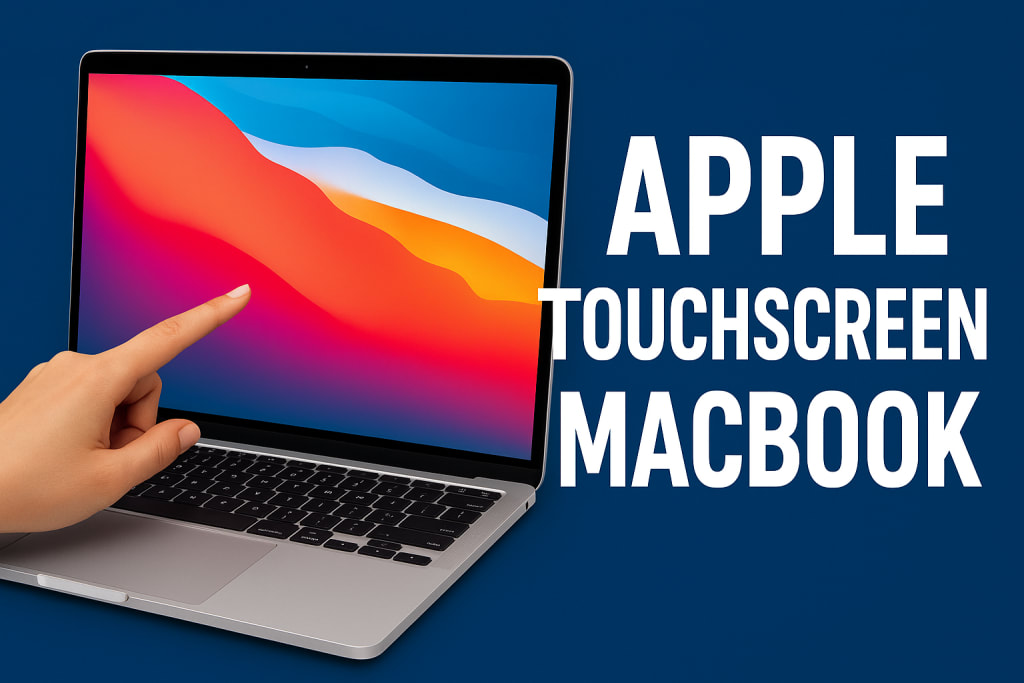
Apple is finally bringing touch to the Mac. The long-awaited Apple touchscreen MacBook Pro is rumored for 2026, featuring OLED displays, M6 chips, and a sleek redesign that could redefine the future of laptops.
Apple Is Finally Breaking Its Own Rules
For years, Apple fans have dreamed of the day they could tap, swipe, and pinch directly on a Mac screen — just like they do on an iPad. It’s finally happening. According to recent Bloomberg reports, Apple is preparing to launch its first-ever Apple touchscreen MacBook, likely arriving in late 2026 or early 2027.
This move marks a major shift in Apple’s philosophy. The company that once said touchscreens don’t belong on laptops is now getting ready to introduce one of the most anticipated products in its lineup — and the tech world is buzzing.
So, why the change of heart? And what can we expect from this groundbreaking MacBook? Let’s dive into everything we know so far.
A Decade in the Making: Why Apple Changed Its Mind
Back in 2010, Steve Jobs famously said, “Touch surfaces don’t want to be vertical.” He argued that using a touchscreen laptop would be uncomfortable for long periods and that it didn’t make sense ergonomically. Apple doubled down on that stance for years, directing users who wanted touch experiences toward the iPad.
But times have changed. Competing manufacturers like Dell, Microsoft, HP, and Lenovo have long offered touch-enabled laptops. Meanwhile, the line between tablets and computers has blurred. Apple’s own iPads now run on the same M-series chips as Macs and even share a similar interface.
With the Apple touchscreen MacBook, Apple seems ready to finally bridge that gap — offering users the best of both worlds: the power of macOS and the convenience of touch.
Inside the Design: Sleeker, Lighter, and More Advanced
Reports indicate that Apple’s upcoming touchscreen MacBook Pro — code-named K114 and K116 — will feature a completely refreshed design. Expect thinner bezels, lighter materials, and a new hole-punch camera instead of the current notch.
The display will use OLED technology, marking the first time this premium panel type appears on a Mac. OLED screens deliver richer colors, deeper blacks, and improved energy efficiency compared to traditional LCDs. That means visuals will look even more stunning, whether you’re editing photos, watching movies, or designing graphics.
Apple is also engineering a reinforced hinge mechanism to handle the physical interaction of touch input. This will prevent the screen from wobbling or bouncing when users tap or swipe — a common issue on Windows laptops.
Simply put, the Apple touchscreen MacBook will combine beauty, functionality, and durability in a way that feels uniquely Apple.
Performance Powerhouse: The M6 Chip Era
Under the hood, the new MacBook Pro will be powered by Apple’s next-generation M6 chips. Each generation of Apple Silicon has delivered major leaps in speed and efficiency, and the M6 is expected to continue that trend.
These chips will likely include faster CPU and GPU cores, longer battery life, and better AI performance — all crucial for professionals who rely on demanding apps like Final Cut Pro, Xcode, or Adobe Creative Cloud.
Apple is also expected to include advanced thermal management, ensuring the laptop stays cool even during heavy workloads. Combine that with the power of macOS and touch input, and the result could be the most capable and intuitive laptop Apple has ever made.
The End of the Notch and the Rise of Dynamic Design
One of the most noticeable design updates will be the removal of the notch at the top of the MacBook display. Instead, Apple plans to use a hole-punch camera design, similar to the Dynamic Island on iPhone models.
This not only gives the screen a cleaner, more immersive look but also opens the door for future features like Face ID. Although Apple isn’t expected to include Face ID in the first touchscreen MacBook, reports suggest the company is working on it for future models.
Touch, Trackpad, and Keyboard: The Perfect Blend
One of the smartest decisions Apple has made is keeping the traditional keyboard and trackpad. This means users who prefer classic controls won’t have to rely on touch — but those who do can enjoy the added flexibility.
Think of it as a hybrid design philosophy. You can use the trackpad for precision, the keyboard for speed, and the touchscreen for creative, intuitive gestures.
Apple already tested part of this concept with the iPad Magic Keyboard, which turned the tablet into a mini laptop. The company learned from that success — and it’s bringing that hybrid experience to the Mac lineup.
Pricing: A Premium Touch
As with most Apple products, innovation won’t come cheap. Current non-touch MacBook Pros start at $1,999 for the 14-inch and $2,499 for the 16-inch version. Analysts expect the Apple touchscreen MacBook to cost a few hundred dollars more due to the OLED display and upgraded components.
For professionals, content creators, and tech enthusiasts, though, the extra cost could be well worth it. After all, this device isn’t just another laptop — it’s a sign of where Mac computing is headed.
Apple’s Strategy: Start High, Then Scale Down
Apple has a pattern: introduce cutting-edge features in its premium models, then trickle them down to more affordable products later.
Just as the MacBook Pro pioneered Apple Silicon before it reached the MacBook Air, the touchscreen MacBook Pro will likely serve as a testing ground. If it succeeds, we could see touch capabilities coming to the MacBook Air and even the iMac in future generations.
For now, Apple is said to be watching market reactions carefully. That’s classic Apple — deliberate, strategic, and always focused on perfect execution rather than rushing to follow trends.
From Skepticism to Strategy: A Historic Shift
It’s worth remembering just how far Apple has come. When Tim Cook once joked that combining a laptop and tablet would be like “mixing a toaster and a fridge,” few imagined Apple would ever make a touchscreen Mac.
But the world has evolved. Touchscreens are now standard on Windows laptops, and users have grown accustomed to fluid, touch-based navigation. Apple’s ecosystem has also matured — macOS and iPadOS now share apps, design language, and even accessories.
In other words, the Apple touchscreen MacBook isn’t a gimmick; it’s a natural next step in Apple’s long-term plan to unify its devices under one seamless experience.
Why the Touchscreen MacBook Matters
Beyond the excitement of new hardware, this device could redefine how we use Macs altogether. Touch opens the door to new creative workflows — from sketching directly on the screen to manipulating 3D models with your hands.
It also gives developers new possibilities for designing touch-optimized macOS apps, potentially reshaping the software ecosystem.
And let’s not forget the marketing side: Apple’s entry into the touchscreen laptop category will immediately raise the bar for design, performance, and user experience across the entire industry.
Looking Ahead: What Comes Next
Apple isn’t stopping at touch. Reports suggest the company is experimenting with Face ID for Macs, new Mac Studio and Mac mini models, and external monitors that could complement the new generation of touch-enabled devices.
If all goes according to plan, 2026 could mark a major turning point in Apple’s hardware strategy — one that blurs the boundaries between Mac, iPad, and even iPhone.
Final Thoughts: The Future Is Touch
The upcoming Apple touchscreen MacBook represents more than just a new product. It’s a symbol of evolution — proof that even the world’s most design-obsessed tech company can change its mind when the time is right.
With its stunning OLED display, M6 chip power, and hybrid touch experience, this device could reshape the laptop market just as the original MacBook Air did years ago.
For users, it means more choice. For Apple, it’s another bold step toward a unified, touch-first future. And for the rest of the industry? It’s a wake-up call: the era of the touchscreen Mac has finally arrived.
Apple touchscreen MacBook
MacBook Pro 2026, Apple M6 chip
OLED MacBook
touchscreen laptop
Apple Silicon MacBook
About the Creator
NextGen Mobile Tech
- I review the latest smartphones, mobile accessories, and tech essentials to help you make smart buying decisions. Explore my curated kits for phones and gear here: [Kit.co link].
Keep reading
More stories from NextGen Mobile Tech and writers in Futurism and other communities.
MacBook Pro M4 vs MacBook Air M4 (2025): Which Apple Laptop Should You Buy?
Discover the ultimate 2025 comparison between the MacBook Pro M4 and MacBook Air M4. Explore key specs, performance, battery life, pros and cons, and find out which Apple laptop is the best choice for students, creators, and professionals this year.
By NextGen Mobile Tech5 months ago in Futurism
AI-Powered Supply Chain Planning Software Market to hit USD 240.96 billion by 2035
AI-Powered Supply Chain Planning Software Market Overview The Global AI-Powered Supply Chain Planning Software Market is projected to reach approximately USD 240.96 Billion by 2035, increasing from USD 11.38 Billion in 2025, reflecting a strong CAGR of 35.7% during the forecast period from 2025 to 2035.
By Roberto Crum3 days ago in Futurism
Australia Frozen Potato Products Market: QSR Expansion, Convenience Foods & Cold Chain Logistics
According to IMARC Group, the Australia frozen potato products market reached a value of USD 1,147.6 Million in 2025 and is projected to reach USD 1,771.2 Million by 2034, growing at a compound annual growth rate (CAGR) of 4.79% during 2026–2034. The market is expanding as changing consumer lifestyles and evolving foodservice trends increase demand for convenient, ready-to-cook food options. Frozen potato products such as French fries, wedges, hash browns and specialty potato snacks are widely used across quick-service restaurants (QSRs), cafés and retail households. Rising urbanization and busy consumer schedules are encouraging the adoption of frozen foods that offer longer shelf life and easy preparation. At the same time, improvements in cold chain logistics and frozen food distribution systems are enabling manufacturers and retailers to maintain product quality while expanding nationwide availability. As both the foodservice sector and retail consumption continue growing, frozen potato products are becoming an essential segment within Australia’s broader frozen food industry.
By Kevin Cooper4 days ago in Futurism
The First Rainbow Baby
Pitter-patter, pitter-patter. The rain fell in rhythmic splatters, slowly slowing, but still constant. Mira rolled onto her side pulling the blanket tight against her ears, but still she could hear chitter-chatter and scurrying feet of the creatures that refused to sleep in the lower decks.
By A. J. Schoenfeldabout 19 hours ago in Fiction


Comments
There are no comments for this story
Be the first to respond and start the conversation.