
Alien: Earth: The Retro-Futuristic Revolution Redefining Science Fiction
Science fiction


Science fiction has witnessed countless interpretations of the future, but few have captured the essence of the past projected into the future as Alien: Earth does. This series, a prequel to the iconic 1979 film Alien, not only expands the universe of xenomorphs and androids but does so through a nostalgic lens that pays homage to the retro-futuristic aesthetic of a bygone era. In this article, we delve into how Alien: Earth has seamlessly blended the past with the future, creating a unique atmosphere that has captivated both long-time fans and new viewers alike.
A Glimpse into the Past: The Retro-Futuristic Aesthetic
From the very first frame, it's evident that Alien: Earth diverges from the ultra-technological portrayals of the future that dominate many contemporary productions. Instead, the series adopts a vision of the future inspired by the 1970s, where technology is robust, tangible, and, in many cases, anachronistic. This choice is intentional; it's a statement of intent.
Production designer Andy Nicholson, renowned for his work on films like Gravity and Charlie and the Chocolate Factory, was tasked with bringing this vision to life. In an interview with The Verge, Nicholson explained that he drew inspiration from devices such as the Sony Watchman, a portable television from the 1980s, to design the tablets used by the Prodigy Corporation. These tablets, with their 16:9 screens, contrast with the 4:3 screens of Weyland-Yutani, visually reinforcing the differences between the two corporations in the series.
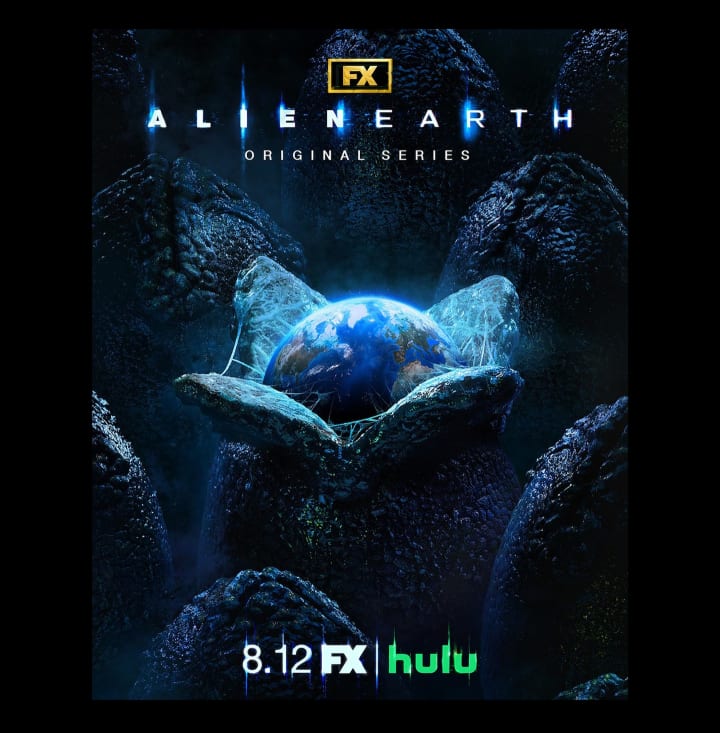
The Verge
Furthermore, the series introduces "synths"—androids that house the consciousnesses of terminally ill children. These beings, while advanced, possess an aesthetic that harkens back to the technology of yesteryear, adding a layer of emotional and philosophical complexity to the narrative.
Nostalgia's Influence: Homages to the Original Saga
One of the standout aspects of Alien: Earth is its ability to pay homage to the original film without resorting to mere repetition. Set in 2120, two years before the events of Alien, the series introduces the Maginot spacecraft, which bears a resemblance to the Nostromo in both design and functionality. This nod to Ridley Scott's film is deliberate and serves to organically connect the two productions.
In a conversation with The Los Angeles Times, series creator Noah Hawley mentioned that he aimed to maintain the "retro-futuristic" technology of the first two Alien films, avoiding the trend of depicting excessively advanced technology in prequels. Hawley stated, "In the prequels, Ridley made the technology thousands of years more advanced than the technology in Alien, which is supposed to take place in the future of those films. There's something about that that doesn't make a lot of sense to me. I prefer the retro-futurism of the first two films. And that's the choice I've made: no holograms."
TIME
The Villain That Steals the Scene: The Ocellus
While the xenomorphs remain a looming threat, Alien: Earth introduces a new creature that has captured the imagination of viewers: the trypanohyncha ocellus, dubbed the "demon sheep eye." This entity is a parasitic eyeball with octopus-like tentacles that initially infects a human and later spends much of the season controlling a sheep. Despite its seemingly absurd host, the ocellus proves to be calculating, dangerously intelligent, and deeply malevolent—manipulating situations with eerie stillness and strategy, in stark contrast to the xenomorph's instinctive brutality.
As the series progresses, there's anticipation over the ocellus being transplanted into a human, potentially creating an even more formidable threat. Its ability to communicate with xenomorphs, already partially shown through a flashback and seen also in a hybrid human character, hints at devastating future developments.
The Guardian
An Ambitious Narrative: The First Season's Plot
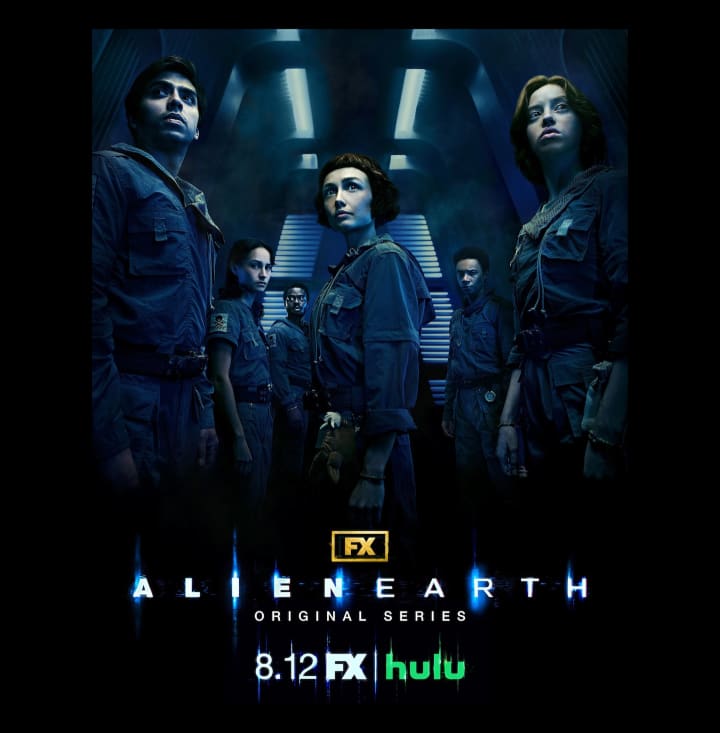
The story follows Wendy, a synthetic with human consciousness, and a group of tactical soldiers investigating the crash of a mysterious spacecraft. As they uncover new forms of alien life, they face ethical and existential dilemmas that question the nature of humanity and artificial intelligence.
The season finale, titled "The Real Monsters," presents a significant twist in the plot. Wendy and her group take control of Prodigy Island, now overrun with escaped xenomorphs. This power shift raises questions about the future of humanity and the morality of the decisions made by the main characters.
The Future of the Series: Will There Be a Second Season?
While FX has not officially confirmed a second season, creator Noah Hawley has expressed interest in continuing the story. In an interview with Entertainment Weekly, Hawley confirmed that discussions are underway for a second season following a dramatic season 1 finale. He emphasized the expansive narrative potential of the series, though it must align with the established Alien film timeline.
EW.com
If renewed, key cast members such as Alex Lawther, Essie Davis, Babou Ceesay, Samuel Blenkin, and Timothy Olyphant are expected to return, provided their characters survived the first season.
People.com
Conclusion: A Rebirth for Science Fiction
Alien: Earth is more than just a prequel; it's a bold reimagining that respects its roots while looking toward the future. Its focus on a retro-futuristic aesthetic, combined with a deep narrative and complex characters, positions it as one of the most innovative series in modern science fiction. For fans of the franchise and newcomers alike, Alien: Earth offers an experience that is both a tribute and an evolution.

Sources:
"Alien: Earth's beefy tablets were inspired by Sony's classic Watchman" – The Verge
"The most evil TV villain ever? Alien: Earth's 'demon sheep eye' is a work of true genius" – The Guardian
"Alien: Earth creator confirms season 2 talks after cliffhanger finale: 'This is such a huge story to explore'" – Entertainment Weekly
"Will There Be an 'Alien: Earth' Season 2? What We Know About the Future of the 'Alien' Prequel Series" – People
"How FX's Alien: Earth Fits Into the Alien Universe" – Time Magazine
About the Creator
JONATAN DAVID VEGA
Hello Welcome! I am Jonatan Vega
Iam self-published mexican author living Sacramento,California
My Instagram: @JonatanVega_writesbooks
My published books in lulu.com
www.lulu.com/spotlight/JonatanVega
Amazon: Jonatan Vega
Keep reading
More stories from JONATAN DAVID VEGA and writers in Futurism and other communities.
🚨The Buga Sphere: The Mysterious Object That Fell from the Sky in Colombia and Defies All Explanation🪩
On March 2, 2025, the skies over Buga—a quiet town in Valle del Cauca, Colombia—lit up for a brief but unforgettable moment. Something strange was falling fast from the heavens. Some witnesses say it struck high-voltage wires before landing, sparking violently and producing a sharp, almost metallic scream. Others say it hovered for a second, as if guided, before touching the earth.
By JONATAN DAVID VEGA9 months ago in Futurism
Australia CCTV Market: AI-Powered Video Analytics, Smart City Surveillance & Cloud-Based Monitoring
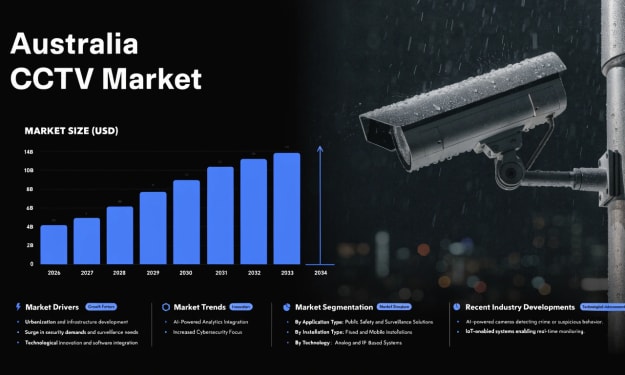
According to IMARC Group, the Australia CCTV market reached a value of USD 1.4 Billion in 2025 and is projected to reach USD 6.2 Billion by 2034, growing at a compound annual growth rate (CAGR) of 17.35% during 2026–2034. The market is expanding rapidly as governments, businesses and residential communities invest in advanced surveillance technologies to enhance safety and operational monitoring. Rising public safety concerns and increasing urbanization are encouraging authorities to deploy CCTV systems across transportation networks, commercial spaces and public infrastructure. Smart city initiatives in major metropolitan areas are further accelerating the adoption of intelligent surveillance solutions. At the same time, advancements in artificial intelligence and cloud computing are transforming traditional CCTV systems into intelligent monitoring platforms capable of real-time video analytics and remote access. As surveillance technology becomes more sophisticated and integrated with digital infrastructure, the CCTV market is evolving into a critical component of modern security ecosystems.
By Kevin Cooper3 days ago in Futurism
Fuel Cell UAV Market Outlook: Long-Endurance Drone Technology and Clean Energy Aviation Opportunities
According to IMARC Group's latest research publication, The global fuel cell UAV market size was valued at USD 6.26 Billion in 2024. Looking forward, IMARC Group estimates the market to reach USD 20.67 Billion by 2033, exhibiting a CAGR of 13.49% during 2025-2033.
By James Whitman4 days ago in Futurism



Comments
There are no comments for this story
Be the first to respond and start the conversation.