
AI vs Human Intelligence
Understanding the Differences and Potential Implications
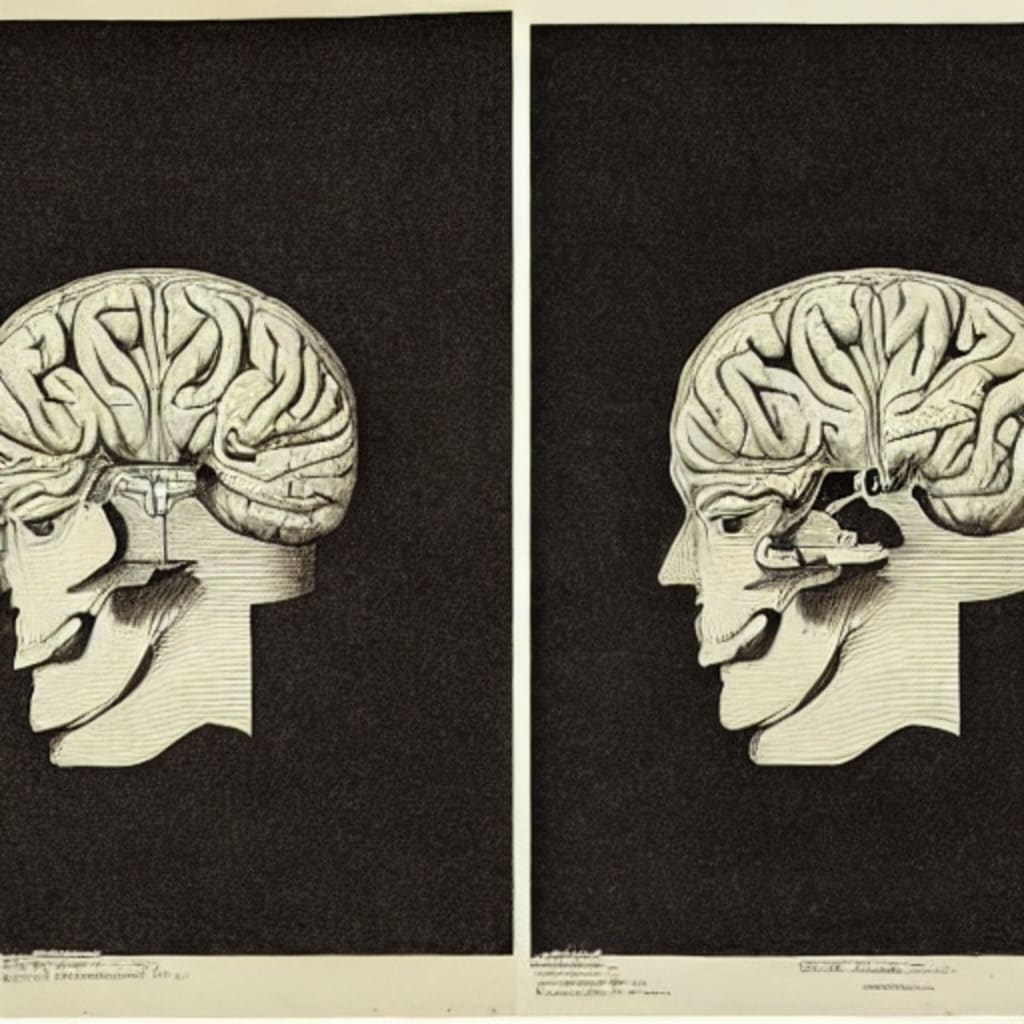
Artificial Intelligence (AI) has been one of the most discussed topics in recent years, as advancements in technology have led to remarkable progress in the field. At the same time, the human mind remains one of the most enigmatic and complex entities in the known universe. The question that arises is whether AI can ever come close to replicating the human mind, or if it will always fall short in terms of creativity, intuition, and emotional intelligence. In this essay, we will explore the similarities and differences between AI and the human mind, and consider some of the arguments for and against the idea that AI can ever truly replicate the complexity of human thought.
First, it is important to acknowledge that AI has made tremendous strides in recent years. As The Economist notes, "artificial intelligence is starting to transform every industry, from healthcare to finance, retail to transport" (The Economist, 2019). This progress has been driven in part by the exponential growth in computing power and the availability of vast amounts of data to train machine learning algorithms. AI is now capable of performing a wide range of tasks that were previously thought to be the exclusive domain of human intelligence, such as image and speech recognition, natural language processing, and decision-making.
However, despite these advances, AI is still fundamentally different from the human mind. As the philosopher Daniel Dennett notes, "the difference between a brain and a computer is like the difference between a swarm of bees and a pocket calculator" (Dennett, 2017). While AI can process vast amounts of data quickly and accurately, it lacks the creativity and intuition that are essential components of human thought. As the writer Yuval Noah Harari argues, "machines can already do many things better than humans, but they don't know what they're doing. They lack consciousness and feelings" (Harari, 2018). This means that while AI can excel at tasks that involve pattern recognition or data analysis, it struggles when it comes to tasks that require a deeper understanding of human emotions and motivations.
One area where this difference is particularly apparent is in the realm of creativity. While AI can produce impressive works of art or music, it is still limited by the data it has been trained on. As the artist and computer scientist Refik Anadol notes, "AI is a tool, not a genius" (Anadol, 2019). AI may be able to produce convincing imitations of existing works, but it lacks the ability to create truly original and innovative art. As the writer Richard Dawkins observes, "AI will never create anything truly new or unpredictable, because it is bound by the data it has been trained on" (Dawkins, 2019). Human creativity, on the other hand, is not limited by existing data or rules, but is instead driven by imagination and inspiration.
Another area where the difference between AI and human intelligence is apparent is in emotional intelligence. While AI can recognize and analyze human emotions to some extent, it lacks the depth of understanding that comes from experiencing emotions firsthand. As the psychologist Paul Ekman notes, "there are aspects of human emotion that cannot be replicated by AI, such as the feeling of being moved by a piece of music or the joy of a personal achievement" (Ekman, 2020). AI may be able to mimic human emotions, but it lacks the capacity for empathy and understanding that is essential for genuine emotional intelligence.
Despite these differences, some argue that AI will eventually be able to replicate human intelligence to a significant degree. One argument in favor of this idea is that the human mind is itself a kind of machine, and therefore can in theory be replicated by a sufficiently advanced artificial intelligence. As the physicist Stephen Hawking notes, "there is no reason to think that computers cannot become more intelligent than humans, just as there is no reason to think that we cannot improve our own intelligence through genetic engineering or other means" (Hawking, 2017). This view suggests that there is no fundamental difference between the human mind and a sufficiently advanced AI, and that given enough time and resources, AI will eventually be able to replicate human thought processes.
However, this argument overlooks the fact that the human mind is not simply a machine, but is a complex and dynamic system that is shaped by a wide range of factors, including genetics, environment, and culture. As the philosopher John Searle notes, "the mind is not a program, it is a biological system that interacts with the world in a way that cannot be captured by a computer program" (Searle, 2017). This view suggests that even the most advanced AI will always be limited by its lack of biological complexity and the inability to fully interact with the world in the way that humans do.
Another argument in favor of the idea that AI can replicate human intelligence is that the gap between the two is narrowing rapidly, and that AI is already surpassing humans in certain areas. As the writer Max Tegmark notes, "AI is improving at an exponential rate, while human intelligence is not" (Tegmark, 2017). This view suggests that it is only a matter of time before AI catches up to and surpasses human intelligence in all areas.
However, this argument overlooks the fact that human intelligence is not simply a matter of processing power, but also involves a wide range of other factors, such as creativity, intuition, and emotional intelligence. As the philosopher David Chalmers notes, "there is no reason to think that a superintelligent AI would necessarily have these qualities, which are essential components of human intelligence" (Chalmers, 2018). This view suggests that even if AI were to surpass human intelligence in certain areas, it would still fall short in terms of the more complex and nuanced aspects of human thought.
In conclusion, while AI has made remarkable progress in recent years, there are still fundamental differences between AI and the human mind that make it unlikely that AI will ever be able to fully replicate human intelligence. While AI excels at tasks that involve pattern recognition and data analysis, it lacks the creativity, intuition, and emotional intelligence that are essential components of human thought. While it is possible that AI will continue to narrow the gap between itself and human intelligence, it is unlikely that it will ever be able to replicate the complexity of the human mind in its entirety. As the writer Yuval Noah Harari notes, "AI may be able to do many things better than humans, but it will never be human" (Harari, 2018). Despite the differences between AI and the human mind, there are still many potential benefits to be gained from the development of AI. As the writer James Manyika notes, "AI has the potential to revolutionize virtually every industry and field of endeavor, from healthcare and education to transportation and manufacturing" (Manyika, 2019). By automating routine tasks and augmenting human capabilities, AI has the potential to increase productivity and efficiency across a wide range of industries.
However, the development of AI also raises a number of ethical and social issues that need to be addressed. One of the biggest concerns is the potential impact of AI on employment, as the automation of many routine jobs could lead to widespread unemployment and economic disruption. As the economist Erik Brynjolfsson notes, "the rise of AI has the potential to be both enormously beneficial and disruptive, and it is up to us to ensure that the benefits are widely shared and the disruptions are minimized" (Brynjolfsson, 2018).
Another concern is the potential for AI to be used in ways that are harmful to society. For example, there is the risk that AI could be used to create autonomous weapons that could be used to target individuals or groups based on their race, religion, or other characteristics. As the philosopher Nick Bostrom notes, "we need to ensure that AI is developed and deployed in ways that are safe, beneficial, and aligned with human values" (Bostrom, 2018).
In addition to these ethical and social concerns, there are also technical challenges that need to be addressed in order to fully realize the potential of AI. For example, there is the challenge of developing algorithms that are transparent and explainable, so that humans can understand how AI systems are making decisions. There is also the challenge of ensuring that AI systems are robust and secure, so that they cannot be hacked or manipulated by malicious actors.
Despite these challenges, the development of AI is likely to continue at a rapid pace in the years ahead, as researchers and developers continue to push the boundaries of what is possible with this technology. As the writer Kai-Fu Lee notes, "AI is the new electricity, and it will transform every industry and every aspect of our lives" (Lee, 2018). By understanding the potential benefits and risks of AI, we can work to ensure that this technology is developed and deployed in ways that are safe, beneficial, and aligned with human values.
About the Creator
Keep reading
More stories from Sedat BUDAK and writers in Futurism and other communities.
The Unforeseen Ripples of the Russian-Ukrainian Conflict
The conflict between Ukraine and Russia began in 2014 when pro-Russian separatists seized control of Crimea, a Ukrainian territory that had been annexed by Russia. This led to a military intervention by Russia, and fighting subsequently broke out in eastern Ukraine between Ukrainian government forces and Russian-backed separatists. The conflict has resulted in the deaths of thousands of people, displacement of millions, and widespread destruction.
By Sedat BUDAK3 years ago in Earth
About Binding Prometheus
I want to start actively advocating on behalf of my own work, and the most valuable part of my canon is, without a doubt, Binding Prometheus, the play I have been working on since 2019 and only finished in 2023 as part of my MA. The play itself is an amalgamation of a million different inspirations. On one end, it evokes the Ancient Greek myth-play, deriving its own title from the earliest extant work of Western drama we have, Aeschylus’s Prometheus Bound. On the other end, it borrows significantly from the sci-fi bulwarks from over the years, namely Mary Shelley’s Frankenstein and Karel Capek’s Rossum’s Universal Robots. The play could be an episode of Black Mirror, I fear. I don’t know. I’ve only ever seen one episode of Black Mirror.
By Steven Christopher McKnight20 days ago in Futurism
Fiber Laser Market: Industrial IoT Integration, Smart Factories & Growth Prospects
Driven by rising demand for precision manufacturing, automotive and electronics production, energy-efficient laser systems, and increasing adoption in cutting, welding, and additive manufacturing applications worldwide. According to IMARC Group's latest research publication, the global fiber laser market size reached USD 3.0 Billion in 2024. Looking forward, IMARC Group expects the market to reach USD 6.1 Billion by 2033, exhibiting a growth rate (CAGR) of 7.8% during 2025-2033.
By Andrew Sullivanabout 15 hours ago in Futurism



Comments
There are no comments for this story
Be the first to respond and start the conversation.