
AI Tools for Success: Changing Work, But at What Cost?
Discovering the Power, Challenges, and Future of AI in Business

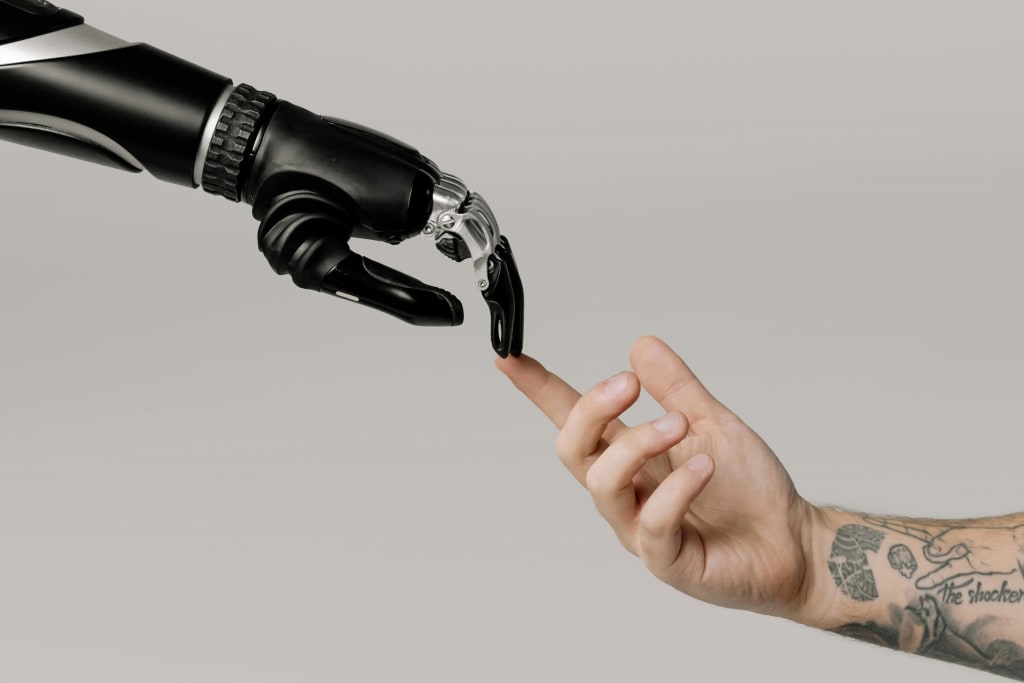
Success Tools of AI: Transforming Work, But at What Price?
Artificial Intelligence (AI) has transitioned from a science fiction idea to an everyday reality, transforming industries and redefining the way we work. AI-based tools are making operations simpler, more efficient, and are providing businesses with unprecedented insights. From customer service automation to deep data analytics, AI is changing the face of the modern workplace. But while organizations are looking to AI for efficiency, an important question remains—what's the price of this change?
AI is certainly revolutionary, but its reach is wider than that of convenience. While companies rejoice at greater efficiency, workers are wary about employment security, moral repercussions, and the loss of human imagination in making decisions. In this blog, we will be looking at how AI tools are revolutionizing work, the advantages they offer, and the problems they pose.
How AI Tools Are Redefining Work
AI solutions are now part of many industries. Their use varies from repetitive task automation to helping solve intricate problems. Some of the most notable ways AI is changing the workplace are:
1. Automating Repetitive Tasks
Much of the administrative and operational work that was once the domain of humans is now handled by AI. Enterprises employ AI-powered chatbots for customer service, AI-based accounting software to process invoices, and automated scheduling systems to streamline workflow. All this saves time and minimizes human error, freeing professionals to concentrate on more strategic and creative work.
2. Boosting Decision-Making
AI not only automates but also enhances decision-making. Machine learning algorithms process massive datasets to yield insights that would take humans much longer to decode. Companies employ AI for predictive financial analytics, tailored marketing approaches, and inventory tracking in real-time. AI-driven insights assist leaders in making better decisions, mitigating risks, and delivering better results.
3. Transforming Customer Interactions
AI chatbots, virtual assistants, and recommendation engines are transforming customer service. AI can handle customer queries, personalize product recommendations, and even predict consumer behavior based on historical data. Companies like Amazon and Netflix leverage AI to tailor user experiences, increasing engagement and satisfaction.
4. Improving Workplace Efficiency
AI is revolutionizing in-house business functions through optimization of supply chains, automated hiring processes, and HR functions support. AI applications aid businesses to identify suitable staff, employee performance management, and automation of recurrent HR procedures. Companies using AI are competitively advantaged in terms of being able to be more efficient without additional expenditure.
The Advantages of AI within the Workplace
Adopting AI solutions provides undeniable benefits in the form of:
- Enhanced Productivity: AI automates routine work, enabling employees to concentrate on high-value tasks.
- Cost Savings: Automation optimizes costs by eliminating human errors and enhancing precision.
- Accelerated Decision-Making: AI insights allow organizations to respond rapidly to market changes and issues.
- Improved Customer Experience: AI tailors interactions, enhancing customer satisfaction and loyalty.
- Scalability: AI enables companies to scale operations without necessarily raising workforce demands.
The Hidden Costs of AI in the Workplace
While it has numerous benefits, AI adoption is not without challenges and risks that companies need to take into consideration.
1. Job Displacement and Workforce Anxiety
One of the most significant issues related to AI is job loss. Automation is displacing jobs in manufacturing, customer service, and administrative tasks. Although new careers are being created in AI maintenance and development, employees in these traditional positions can find it challenging to make the shift. The question is: are companies ready to reskill and upskill their employees to accommodate this transition?
2. Ethical and Bias Concerns
AI systems are only as good as the data that they have been trained on. Bias in AI models can cause discrimination in hiring, lending, and law enforcement decisions. Firms need to make sure that their AI tools are ethically designed with transparency and fairness in mind. Addressing bias in AI is key to avoiding unintended consequences that may harm individuals and communities.
3. Dependency on AI and Loss of Human Touch
While AI enhances efficiency, over-reliance on automation can diminish the human element in workplaces. AI-driven customer service may lack empathy, and AI-generated content may miss the emotional depth of human creativity. Striking the right balance between automation and human interaction is key to maintaining genuine connections with customers and employees.
4. Privacy and Security Risks
AI-based data collection threatens privacy and security. Companies leveraging AI for analytics have to use sensitive customer information wisely. Cyber attacks, data loss, and abuse of AI-based insights can be highly detrimental. Ensuring strict security protocols is essential to establishing credibility and ensuring ethical use of AI.
Finding the Balance: AI as a Tool, Not a Replacement
AI must be viewed as an enabler, not a substitute for human intelligence. The future of work is the collaboration between humans and AI, where technology is there to support human capabilities, not substitute for them. Organizations need to take proactive approaches to navigate the changing AI landscape:
- Invest in Workforce Upskilling : Firms must offer training programs to equip employees with AI, data analysis, and digital literacy skills. This keeps employees relevant in the AI economy.
- Implement Ethical AI Practices : Firms must focus on transparency in AI decision-making, frequent auditing of AI algorithms for bias, and creating ethical standards for AI use.
- Maintain Human-Centric Workplaces : AI should support—not replace—human interactions in customer service, creative work, and decision-making. Preserving the human element in business operations is essential for long-term success.
- Strengthen AI Security Measures : Organizations must safeguard AI-driven systems against cybersecurity threats, ensuring customer data is protected and privacy regulations are met.
The Future of Work with AI
AI is not going anywhere, and its influence on the workplace will only increase. As companies embrace AI technology, they need to see both the benefits and the obligations that come with it. While success can be fueled by AI, its human and ethical aspects cannot be overlooked.
The test of businesses is how they can include AI in their systems to benefit efficiency without negating the essence of human competencies. Finding an optimal combination between automation and human capabilities will set the work agenda for the future. Organizations that adopt AI responsibly—making an investment in humans as much as in machines—will stand a better chance to thrive long term in the face of change.
Final Thought
AI is not only transforming the way we work, but it is also transforming what work is. As we go forward, companies and individuals need to adapt, innovate, and make sure that AI is a force for advancement and not a force of disruption. The success of AI is not in displacing people but in augmenting human potential. The question is not if AI will transform work—but how we decide to craft that transformation.
About the Creator
Keep reading
More stories from Malik Fahad and writers in Futurism and other communities.
Digital Trends to Watch: Innovations Shaping the Future
The digital environment is changing faster than ever before, with new platforms, technologies, and consumer behaviors remapping the way companies do business. While these trends hold thrilling promise, they also pose essential challenges that cannot be avoided. Will companies be able to move fast enough? Can we reconcile innovation and ethics?
By Malik Fahad11 months ago in Futurism
About Binding Prometheus
I want to start actively advocating on behalf of my own work, and the most valuable part of my canon is, without a doubt, Binding Prometheus, the play I have been working on since 2019 and only finished in 2023 as part of my MA. The play itself is an amalgamation of a million different inspirations. On one end, it evokes the Ancient Greek myth-play, deriving its own title from the earliest extant work of Western drama we have, Aeschylus’s Prometheus Bound. On the other end, it borrows significantly from the sci-fi bulwarks from over the years, namely Mary Shelley’s Frankenstein and Karel Capek’s Rossum’s Universal Robots. The play could be an episode of Black Mirror, I fear. I don’t know. I’ve only ever seen one episode of Black Mirror.
By Steven Christopher McKnight23 days ago in Futurism
Carbon Felt and Graphite Felt Market: Battery Technology Demand, Flow Batteries & Energy Transition
According to IMARC Group's latest research publication, global carbon felt and graphite felt market size reached USD 551.7 Million in 2024. Looking forward, IMARC Group expects the market to reach USD 1,114.8 Million by 2033, exhibiting a growth rate (CAGR) of 8.13% during 2025-2033.
By sujeet. imarcgroup4 days ago in Futurism
📢 Raise Your Voice Thread: 01/22/2026
Our “Raise Your Voice Threads” are hosted most alternating Thursdays at 12PM ET to offer creators more avenues to uncover exceptional stories on Vocal. As we are continuously searching for fresh creators and inspiring stories, this thread provides an opportunity to exchange and discuss the stories that have moved and motivated us on Vocal.
By Raise Your Voice by Vocala day ago in Resources




Comments
There are no comments for this story
Be the first to respond and start the conversation.