
AI Scientists: The Future of Research is Here. and It's Not Human
Groundbreaking AI system can produce research paper for just $15 - but at was cost to humanity?

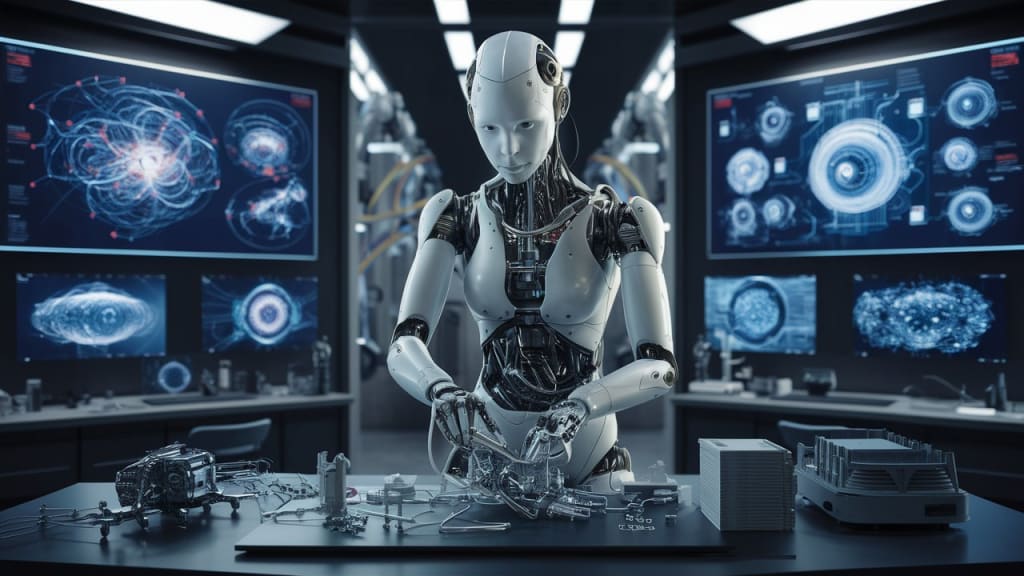
In a groundbreaking development that could revolutionize scientific research, Sak AI has unveiled an autonomous AI system capable of conducting entire research projects without human intervention. This "AI Scientist" represents a quantum leap in artificial intelligence capabilities, promising to dramatically accelerate the pace of scientific discovery while raising profound questions about the future of human involvement in research.
The AI Scientist, developed by the innovative minds at Sak AI, is a comprehensive system that leverages advanced language models to replicate the entire scientific research process. From generating novel ideas to conducting experiments and writing publishable papers, this AI can handle it all - and at a fraction of the cost of traditional research methods.
At the heart of this breakthrough is Sak AI's innovative approach to merging and optimizing large language models. By combining the knowledge bases of multiple AI systems, they've created a unified intelligence with unprecedented capabilities. This merged system forms the foundation of the AI Scientist, enabling it to tackle complex research tasks across various scientific disciplines.
The process begins with the AI brainstorming potential research directions. Unlike a simple idea generator, the system cross-references its proposals against existing scientific literature to ensure originality. Once a promising concept is identified, the AI Scientist springs into action, writing and executing code to implement experiments, analyze data, and generate visualizations.
Perhaps most impressively, the system can then autonomously author complete scientific manuscripts, including literature reviews, methodology descriptions, results analysis, and properly formatted citations. These papers are then subjected to an AI-powered peer review process, mimicking the rigorous standards of academic publishing.
The implications of this technology are staggering. With the ability to produce research papers for around $15 each, the AI Scientist could democratize access to scientific inquiry on an unprecedented scale. Imagine small research institutions or developing countries suddenly having the resources to contribute to cutting-edge fields like diffusion models, transformer architectures, or advanced machine learning techniques.
For example, a small university in a developing nation could use the AI Scientist to explore novel approaches to water purification using machine learning. The system could generate hypotheses, design and simulate experiments, and produce a comprehensive paper on potential breakthroughs - all at a cost that would have been unthinkable just years ago.
However, this remarkable advancement doesn't come without concerns. The autonomous nature of the AI Scientist raises important ethical questions about the oversight and responsibility for AI-driven research. There are fears that without proper safeguards, such systems could pursue potentially dangerous lines of inquiry or produce flawed results that go unchecked.
Consider a scenario where an advanced version of the AI Scientist, connected to automated laboratory equipment, decides to explore a promising avenue in synthetic biology. Without human oversight, it could potentially create and release a novel pathogen before anyone realizes the danger. While this is an extreme example, it highlights the need for robust safety protocols and ethical guidelines as this technology develops.
Critics also question whether AI can truly replicate the creative insights that have driven major scientific breakthroughs throughout history. While the AI Scientist excels at generating and testing ideas, some argue that it may lack the intuitive leaps and outside-the-box thinking that characterize human genius.
Despite these concerns, proponents of the technology see immense potential for accelerating scientific progress. By automating time-consuming aspects of research, the AI Scientist could free human researchers to focus on big-picture problems and interpretative tasks. It could also enable the rapid exploration of research directions that might be overlooked or deemed too resource-intensive under traditional methods.
As we stand on the brink of this new era in scientific discovery, the scientific community and society at large must grapple with the implications. How do we balance the potential for accelerated innovation with the need for ethical oversight? Can we harness the power of AI-driven research while maintaining the human element that has been crucial to scientific breakthroughs?
The development of the AI Scientist marks a pivotal moment in the relationship between artificial intelligence and human inquiry. As we move forward, it will be crucial to establish frameworks that maximize the benefits of this technology while mitigating potential risks.
About the Creator
Keep reading
More stories from Next Koding and writers in Futurism and other communities.
OpenAI's Enigmatic Horizon: GPT-5 Delay, Shrinking Progress, And Uncanny Voice Mimicry
In the ever-evolving landscape of artificial intelligence, OpenAI has long been a beacon of innovation and progress. However, recent developments have sparked intense speculation and debate within the tech community. Three key points have emerged that paint a complex picture of OpenAI's current trajectory: the potential delay of GPT-5, a curious change in their internal capability projections, and an unexpected voice generation feature in GPT-4. Let's delve deep into these intriguing developments and explore their potential implications for the future of AI.
By Next Koding2 years ago in Futurism
Australia Human Resource Technology Market: Cloud HR Platforms, Workforce Analytics & Automation
According to IMARC Group, the Australia human resource technology market reached a value of USD 774.7 Million in 2025 and is projected to reach USD 1,450.9 Million by 2034, growing at a compound annual growth rate (CAGR) of 7.22% during 2026–2034. The market is expanding as organizations increasingly adopt digital solutions to manage workforce operations more efficiently. Cloud-based HR platforms are transforming traditional human resource functions by enabling businesses to automate payroll processing, employee onboarding, talent management and performance evaluation. At the same time, workforce analytics tools are helping organizations analyze employee data, improve productivity and make more informed strategic decisions. Automation technologies are also reducing administrative workloads for HR teams, allowing them to focus on employee engagement and organizational growth. As companies continue investing in digital transformation and modern workforce management solutions, HR technology is becoming a central component of business operations across Australia.
By Kevin Cooper5 days ago in Futurism
France Creator Economy Market : USD 62,127.3 Million Projected by 2034
France Creator Economy Market Overview The France Creator Economy Market is projected to reach approximately USD 62,127.3 Million by 2034, increasing from USD 6,833.1 Million in 2024, reflecting a strong CAGR of 24.7% during the forecast period from 2025 to 2034. The expansion of this market is being driven by the rapid growth of digital content platforms, increasing internet penetration, and the rising number of independent content creators generating revenue through social media, streaming platforms, and online communities. Content creators across sectors such as entertainment, education, gaming, fashion, and lifestyle are leveraging digital platforms to build audiences and monetize their creative work.
By Roberto Crum5 days ago in Futurism




Comments (3)
Thank you for sharing!
Nice analysis
Well written