
AI’s Human Architects
Crafting the Future with Code and Conscience

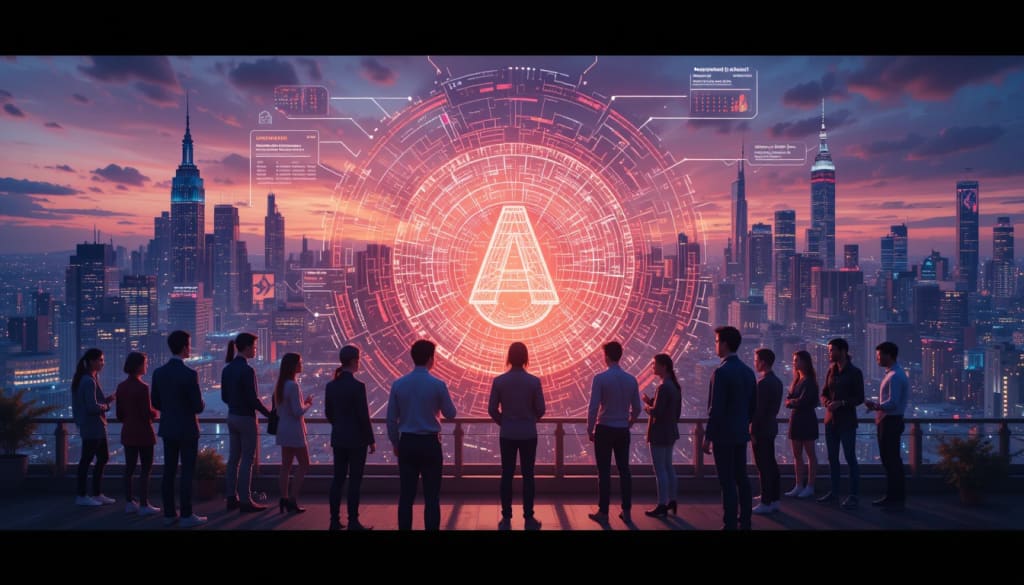
The Human Core of AI
Artificial Intelligence (AI) often conjures images of sleek machines or disembodied voices answering our queries. Yet, behind every algorithm, neural network, and chatbot lies a profoundly human story. AI is not a self-sustaining force—it’s a creation born from human ingenuity, shaped by our ambitions, and guided by our values. This article dives into the human essence of AI, exploring how scientists, artists, ethicists, and everyday innovators collaborate to build a technology that mirrors our potential and challenges our responsibilities. From its origins to its future, AI is a testament to humanity’s drive to create, connect, and question.
The Dreamers: Origins of AI
The roots of AI stretch back to human curiosity about the nature of thought. In the 1950s, pioneers like Alan Turing and John McCarthy dared to ask if machines could emulate human intelligence. Turing’s 1950 paper, “Computing Machinery and Intelligence,” introduced the idea of a machine that could mimic human conversation, planting the seed for modern AI. McCarthy, who coined the term “Artificial Intelligence” in 1956, envisioned computers solving problems with human-like reasoning. These were not just technical pursuits but philosophical quests, driven by a desire to understand what it means to think.
Early AI researchers worked with limited tools—punch cards, rudimentary computers, and sheer imagination. For instance, Frank Rosenblatt’s Perceptron, introduced in 1958, was a simple neural network inspired by the human brain’s neurons. Though primitive by today’s standards, it was a bold step, fueled by Rosenblatt’s vision of machines learning from experience. These early dreamers weren’t just coding; they were storytelling, weaving narratives of what technology could become.
Today, their legacy lives on in breakthroughs like large language models and generative AI. Each milestone—from IBM’s Watson winning Jeopardy! in 2011 to DeepMind’s AlphaGo mastering the game of Go in 2016—reflects human persistence. Behind these achievements are teams of researchers who spent years refining algorithms, debugging code, and dreaming of possibilities.
The Builders: Crafting AI’s Foundation
Building AI is a collaborative effort, blending technical precision with human intuition. Data scientists, engineers, and domain experts work together to transform raw data into intelligent systems. Consider the process of training a machine learning model. It starts with humans curating datasets—images, texts, or sounds—that teach AI to recognize patterns. This isn’t a mechanical task; it requires judgment. For example, when training an AI to identify medical conditions from X-rays, radiologists annotate scans, deciding which anomalies signal disease. Their expertise shapes the AI’s accuracy.
Programmers also infuse AI with purpose. They decide whether an algorithm optimizes traffic flow, predicts stock market trends, or composes music. These choices reflect human priorities—improving efficiency, saving lives, or sparking joy. For instance, AI systems like Google’s DeepDream, which generates surreal artwork, were designed to explore creativity, a distinctly human aspiration.
But the building process isn’t flawless. Humans introduce biases, often unintentionally. A 2018 study revealed that facial recognition systems misidentified darker-skinned and female faces at higher rates due to biased training data. Correcting this requires human intervention—diverse teams auditing datasets and refining algorithms. The builders of AI are not just coding; they’re problem-solving, reflecting, and striving for fairness.
The Artists: AI as a Creative Partner
AI is often seen as a threat to creativity, but it’s more accurately a partner. Artists, writers, and musicians are harnessing AI to push boundaries. Tools like Stable Diffusion and DALL·E 3 let visual artists generate images from text prompts, enabling them to explore concepts that would be impossible to hand-draw. For example, a designer might input “a futuristic city under a crimson sky” and refine the AI’s output to match their vision. The result is a collaboration, with AI providing raw material and humans adding soul.
In music, AI platforms like Suno and Soundraw generate melodies or beats, but human producers shape them into songs. In 2023, a track called “Heart on My Sleeve,” created with AI-generated vocals mimicking Drake and The Weeknd, went viral. While the AI produced the vocals, human songwriters crafted the lyrics and arrangement, blending technology with emotion. This synergy is redefining creativity, making it more accessible. Platforms like Canva use AI to help non-designers create stunning visuals, while tools like Jasper assist writers in brainstorming ideas.
This partnership doesn’t diminish human artistry—it amplifies it. The artist’s role is to guide AI, infusing its outputs with intention and meaning. A painter might use AI to generate a base image but add brushstrokes to convey emotion. A writer might use AI to draft a story but rewrite it to capture their voice. AI is a tool, not a replacement, and its creative potential lies in human hands.
The Ethicists: Guiding AI’s Moral Compass
As AI’s capabilities grow, so do its ethical challenges. Who ensures AI serves humanity rather than harms it? This responsibility falls to ethicists, policymakers, and activists. AI lacks inherent morality; its impact depends on the humans steering it. For example, autonomous drones used in agriculture can optimize crop yields, but similar technology in warfare raises questions about accountability. Humans must decide where to draw the line.
Ethical dilemmas are particularly stark in areas like privacy. AI-powered surveillance systems, used in cities like Beijing and London, can enhance security but risk eroding personal freedoms. In 2020, San Francisco banned facial recognition technology, citing concerns about bias and misuse. This decision came from human advocates—city officials, privacy experts, and citizens—who weighed AI’s benefits against its dangers.
Another ethical frontier is equity. AI’s benefits, like advanced healthcare diagnostics, are often concentrated in wealthy nations, leaving developing regions behind. Organizations like Data.org are working to democratize AI, training communities in low-income countries to use it for local challenges, such as predicting droughts. These efforts are driven by humans who believe technology should serve all, not just a few.
Bias mitigation is another human-led endeavor. When Amazon’s recruiting tool was found to penalize women’s resumes in 2018, it was scrapped after human researchers identified the issue. Today, initiatives like AI4Good and the Responsible AI Institute bring together diverse voices to ensure AI aligns with human values—fairness, transparency, and accountability.
The Connectors: AI and Human Bonds
AI is increasingly a bridge to human connection. Chatbots like me are designed to understand and respond to human emotions, even if we don’t feel them. This capability comes from linguists, psychologists, and developers who study how people communicate. For instance, mental health apps like Youper use AI to offer supportive conversations, drawing on techniques from cognitive behavioral therapy. A 2022 study found that users felt less isolated after interacting with such apps, thanks to human-designed algorithms that mimic empathy.
In entertainment, AI enhances immersion. Video games like The Last of Us Part II use AI to create characters that react dynamically to player choices, making stories feel personal. These experiences are crafted by writers and animators who understand human emotions—fear, love, betrayal—and embed them into code.
AI also fosters connection in education. Tools like Duolingo use AI to tailor lessons to individual learners, adapting to their pace and style. Behind these tools are educators and data scientists who study how people learn, ensuring AI feels like a patient teacher, not a cold machine.
The Visionaries: AI’s Future, Human-Driven
The future of AI is as boundless as human imagination. Researchers are exploring its potential to address global challenges, from curing diseases to combating climate change. For example, AI models are optimizing wind turbine efficiency, reducing carbon emissions, while others analyze satellite data to predict deforestation. These projects are driven by scientists who see AI as a tool for planetary good.
On a personal level, AI is poised to become more intuitive. Imagine a virtual assistant that anticipates your needs—booking a doctor’s appointment when you mention feeling ill—or a tutor that adjusts lessons based on your mood. These innovations will come from humans who blend technical expertise with empathy.
But the future also demands caution. As AI integrates deeper into society, humans must ensure it remains transparent and accountable. This means fostering diversity in AI development to avoid cultural blind spots and creating regulations to prevent misuse. The visionaries shaping AI’s future are not just technologists but storytellers, ethicists, and advocates who see technology as a means to elevate humanity.
Conclusion: A Human Legacy in Code
AI may seem like a force of its own, but it’s a product of human hands and hearts. From the dreamers who imagined it to the builders, artists, ethicists, and connectors who shape it, AI reflects our collective drive to explore, create, and connect. Its flaws mirror our own, but so do its triumphs. As we build the future of AI, we’re not just writing code—we’re crafting a legacy of human curiosity, creativity, and conscience.
About the Creator
Shohel Rana
As a professional article writer for Vocal Media, I craft engaging, high-quality content tailored to diverse audiences. My expertise ensures well-researched, compelling articles that inform, inspire, and captivate readers effectively.
Keep reading
More stories from Shohel Rana and writers in Futurism and other communities.
From Zero to Viral: How AI Can Turn Your Facebook Reels into a Full-Time Income
🌍 Welcome to the Gold Rush of Short-Form Video In 2024, every scroll is a paycheck waiting to happen. Facebook Reels isn’t just a platform—it’s a digital economy where creators like you can thrive. But with over 200 million creators competing for eyeballs, standing out demands more than luck. It requires strategy, speed, and a secret weapon: AI.
By Shohel Rana10 months ago in Futurism
Australia Soft Skills Training Market: Workplace Communication Demand, Leadership Development & Online Learning
According to IMARC Group, the Australia soft skills training market reached USD 1.0 Billion in 2025 and is projected to grow to USD 2.5 Billion by 2034, exhibiting a compound annual growth rate (CAGR) of 9.89% during 2026–2034. The strong expansion reflects the increasing recognition of interpersonal and leadership capabilities as essential drivers of workplace productivity across Australia. Organizations are increasingly investing in training programs that enhance communication, collaboration, problem-solving, and emotional intelligence among employees. As businesses adapt to hybrid work environments and rapidly evolving corporate cultures, soft skills development is becoming a key strategic priority. Government initiatives supporting workforce development and the rise of digital learning platforms are further strengthening Australia soft skills training market share.
By Shrestha Royabout 10 hours ago in Futurism
Should Human be afraid of AI ? The truth reveals
Artificial Intelligence isn’t something of the future anymore — it’s here. It’s in the smartphones that recognize our voices, the apps that suggest what to watch, and the systems that predict what we might want to buy next. AI is quietly shaping the world around us.
By Shahid Zaman7 days ago in Futurism



Comments (1)
The article really makes you think about how far AI has come. It's amazing to see how those early pioneers' ideas have led to today's tech. I remember when Watson won Jeopardy! That was huge. It showed just how powerful AI could be. Do you think we'll ever reach a point where AI is truly indistinguishable from human intelligence? And what about the ethical implications as it gets more advanced?