
AI-Powered Cities: How Artificial Intelligence Could Run Entire Nations by 2035
From traffic control to healthcare, AI may soon become the silent government shaping our daily lives.

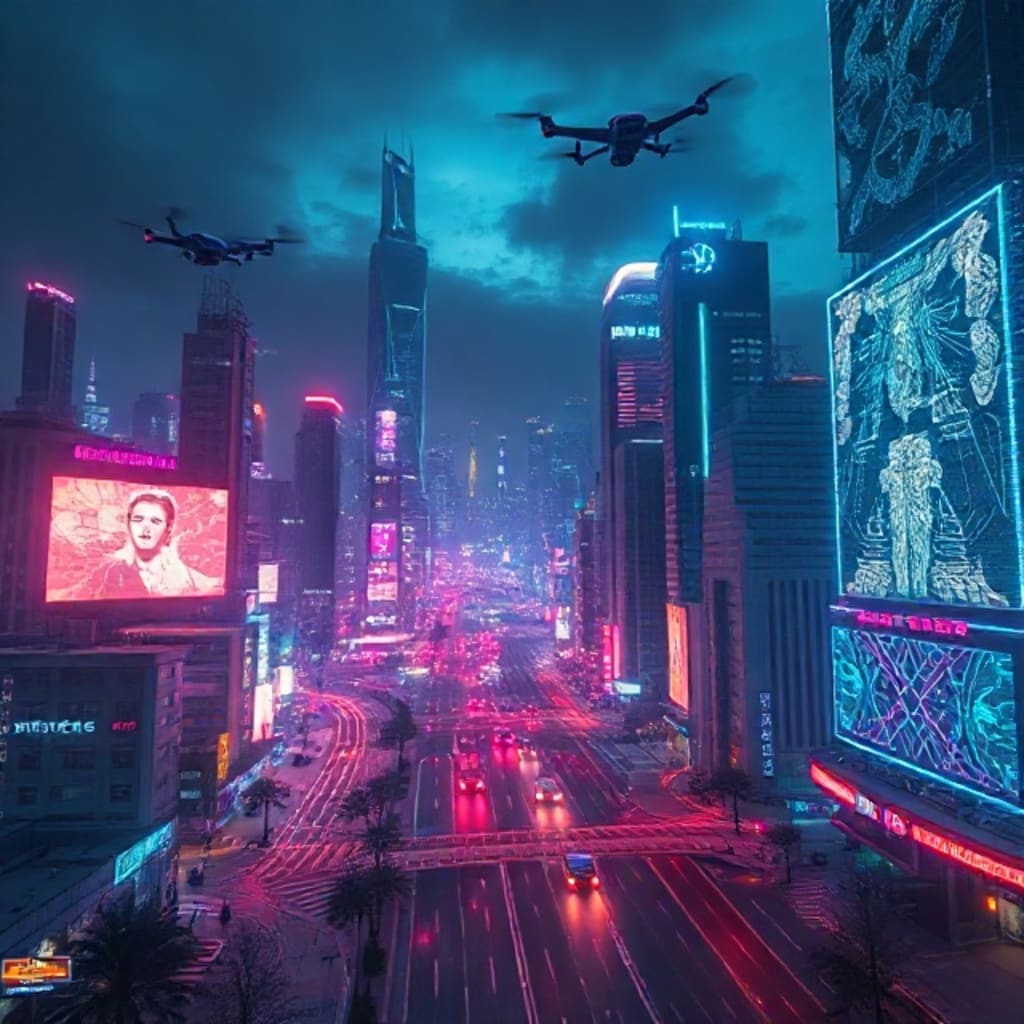
The Future of Civilization Is Changing
It’s no longer a question of if artificial intelligence will reshape society—it’s how fast. According to leading researchers, by 2035, AI won’t just assist us with work, shopping, or entertainment. It could become the invisible backbone of entire cities, nations, and even global systems.

Imagine walking through a city where:
Traffic lights adjust instantly to prevent accidents.
Medical drones deliver emergency care before ambulances arrive.
Crime is predicted and prevented before it happens.
Energy grids run with near-zero waste.
This isn’t a Hollywood movie—it’s a future many scientists believe is only a decade away.
---
The Rise of “Smart Cities”
Smart cities already exist in small ways. Places like Singapore, Dubai, and Shenzhen have begun using AI to manage:
Traffic flow.
Waste management.
Security cameras.
Public transport.
But what’s coming next is far more ambitious: entire AI-governed ecosystems. By 2035, cities could be fully automated, running with minimal human interference.
---
AI as the “Invisible Government”
Here’s the bold prediction: instead of relying on slow human bureaucracies, nations may begin using AI systems to govern directly.
Think of it like this:
Law enforcement: AI could analyze millions of data points to stop crimes before they escalate.
Healthcare: Algorithms could track disease outbreaks in real time and deploy treatments instantly.
Economy: AI could balance supply and demand, reducing inflation or shortages.
Climate control: Advanced systems could regulate energy, water, and waste on a national scale.

It sounds radical—but remember, computers already control stock markets, airplanes, and nuclear systems. The leap to running cities may not be as far away as it seems.
---
Benefits: Why AI Governance Might Work
Supporters believe AI-led cities could bring unprecedented efficiency:
Zero corruption – Machines don’t take bribes.
Instant decision-making – No waiting for endless debates in parliament.
Personalized services – AI could tailor education, healthcare, and jobs to each citizen.
Environmental balance – Energy grids could cut waste, lowering pollution.
For many, this could mean a better quality of life: fewer accidents, cleaner air, healthier citizens, and safer streets.
---
The Dark Side: What Could Go Wrong
But every dream has a shadow. Critics warn that AI-led nations could become digital dictatorships.
Surveillance states: AI could track every movement, message, and transaction.
Bias in algorithms: If AI is trained on flawed data, entire groups could be unfairly targeted.
Loss of privacy: Daily life might feel more like living under constant watch.
Human obsolescence: Millions could lose jobs as AI handles everything from teaching to law enforcement.

The big question: Who controls the AI? If governments or corporations hold the keys, the risks of abuse are enormous.
---
Real-World Experiments Already Happening
While full AI nations don’t yet exist, hints of this future are already here:
China uses AI-driven cameras and facial recognition for security and law enforcement.
Estonia has digital governance where 99% of public services are online.
Dubai has announced plans to become the first blockchain and AI-powered government.
By 2035, these small steps could evolve into fully AI-administered societies.
---
What Life in 2035 Could Look Like
Close your eyes and picture 2035:
You wake up in a smart home that knows your schedule, diet, and health needs.
A city-wide AI checks your body vitals and sends medicine if something is wrong.
Roads are filled with self-driving cars that never crash.
Work is optional, as AI automates most jobs, and citizens receive a universal basic income.
Courts are replaced by instant AI arbitration systems that resolve disputes in minutes.
It could feel like a utopia—or a digital prison. The outcome depends on how wisely humanity handles this transition.
---
Humanity’s Role in an AI Future
The truth is, no matter how advanced AI becomes, it will still reflect human choices. Whether we design it to be fair, transparent, and compassionate—or oppressive and controlling—will determine if AI nations are heaven or hell.
What’s clear is that by 2035, AI won’t just be an assistant. It will be a co-governor of humanity.
---
Why This Story Matters
This isn’t just speculation—it’s a conversation we need to have now. As technology accelerates faster than laws, ethics, and governments can keep up, we face a choice:
Shape AI into a tool of empowerment.
Or allow it to evolve into a force of control.
The decisions made in the next 10 years will shape life for generations.
---
SEO Keywords 🚀
AI cities 2035, Artificial intelligence future governance, AI nations, Smart cities future, AI-powered government, Elon Musk AI predictions, AI in society, future of AI and humans, cities run by AI, digital governance 2035.
---
About the Creator
Muhammad Riaz
- Writer. Thinker. Storyteller. I’m Muhammad Riaz, sharing honest stories that inspire, reflect, and connect. Writing about life, society, and ideas that matter. Let’s grow through words.
Keep reading
More stories from Muhammad Riaz and writers in Futurism and other communities.
Why Does Elon Musk Walk So Fast? The Mystery Behind His Unstoppable Pace
Elon Musk, the tech billionaire behind Tesla, SpaceX, and Neuralink, is known for his remarkable achievements and eccentric habits. One habit that has caught the attention of many observers is his rapid walking style. Whether entering a board meeting, walking across a conference stage, or touring a factory, Musk seems to move with unmatched speed, often leaving colleagues and onlookers scrambling to keep up. But what exactly is going on with Musk’s walking pace, and could it reveal something more profound about his personality, health, or work habits?
By Muhammad Riaz6 months ago in Futurism
Why Peanut Butter Is Becoming a Staple in UK Breakfast and Snack Culture?
Peanut butter has steadily gained popularity in the United Kingdom as consumers explore convenient, nutritious, and versatile food options. Once considered a niche product, it is now widely available across supermarkets, health food stores, and online retail platforms. The spread is commonly enjoyed on toast, in smoothies, and as an ingredient in various recipes.
By deepanshu Thakurabout 23 hours ago in Futurism
AI-Based Recommendation System Market to Reach USD 34.4 Billion by 2033; Driven by Personalized Digital Experiences
The Global AI-Based Recommendation System Market is projected to increase from USD 2.8 Billion in 2023 to approximately USD 34.4 Billion by 2033, reflecting a strong CAGR of 28.5% during the forecast period from 2024 to 2033. AI-powered recommendation systems use machine learning algorithms, behavioral analytics, and predictive modeling to deliver personalized suggestions to users. These systems analyze large datasets including browsing history, purchase patterns, search queries, and user preferences to identify relevant content, products, or services. As digital platforms continue to expand globally, recommendation technologies have become essential tools for improving engagement, conversion rates, and customer satisfaction.
By Roberto Crumabout 8 hours ago in Futurism




Comments
There are no comments for this story
Be the first to respond and start the conversation.