
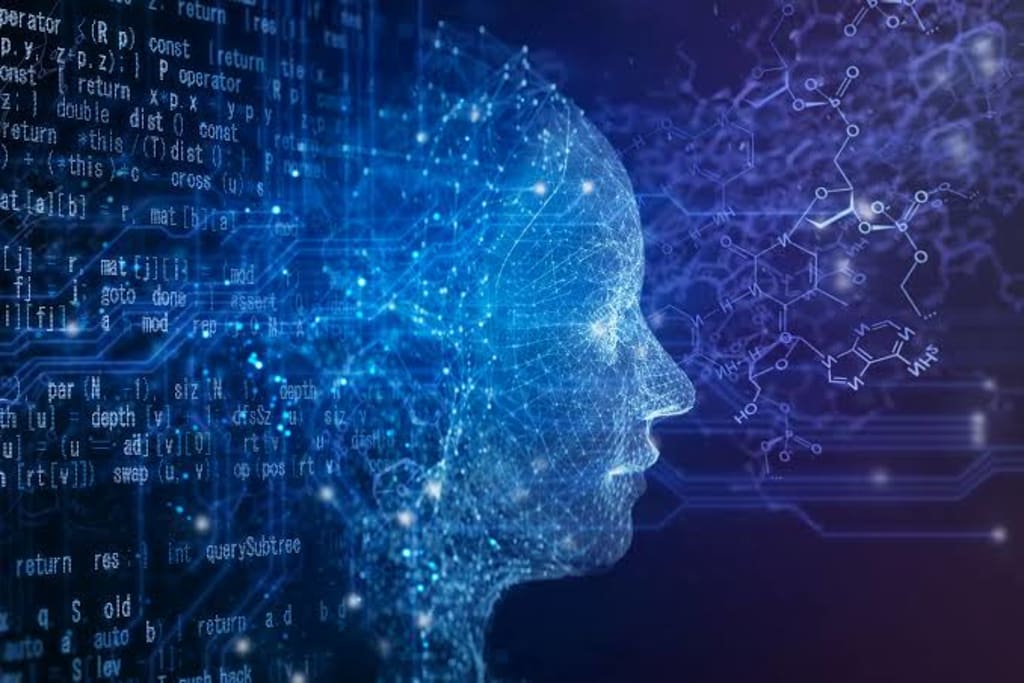
Artificial intelligence (AI) is a rapidly advancing field that has the potential to revolutionize many aspects of our lives. From self-driving cars to virtual assistants, AI is already transforming the way we interact with technology. But as AI becomes more sophisticated, it also raises important ethical and philosophical questions that challenge our understanding of what it means to be human.
At its core, AI is about using computers to perform tasks that normally require human intelligence, such as perception, reasoning, learning, and decision-making. This can be achieved through a variety of techniques, including machine learning, deep learning, and natural language processing. These approaches allow machines to analyze vast amounts of data, identify patterns, and make predictions based on what they've learned.
One of the most exciting applications of AI is in the field of healthcare. Researchers are using AI to develop new drugs, predict disease outbreaks, and even diagnose illnesses. For example, AI-powered algorithms can analyze medical images to identify signs of cancer or other diseases, potentially leading to faster and more accurate diagnoses. AI is also being used to develop personalized treatment plans based on a patient's genetic makeup, medical history, and other factors.
AI is also being used to transform the way we work. In many industries, machines are taking over tasks that were previously performed by humans. For example, AI-powered chatbots can handle customer service inquiries, while robots can perform physical tasks such as assembling products or packing boxes. While this may lead to increased efficiency and productivity, it also raises questions about the future of work and the impact of automation on employment.
One of the most fascinating aspects of AI is its ability to learn and adapt. Through machine learning, AI algorithms can analyze large datasets and identify patterns and trends that humans may miss. As these algorithms continue to learn, they can become more accurate and efficient, leading to breakthroughs in fields such as medicine, finance, and transportation.
However, this ability to learn and adapt also raises concerns about the potential for AI to develop biases or make decisions that are not in line with human values. For example, if an AI algorithm is trained on data that contains biases, such as gender or racial bias, it may make decisions that perpetuate these biases. This is a significant challenge that researchers and policymakers will need to address as AI becomes more widespread.
Another major challenge is the potential for AI to be used for malicious purposes. As AI algorithms become more powerful, they could be used to create autonomous weapons or conduct cyberattacks on a massive scale. This raises important ethical questions about the role of AI in warfare and the need for international regulations to ensure that AI is used in a responsible and ethical manner.
Finally, AI also raises fundamental philosophical questions about what it means to be human. As machines become more intelligent and capable, will they eventually surpass human intelligence? Will they develop their own consciousness and emotions? These are complex questions that challenge our understanding of what it means to be alive and conscious.
In conclusion, AI is a rapidly advancing field with the potential to transform many aspects of our lives. From healthcare to the workplace, AI is already making an impact and is likely to become even more widespread in the coming years. However, as AI becomes more sophisticated, it also raises important ethical and philosophical questions that we must grapple with. By addressing these challenges, we can ensure that AI is used in a responsible and ethical manner that benefits society as a whole
About the Creator
Keep reading
More stories from Muhammad Moosa and writers in Futurism and other communities.
Nature we marginalized
It's simple to overlook the significance of nature in our lives in the fast-paced, technologically-driven society we live in today. We spend the majority of our time indoors, engrossed in screens, and cut off from the outside environment. However, studies have demonstrated that spending time in nature may provide a variety of advantages for our physical, mental, and emotional health.
By Muhammad Moosa3 years ago in Earth
About Binding Prometheus
I want to start actively advocating on behalf of my own work, and the most valuable part of my canon is, without a doubt, Binding Prometheus, the play I have been working on since 2019 and only finished in 2023 as part of my MA. The play itself is an amalgamation of a million different inspirations. On one end, it evokes the Ancient Greek myth-play, deriving its own title from the earliest extant work of Western drama we have, Aeschylus’s Prometheus Bound. On the other end, it borrows significantly from the sci-fi bulwarks from over the years, namely Mary Shelley’s Frankenstein and Karel Capek’s Rossum’s Universal Robots. The play could be an episode of Black Mirror, I fear. I don’t know. I’ve only ever seen one episode of Black Mirror.
By Steven Christopher McKnight25 days ago in Futurism
Fraud Detection and Prevention Market: Behavioral Biometrics, Anomaly Detection & Advanced Analytics
According to IMARC Group's latest research publication, global fraud detection and prevention market size reached USD 42.8 Billion in 2024. Looking forward, IMARC Group expects the market to reach USD 260.1 Billion by 2033, exhibiting a growth rate (CAGR) of 20.42% during 2025-2033.
By sujeet. imarcgroup6 days ago in Futurism
📢 Raise Your Voice Thread: 01/22/2026
Our “Raise Your Voice Threads” are hosted most alternating Thursdays at 12PM ET to offer creators more avenues to uncover exceptional stories on Vocal. As we are continuously searching for fresh creators and inspiring stories, this thread provides an opportunity to exchange and discuss the stories that have moved and motivated us on Vocal.
By Raise Your Voice by Vocal4 days ago in Resources



Comments
There are no comments for this story
Be the first to respond and start the conversation.