
AI and the Future Ahead
How AI is going to affect the future?

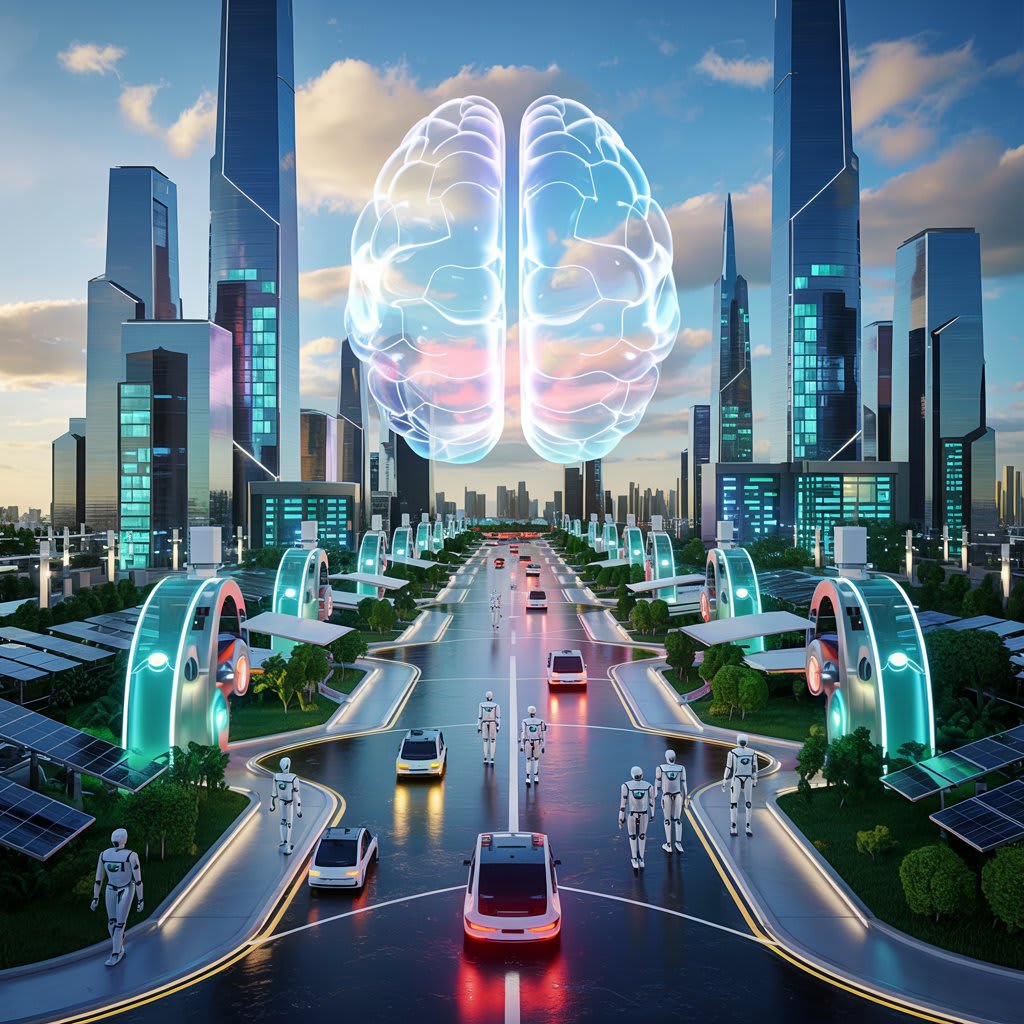
AI and the Future Ahead: Shaping Tomorrow with Intelligent Innovation
Artificial Intelligence (AI) has rapidly evolved from a science fiction concept to an integral part of our everyday lives. From voice assistants like Siri and Alexa to autonomous vehicles and AI-powered medical diagnostics, the impact of AI is already being felt across every industry. However, the future of AI promises even more transformative changes that will redefine how we work, live, and interact with the world. As we move forward into an increasingly automated and intelligent future, understanding the potential and the challenges that AI presents will be crucial in shaping the world ahead.
The Current State of AI
Before looking at the future, it’s important to understand where AI stands today. AI can be broadly categorized into two types: narrow (or weak) AI and general (or strong) AI. Narrow AI is designed to perform a specific task, such as recognizing faces in photos or recommending products based on past purchases. General AI, on the other hand, would possess the ability to perform any cognitive task that a human can do — something that has not yet been achieved.
Currently, narrow AI systems dominate the landscape, and they are embedded in everything from healthcare to finance to entertainment. In healthcare, AI models help doctors diagnose diseases more accurately. In finance, AI is used to predict stock prices, detect fraud, and automate trading. In entertainment, streaming platforms like Netflix and Spotify leverage AI algorithms to personalize content for users.
The Vision for AI’s Future
Looking ahead, AI is poised to move beyond its current applications and play an even more significant role in shaping the future. While the full realization of general AI may still be decades away, the progress made so far points to a world where intelligent machines will be capable of taking on increasingly complex tasks. This will not only enhance productivity but also lead to groundbreaking advancements in various fields.
1. Work and Employment: A New Era of Automation
One of the most significant ways AI will impact the future is in the workforce. Automation powered by AI will revolutionize industries by streamlining processes, reducing costs, and eliminating mundane tasks. In manufacturing, for instance, robots already assemble products with remarkable precision and efficiency, and this trend will continue to expand. However, the automation of even more complex tasks could lead to job displacement for millions of workers. While AI can handle repetitive and time-consuming tasks, humans will still be needed for creative, strategic, and emotional intelligence-driven roles.
The challenge, however, lies in managing this transition. As AI eliminates some jobs, it will also create new ones. For example, the rise of AI technology will increase demand for data scientists, AI trainers, ethicists, and maintenance engineers. Upskilling and reskilling programs will become essential to equip the workforce for these new roles. Governments and businesses will need to invest in educational systems that prepare workers for an AI-driven economy.
2. Healthcare: Precision Medicine and AI-driven Diagnostics
The future of AI in healthcare holds immense promise. AI systems are already showing great potential in diagnosing diseases, analyzing medical images, and predicting patient outcomes. However, as AI technologies advance, they will enable a more personalized and precise approach to medicine.
In the near future, AI algorithms will be capable of analyzing genetic information, lifestyle factors, and medical history to provide tailored treatment plans for individuals. These personalized therapies will increase the effectiveness of treatments and reduce side effects. Additionally, AI could play a critical role in discovering new drugs and treatments at an accelerated pace, by simulating various chemical interactions and predicting the effectiveness of new compounds.
3. Education: Personalized Learning for Every Student
The education sector is also on the brink of a major transformation due to AI. With AI-powered tools, educators will be able to offer more personalized learning experiences for students. AI can assess each student’s strengths, weaknesses, and learning styles, adapting educational content to suit individual needs. This could bridge the gap between students who require additional support and those who are ahead of the curve.
Moreover, AI could also assist in administrative tasks, such as grading and student assessments, enabling teachers to focus more on instruction. Virtual classrooms and online tutoring powered by AI will make education more accessible and affordable, especially in remote or underserved areas. The future of education will likely involve a blend of human interaction and AI-powered assistance, optimizing both teaching and learning.
4. Transportation: The Age of Autonomous Vehicles
AI’s impact on transportation will likely be one of the most visible and profound changes in the coming decades. Autonomous vehicles, powered by AI, have already started testing on public roads, and while widespread adoption is still some years away, the future promises a world where self-driving cars, buses, and trucks are commonplace.
The benefits of autonomous vehicles are clear: fewer accidents, reduced traffic congestion, and enhanced mobility for individuals who cannot drive. Moreover, self-driving trucks could revolutionize logistics and supply chain management, cutting costs and delivery times. Cities will be transformed as AI-powered transportation systems make commuting faster and more efficient.
However, the road to full autonomy is not without challenges. Legal, ethical, and technological hurdles must be overcome to ensure the safety and reliability of autonomous vehicles. Additionally, the rise of autonomous vehicles will require new infrastructure, such as smart roads and AI-powered traffic management systems.
5. Ethics and Governance: Balancing Innovation and Responsibility
As AI continues to evolve, it will present complex ethical dilemmas that will need careful consideration. Issues such as data privacy, algorithmic bias, and AI's potential role in decision-making (e.g., in criminal justice or hiring) will require robust frameworks and regulations.
Governments, businesses, and researchers must work together to establish ethical guidelines for AI development and deployment. Transparency in how AI systems make decisions, along with mechanisms for accountability, will be essential to ensure that AI is used for the benefit of all. The potential for AI to exacerbate social inequalities — if left unchecked — underscores the need for inclusive policies that ensure AI's benefits are shared equitably.
The Role of Humans in an AI-Powered Future
Despite the rapid rise of AI, it’s crucial to remember that humans will always play an essential role in guiding and shaping the future of technology. While AI can assist with decision-making and automate repetitive tasks, it cannot replicate human creativity, emotional intelligence, or ethical reasoning.
In the future, human-AI collaboration will become increasingly important. By combining the strengths of both, we can solve complex problems and tackle challenges that were previously beyond our reach. The key to this collaboration will be developing AI systems that complement human abilities rather than replace them.
Conclusion: Embracing a Future with AI
The future of AI is both exciting and daunting. From transforming industries and healthcare to revolutionizing education and transportation, AI holds the promise of a smarter, more efficient world. However, as we move forward, we must be mindful of the ethical implications and challenges that come with such profound changes.
AI is not a distant dream but a present-day reality that will continue to evolve. The future ahead offers boundless possibilities, and how we navigate this landscape will determine whether AI’s impact is for the greater good of humanity. By embracing innovation responsibly, we can unlock the true potential of AI, shaping a future that is not only intelligent but also just, inclusive, and human-centered.
About the Creator
Inam Ullah
Tech enthusiast exploring AI, web development, and business innovation. Join me as we navigate the future of technology, learning and growing together to shape a smarter, more efficient world. Let's innovate!
Keep reading
More stories from writers in Futurism and other communities.
Plant-Based Food Market: How AI and Innovation Are Shaping the Future of Sustainable Nutrition
Introduction The global food industry is undergoing a significant transformation as consumers shift toward healthier and more sustainable dietary choices. One of the most prominent trends emerging from this shift is the growing popularity of plant-based foods. These products are derived entirely from plant sources such as soy, peas, almonds, oats, coconut, and other plant ingredients, offering alternatives to traditional animal-based products.
By James Smith7 days ago in Futurism
Automotive Adhesives Market Outlook: Lightweight Vehicle Manufacturing and Advanced Bonding Growth Opportunities
According to IMARC Group's latest research publication, The global automotive adhesives market size reached USD 6.4 Billion in 2024. Looking forward, the market is expected to reach USD 13.5 Billion by 2033, exhibiting a growth rate (CAGR) of 4.3% during 2025-2033.
By James Whitmanabout 2 hours ago in Futurism



Comments
There are no comments for this story
Be the first to respond and start the conversation.