
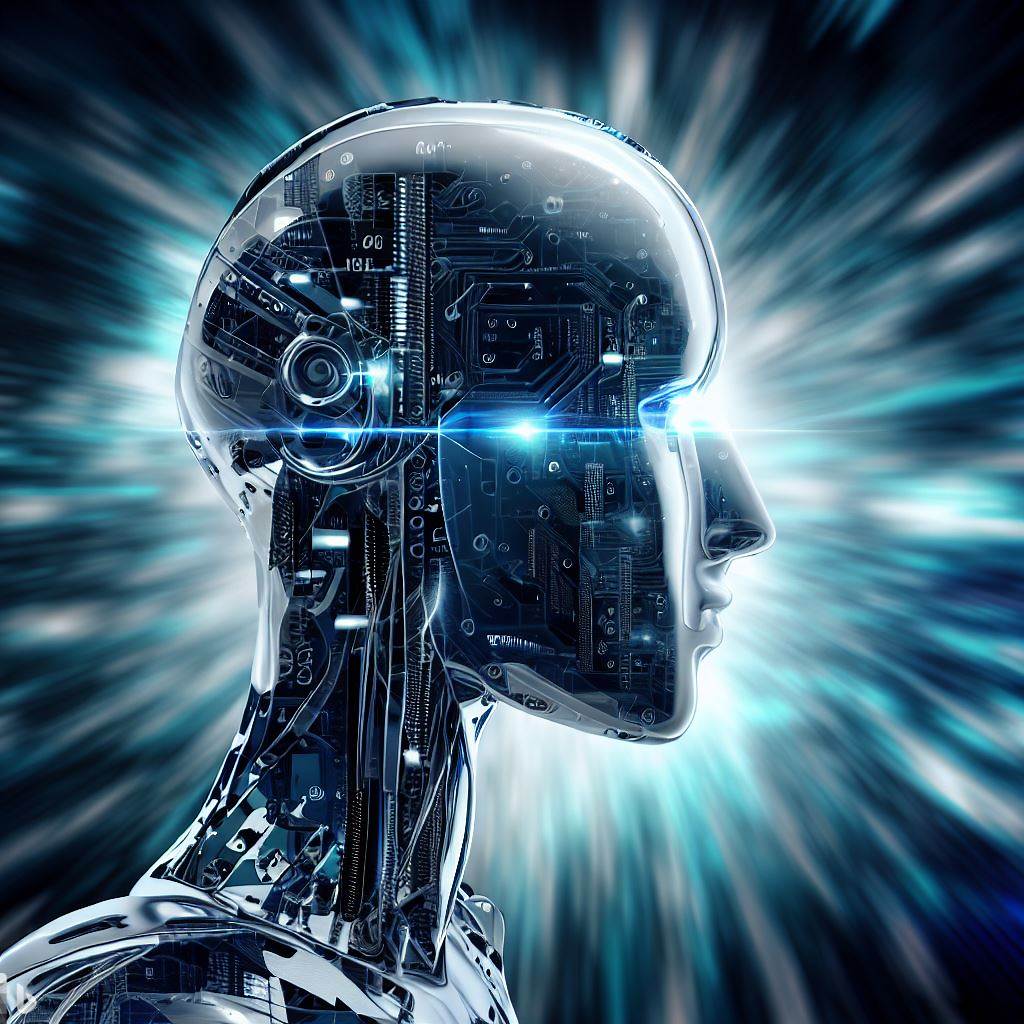
Times have immensely changed. The place where we used to see numerous workers performing a certain job is now seen with one worker and a gadget. It is not only a gadget but something which can even challenge a human brain. Yes, I am definitely talking about Artificial Intelligence. In the recent years, AI has taken control over this fast-paced world and now a vast majority of people cannot even think of doing their day-to-day tasks without the use of Artificial Intelligence. Increasing efficiency, highlighting climate changes, detecting disease outbreaks and managing time are all what are possible with the application of AI.
The invention of AI has increased the productivity and efficiency of industries to several folds. It can perform tasks in a very short period of time as compared to humans who first strain their brain for some time and then finally act. Also, AI is replacing the need for large number of workers in a factory and ultimately, industries are able to overcome the problem of overcrowding and focus on their production. According to a recent study by Accenture, businesses that invest in AI and other intelligent technologies could increase their productivity by up to 40%.
Not only AI has affected productivity but at the same time, it can also help in detecting climate changes in the following ways:
1. Climate prediction: AI can process vast amounts of data to make more accurate climate predictions. This can be used to develop more effective strategies for mitigating the effects of climate change.
2. Renewable energy optimization: AI can be used to optimize renewable energy systems such as wind and solar power. This can help to increase overall efficiency and reduce reliance on fossil fuels.
3. Carbon capture and utilization: AI can be used to optimize carbon capture and utilization technologies, which can help to reduce carbon dioxide emissions.
Regarding disease outbreaks, AI could help in the following ways:
1. Early outbreak detection: AI models can analyze data from healthcare facilities and social media to detect disease outbreaks earlier than traditional methods, enabling early intervention and control.
2. Vaccine development: AI can help scientists identify new targets for vaccines by analyzing large sets of biological data such as genomic data.
3. Diagnosis and treatment: AI can help to improve diagnosis and treatment for diseases by analyzing medical images and clinical data, resulting in faster and more accurate identification of diseases and personalized treatments.
Recently, Sundar Pirchai, the CEO of google demonstrated new advancements in Artificial Intelligence. Using the utmost ability of AI, users will be able to have a look at their route before travelling. So, having a look at the surroundings of a road have become a real possibility. In addition to the experience of the route, checking traffic and weather conditions will also become feasible in the near future as soon as Google releases its new update.
However, there is no denying in the fact that AI can result in dire consequences. Firstly, AI eliminates the need of more workers so this leads to a reduction in employment opportunities. Secondly, AI will create an economic bridge between the people as AI technologies are expensive and everyone cannot think of buying them. Lastly, AI also raises serious ethical concerns. For example, if an AI system is used to make decisions with significant consequences, such as hiring or criminal sentencing, there is the potential for bias or discrimination if the algorithm is not properly designed and trained.
By throwing light on these facts, we come to a conclusion that AI can mean the world to us only if it is implemented in an ethical and responsible way.
About the Creator
Keep reading
More stories from writers in Futurism and other communities.
About Binding Prometheus
I want to start actively advocating on behalf of my own work, and the most valuable part of my canon is, without a doubt, Binding Prometheus, the play I have been working on since 2019 and only finished in 2023 as part of my MA. The play itself is an amalgamation of a million different inspirations. On one end, it evokes the Ancient Greek myth-play, deriving its own title from the earliest extant work of Western drama we have, Aeschylus’s Prometheus Bound. On the other end, it borrows significantly from the sci-fi bulwarks from over the years, namely Mary Shelley’s Frankenstein and Karel Capek’s Rossum’s Universal Robots. The play could be an episode of Black Mirror, I fear. I don’t know. I’ve only ever seen one episode of Black Mirror.
By Steven Christopher McKnightabout a month ago in Futurism


Comments
There are no comments for this story
Be the first to respond and start the conversation.