
A Sustainable Future World 2050
Imagining a Greener Tomorrow


As we look toward the future, it is important to consider the impact that our current actions will have on the world we will leave for future generations. With the pressing need for a sustainable energy future, it is crucial to imagine what a sustainable world in 2050 might look like. In this blog post, we will explore what a sustainable future world in 2050 might look like and the steps we can take to make this vision a reality.
A World Powered by Renewable Energy

In a sustainable future world of 2050, renewable energy sources such as solar, wind, hydro, and geothermal will be the primary sources of energy, providing clean and efficient energy for homes, businesses, and industry. The use of fossil fuels will be greatly reduced, leading to a significant reduction in greenhouse gas emissions and improved air quality.
A Circular Economy

In a sustainable future world of 2050, waste will be reduced and resources will be reused and recycled, reducing the demand for new materials and preserving the world's finite resources. The concept of a circular economy, where waste is minimized and resources are used efficiently, will be at the heart of economic activity.
Sustainable Cities

In a sustainable future world of 2050, cities will be designed to be sustainable, with green spaces, energy-efficient buildings, and clean transportation systems. The use of electric vehicles and public transportation will be widespread, reducing the need for personal cars and improving air quality. The focus will be on creating liveable and sustainable cities that prioritize the well-being of their residents.
Innovative Agriculture

In a sustainable future world of 2050, agriculture will be sustainable, with practices that promote soil health, reduce waste, and conserve water. Innovative technologies, such as vertical farming and precision agriculture, will be widely used, increasing food production while reducing the environmental impact of agriculture.
The Benefits of Renewable Energy
Renewable energy offers numerous benefits over traditional energy sources. Firstly, renewable energy is clean and does not emit harmful greenhouse gases, reducing the impact of energy production on the environment. Secondly, renewable energy is more cost-effective than traditional energy sources, with the cost of renewable energy technologies continuing to fall. Finally, renewable energy sources are domestically available and provide energy independence, reducing reliance on foreign energy sources.
The Challenges of Renewable Energy Adoption
Despite the numerous benefits of renewable energy, the transition to a sustainable energy future is not without challenges. The most significant challenge is the cost of renewable energy technologies, which can be prohibitively expensive for many countries. Additionally, renewable energy sources are dependent on weather conditions and may not always be available when needed. Finally, there is a need for significant investment in renewable energy infrastructure and the development of energy storage technologies to ensure a reliable supply of renewable energy.
The Role of Governments and Businesses
Governments and businesses will play a crucial role in shaping a sustainable future world in 2050. Governments will set ambitious targets for reducing greenhouse gas emissions, promoting renewable energy, and conserving resources. Businesses will adopt sustainable practices, invest in renewable energy and develop innovative technologies to reduce waste and improve efficiency.
Conclusion
A sustainable future world of 2050 is an achievable vision that requires action from governments, businesses, and individuals. By investing in renewable energy, promoting sustainable practices, and reducing waste, we can create a cleaner, more sustainable world for future generations. As we look towards the future, let us imagine a greener tomorrow and take the steps necessary to make this vision a reality.
About the Creator
Keep reading
More stories from Tamizhselvan Munuswamy and writers in Futurism and other communities.
Groningen: A Dutch City on the Rise
Discovering Groningen: The Dutch City with a Rich Cultural Heritage Nestled in the northern region of the Netherlands, the city of Groningen is a hidden gem, brimming with history, culture, and modern sophistication. With its charming canals, historic buildings, and vibrant student population, Groningen is a city that has something to offer for everyone. In this blog post, we will explore what makes Groningen one of the most unique and interesting cities in the Netherlands.
By Tamizhselvan Munuswamy3 years ago in Earth
Australia Steel Market: Infrastructure Development, Mining Demand & Manufacturing Growth
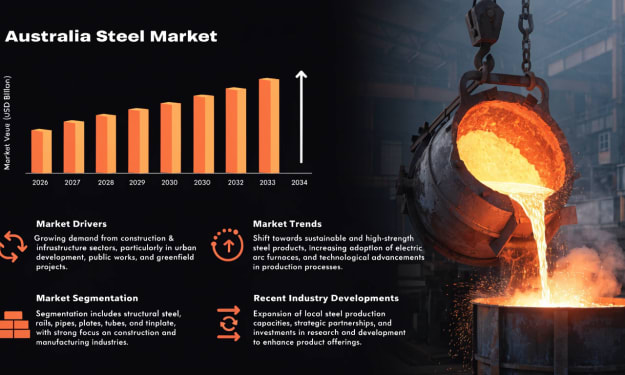
According to IMARC Group, the Australia steel market reached USD 20.1 Billion in 2025 and is projected to grow to USD 26.2 Billion by 2034, exhibiting a compound annual growth rate (CAGR) of 2.91% during 2026–2034. Steel remains one of the most essential materials supporting economic development in Australia. Its widespread applications across construction, mining, transportation, and manufacturing sectors make it a critical component of the country’s industrial ecosystem. Large-scale infrastructure development, expansion in mining operations, and rising domestic manufacturing activity are strengthening Australia steel market share. Additionally, government investments in renewable energy infrastructure and transport modernization projects are further increasing demand for advanced steel products.
By Kevin Cooperabout 9 hours ago in Futurism
Nano Banana 2: Google DeepMind Combines Pro-Level Intelligence With Flash-Speed Image Generation
On February 26, 2026, Google DeepMind announced the launch of Nano Banana 2, officially branded as Gemini 3.1 Flash Image, its latest image generation model. The company describes the release as a convergence of two previously distinct capabilities: the advanced reasoning and visual quality found in Nano Banana Pro, and the rapid, iteration-friendly performance of Gemini Flash.
By Behind the Tech6 days ago in Futurism



Comments
There are no comments for this story
Be the first to respond and start the conversation.