
A Silent Tomorrow
Sometimes the future doesn’t feel like progress

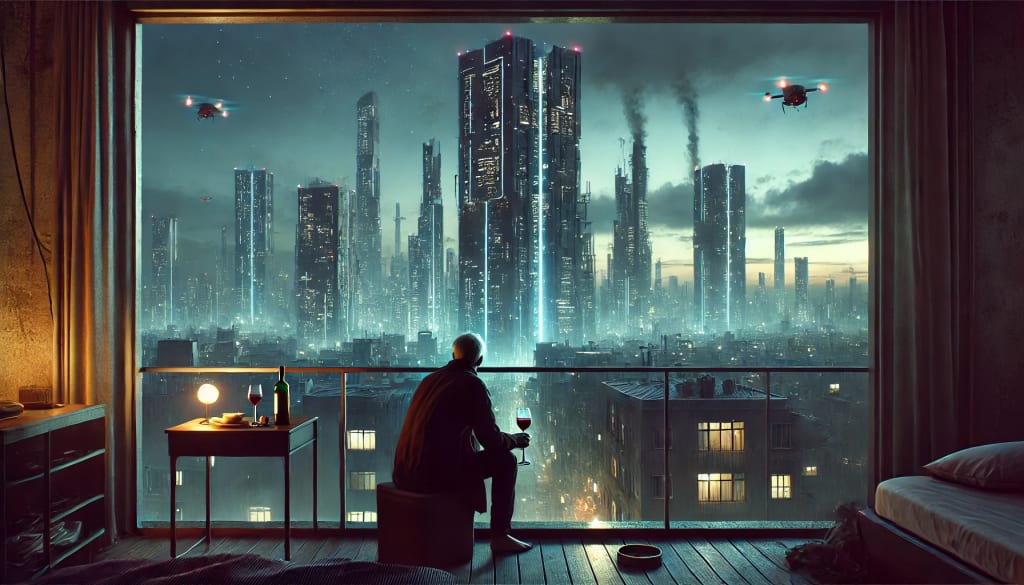
It’s the year 2075, and silence is all I’ve known for years. My ears stopped hearing long ago, a side effect of an implant that was supposed to improve my health but failed miserably. Now, all I have is the quiet and the dim glow of the city outside my window.
I live in a small apartment in what used to be called a bustling metropolis. The streets are still crowded, but the people aren’t the same. They don’t look up from their holographic interfaces, their faces washed in blue light. Conversations happen through text or augmented reality overlays, and voices are rare. Maybe I wouldn’t feel so lonely if people still talked out loud.
My days are predictable. I wake up to the synthetic sunlight from the automated blinds, brew a cup of nutrient-rich coffee, and stare out the window for longer than I care to admit. The cityscape is a strange blend of decay and innovation. Skyscrapers built decades ago now lean against sleek, self-repairing towers. The sky is dotted with drones carrying packages and advertisements, their buzzing faintly vibrating through the glass.
Work isn’t fulfilling, but it keeps me afloat. I’m a “data sorter,” a job that barely requires me to think. The AI does the heavy lifting, and I’m just there to make sure it doesn’t glitch. It’s ironic—humans created machines to make life easier, but we’ve rendered ourselves obsolete in the process. The pay is just enough to cover my rent and the treatments I need for my deteriorating health.
The treatments are costly, though they’ve advanced considerably since I was young. Pills have been replaced by nanobots, tiny machines that repair damaged cells and organs. They’re efficient, but they don’t work forever. The body always finds a way to resist, and I’ve started to feel the strain. My knees ache, my hands tremble, and my vision is fading.
I haven’t seen my family in over a decade. My sister lives in another city, one of the floating ones built over the oceans to combat rising sea levels. She says it’s beautiful, but I wouldn’t know. We stopped talking after a fight about something I can’t even remember. Our parents passed years ago, victims of a new strain of flu that swept through the population faster than anyone could react.
The loneliness is suffocating. I’ve tried to connect with others, but it feels impossible. Social interactions are awkward when you can’t hear, and most people would rather interact with their virtual assistants than with me. I used to have a cat, a scrappy little thing I found on the street, but he died five years ago. I still keep his collar on my nightstand, a tiny piece of comfort in a world that feels increasingly alien.
Tonight, like most nights, I sit on my balcony with a glass of cheap synthetic wine. The stars are barely visible through the haze of pollution and artificial light. I stare at the distant horizon, where the old city meets the new, and wonder how we ended up here. Progress, they call it. But what’s the point of progress if it leaves people like me behind?
I finish my drink and go back inside. The silence is deafening, but I’m used to it. As I lie in bed, staring at the ceiling, I remind myself of the promises I made at the start of this year. To reach out to my sister. To find some way, any way, to feel connected again. Tomorrow, I tell myself. Tomorrow I’ll try.
About the Creator
Keep reading
More stories from Anthony Scott and writers in Futurism and other communities.
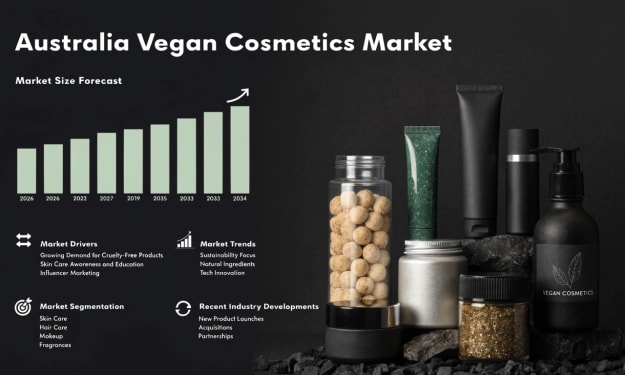
Australia Vegan Cosmetics Market: Ethical Consumerism, Product Innovation & Retail Growth
According to IMARC Group, the Australia vegan cosmetics market reached USD 552.7 Million in 2025 and is projected to grow to USD 1,073.0 Million by 2034, exhibiting a compound annual growth rate (CAGR) of 7.42% during 2026–2034. The market’s robust expansion reflects the rapid rise of ethical consumerism and clean beauty awareness across Australia. Increasing adoption of vegan lifestyles, heightened demand for ingredient transparency, and growing environmental consciousness are reshaping purchasing decisions. With innovation in plant-based formulations and strong digital retail growth, Australia vegan cosmetics market share continues to strengthen within the broader beauty and personal care industry.
By Shrestha Roy5 days ago in Futurism
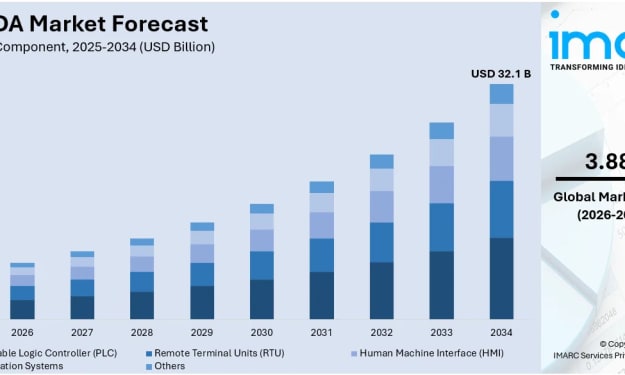
SCADA Market Trends: Smart Manufacturing Shift, Edge Computing Integration & Forecast to 2034
Rising demand for industrial automation, the rapid integration of the Industrial Internet of Things (IIoT), and the increasing need for real-time data monitoring across critical infrastructure are driving the SCADA market growth. These systems are becoming essential for optimizing operations in the oil and gas, power generation, and water management sectors, where reducing downtime and increasing efficiency are top priorities. According to IMARC Group’s latest data, the global SCADA market size was valued at USD 22.8 Billion in 2025. Looking forward, IMARC Group estimates the market to reach USD 32.1 Billion by 2034, exhibiting a CAGR of 3.88% from 2026-2034.
By Andrew Sullivan5 days ago in Futurism


Comments (1)
A nice start to a story that has possibilities for an extension. Very well written