

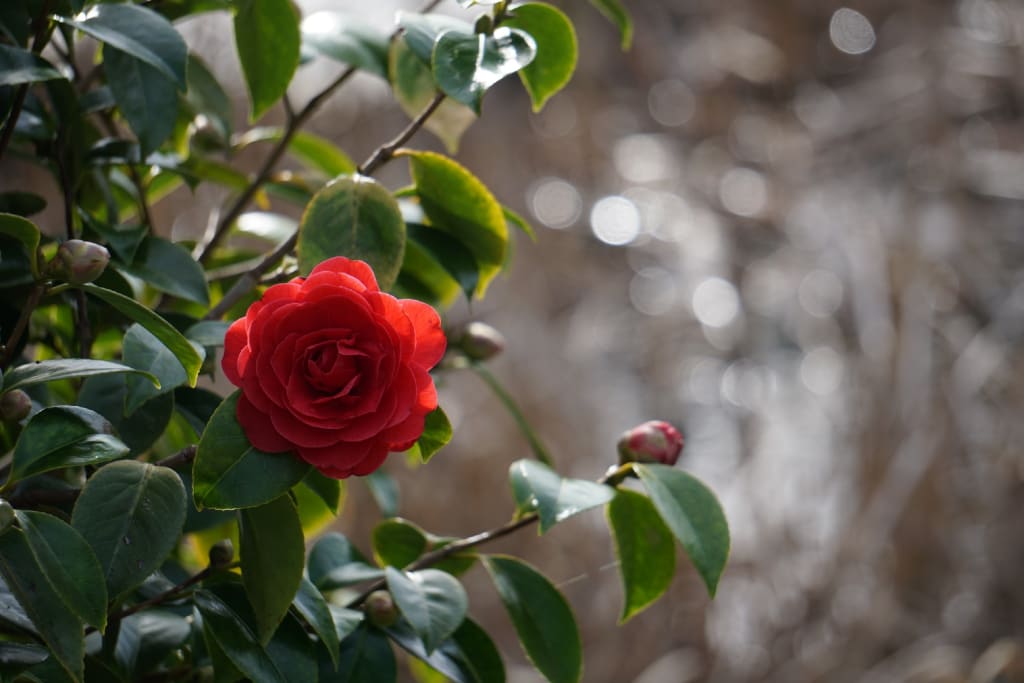
“The heart, like an empty canvas or a blank page, is a waiting to be filled with the desires that only dreams can inspire. A word of caution however, Dreamers, like the ever changing seas, may find their ship safely in port or dashed upon the rocks.”
- Quoted by an old aquaintance -
Through the streets of Vienna there wandered a certain young fellow alleged to be a Prince of Lovers—such was his jest, loves unrelenting quest—but for that he was no king.
It happened upon one day, as he was enroute to the nearest tavern, he discovered sitting by the bank of the Danube River a lovely French painter. She was of that rare breed of woman granted all the wonderful qualities of intelligence, beauty, and charm. Her face, as smooth and pale as a pearl washed many years by the sea; her subtle blue eyes, akin to those gentle waters of the Mediterranean. Her long silken hair, adorned into a lovely braid, resembled golden fields of twilight upon a midsummer’s eve. Her voice held soft, dulcet tones like those that are plucked from the strings of a harp or played upon the heart like that of operatic symphony. He knew he must acquaint himself, lest another worthy fellow, lured by her charms, bore her away from him without so much as knowing her name.
Having harnessed a fondness for her, the young man would bring her flowers of a rare and wild variety—which she would accept askance—and incite lovely verse while serenading her with his mandolin.
Having secrets of her own, her distrust was of no wonder, for at a very young age she had escaped incognito from the corruption of the French government shortly before the commencement of the Revolution. Thrown into this arduous existence, she became very cautious of the world around her. Nonetheless she carried on and used her gifts to sustain a livelihood that would one day establish a name for her in the world of aspiring minds. She paid him little mind, even though he tried without refrain to impress her, vesting himself a Renaissance Idealist. He told her his great admiration for medieval Parisian architecture had led him to study the arts, and therefore he had learned his trade.
Now the appearance of this gallivant was not far from that of a merry hero out of a story book, possessing the stature and courtliness of a medieval knight; well formed and chiseled features, wavy locks of strawberry gold, and sparkling blue eyes. While his manner was by no means the humble, princely type, but lewd and gregarious, if not slightly conceited. He was quite crafty with words, bold and daring when it came to a challenge. His vestments, though little attire he owned, consisted mainly of wide lapelled brocade jackets, laced collars, and tight cuffed billow sleeved shirts. Pinned upon his breast was an embroidered patch of scarlet with the insignia of a writing quill above the inscription Poeta Corde or Poet at Heart.
Try as he may for the young maiden’s heart she not was encouraged by his demeanor. In truth he was but a poor, impoverish poet, of a middle class family, who had exhausted his small inheritance on gambling and drink. So, furthering in his charade he sought out an old friend.
The young poet called on him one afternoon, while he was engaged in deep contemplation. His tall, slightly stooping form, hunched broodingly over his work, as if willing the image depicted in his mind onto the canvas. A curious rap on the front door broke his concentration. Thwarted by the distraction he stood up and shouted through the open window of his studio. “I’m busy. Please go away!”
The poet ignored this order and barged in unannounced. Without a word of greeting he seated himself in the chair his friend had previously occupied, crossing one leg over the other. By force of habit he retrieved a small pewter box from out of his breast pocket and took a pinch of snuff. Thus he concluded, inhaling a good whiff of the fine brown powder, and placed it back in his pocket.
Finally he said, “Define beauty and generously will I pay you for it.”
The artist, baffled by this sudden intrusion, asked what he had meant, but the poet spoke no more on the matter, only exhaled rather noisily and loitered listlessly about the apartment. As ridiculous as such a request may have appeared it was not wise to let money slip through ones fingers. Therefore he agreed. Throwing over himself a long embroidered coat and plumed hat, he set off in search of a subject.
He soon found her, a maiden like no other, who possessed the appealing qualities of a baroness, the elegant radiance of a Greek Goddess. Through his mind’s eye he depicted Venus waking from her slumber, arms outstretched, a veil of golden hair draped over her slender shoulders.
“Oh Beautiful and Devine One I worship the very ground thou walkest upon!” he called aloud to her from across the avenue.
She turned around somewhat bewildered by this stranger’s remark. “Pardon, Monsieur, but were you speaking to me?” she asked with a questioning gaze.
“Aye!” He nodded, observing her. With trembling lips, he approached and asked if she would grant him the pleasure of posing before him at his studio. She was a slightly unnerved, if not a little esteemed, by this sudden show of audacity and asked, “Who are you to request such attentions from a lady? I do not know whether to take your inquiry as a compliment or a rather inappropriate gesture.”
“I meant not to offend mademoiselle,” he said, “but I must mention that while I have been commissioned to define beauty I find you to be a perfect rendition.”
“I take it by your inquiry that you are a painter?” she asked enlivened with curiosity. Gratified by this unusual request she revealed that she too was an artist.
He acknowledged her inquest with an incline of the head, removing his hat. She held out her hand to him. “Now, that makes quite a difference. Well met Monsieur—?”
He received it in his and kissed it. “Raphael La Dilettante and what lovely name shall I dub thee mademoiselle?” said he, alluding to the warmth of her tender hand.
She giggled disregarding his question, concealing her face within the shroud of her hair. “Why Monsieur I am quite astonished that we have never met before today. Yes, by all means show me to your studio.”
For several weeks she stood in his company while he painted her genuine form. His masterpiece, so rightfully named, Venus at her Easel, captured the maiden in all her splendor partaking in what she loved most, while mythical Cupid posed before his mother’s canvas—the Immortalized and radiant daughter of Jove. She was speechless when Monsieur Dilettante granted her the privilege to see it and greeted her approval with a kiss upon the cheek to demonstrate her evaluation of the finished piece. Before they parted she told him that she would prefer if her name remained anonymous. And such a pretty name it was that he wouldn’t have told a soul for the world, even if the devil himself had appeared and demanded it.
He found a great deal of pride in his work and a newly discovered admiration for the maiden whom had inspired him. After a time he wrapped it up and called on his friend the poet. The young man gave him compensation for the priceless piece, but from where did he obtain that coin it is unlikely anyone will ever know.
“Shall you unwrap it and see the definition of beauty I sought for?” asked Raphael, longing to catch one last glimpse of his Love, before she was gone from his life forever.
The young man declined and explained that he wished to view it within the private quarters of his apartment with a most personal friend, who was a collector of rare and famous works of art and promised to make Monsieur Dilettante’s name well known throughout Europe for his spectacular hand.
To this end Raphael was quite skeptical. But he was neither wealthy nor well-to-do and so had no choice but to accept payment, continuing in his own endeavors, in an attempt to forget her, whom had aroused his ambitions.
The young man left his friend and hurried to the place where he had first met the lovely maiden. She was at that moment sitting on bench near the bank of the river, perceiving an idea for her next creation. With an air of confidence he lightly tapped her on the shoulder. Having interposed upon her thoughts, she whirled around, slightly shocked at the encounter. Without a word of salutation he handed her the portrait. She was at first reluctant to take such a gift from the stranger and inquired, “What is this?”
“A gift my dear. As promised, a creation from my own canvas,” he replied haughtily, quite proud with himself.
She carefully tore off the brown paper wrapping to reveal an astonishing panorama of depth, perspective and vibrant contrast that she instantly realized was not his own. At her startled expression he was well pleased, believing he had ensnared her in his trap, until— “Where did you get this?”
“Why, my lady, I wielded that very brush with these two hands!” he justified in a self-aggrandizing way, observing his finger tips and brushing them against his blue lapel.
“Do you take me for a fool?” she said, “I find your conduct most detestable. You should be ashamed of yourself.”
“But my lady, do you not you like it?” he asked puzzled by the tone in her voice.
While his denial perturbed her, the evidence presented itself in the ugly lines which formed the creases upon her brow, temporarily distorting her pretty features. “Do I like it? Do not play dumb with me. You did not paint this—this masterpiece!”
“But I assure you—” he began to say until she handed it back to him. There was a sudden lump in his throat when he noticed that the damsel’s likeness echoed the image in the portrait.
“Take this back to your friend,” she fumed; the redness in her cheeks afflicted by the torrent of her anger. “You prove nothing by your insolence. Tell Monsieur Dilettante that your little joke was very hurtful and I wish never to see either of you again. Now be gone before I call on the guard to assist you.”
Alas, the poet knew nothing of the art. He was a singer of songs, a wooer of fair maidens. The harmony of poetry and music, accompanied by the melody of his mandolin, were his own true talents. Panged by guilt and restlessness he summoned up the courage to confront his friend. But the artist knew nothing concerning the girl only that the poets request had surmounted in him a certain longing which had compelled him to seek out a meaning to his own definition of beauty—his heart leading him to ascertain the epithet of Love herself.
Distraught the young man asked of him his talent. But to this Raphael could give no reply.
“Then I will become your apprentice and you will teach me all that you know,” the poet persisted, throwing himself at his friend’s mercy.
“I am sorry,” began the other, “but that I cannot do. Such talent is not learned in only a fortnight, it takes years to acquire. ” The young man was insistent upon the point and so Raphael betook it upon himself to teach his friend in the art of his craft.
Monsieur Dilettante admired his subject more and more every time he gazed upon her portrait. She had embodied his vision. Her anger only fueled his passion. Even though he had done nothing wrong, would she ever believe him? The remembrance of their intimate sessions in his studio strove him to seek her out with an explanation.
For days she shirked his attempts to speak with her. Having had such a terrible joke played on her she was not willing to forgive so easily. He spoke to her in earnest that he had had no intentions of harming her pride. What he had said and done he had meant with every stroke of his brush. After a time she became persuaded of his innocence.
And so every evening from that moment forth they would wander together through the streets of Vienna. They gave pause to observe the sixteenth century architecture; stone edifices of churches and music halls; the lattice stained glass windows reverberated the emanations of a organ grinder, followed by a choir of righteous fellowship; the music played from a hundred polished brass instruments while eight-hundred fingers strummed raptures, entrancing an extravagantly dressed audience garbed in all the latest fashions.
Reservations were made the following weekend for a seat at the Theater an der Wien, one of the oldest Opera houses still standing today, to watch a magnificent performance of the orchestrator Ludwig van Beethoven for his Eroica Symphony; a portrayal of the Great Napoleon Bonaparte. Fortunately that evening the Revolutionary would not be in attendance. Much comfort did this bring to his lady acquaintance whom had no desire to meet the ill tempered French General.
As the night progressed they strolled hand in hand along the Danube finding a place to rest overlooking the river. The gentle winds stirred the waters over the glass like surface of the moon while the stars danced upon the tide spellbound by far-carrying harmonies. In a moment of silent bliss they held each other’s gaze embracing as lovers do, their lips touching in momentum with the hands of time as Night retreated to her fortress in the west and the Dawn arose from her bed in the east, to welcome the Sun as he prepared to embark upon his blazing chariot across the sky.
In the interim of their passion, a certain apprentice stayed awake into the dead of night, sitting in the somber atmosphere of his master’s studio staring wide eyed at the ruined canvas before him. What slow progress he had made in those past weeks. Even with Rafael’s proper instruction his work still lacked the very essence of a true artist’s vision. Every attempt he’d made had been a grave waste of paint and effort.
From time to time he would gaze up at the waning moon in anticipation for his friends return, but when Raphael did not show the amateur painter became somewhat apprehensive. Where could he have gone to so late in the night? It was well known by many that the Prince could stay out until sunup in his pursuit for love, but Monsieur Raphael La Dilettante had always been a quiet, reserved individual who preferred the solitude of his studio to that of the company of a young lady.
His suspicions, however, led him to the conclusion that his friend had taken a lover. If the night permitted, though it were none of his affair, perhaps he’d steal into the shadows and follow him to meet his mistress at their secret rendezvous. To admire a lover’s quarrel from a distance would certainly give inspiration to the symphony that he had been composing since last month. It was written in a style of his own tastes, being somewhat inspired by the masterful German composers of the day. And to think that it had not been one of his woman friends who had inspired him to write it, but a storm. He had composed it out of sound and light, the chill of the wind and the rain as it beat down upon his brow.
Yet he could not leave for he had been entrusted to watch over the studio while his master was away. He sighed cleaning his brushes and palette. His misfortune befell that he had no talent for the art. His gift lay in the aspects of the heart and soul, the very philosophy of words, yet, ever since he had taken up a brush these thoughts had been driven far from his mind. One tragic rejection had been a near fatal blow to his love-deprived heart. No woman had ever refused him before and he was lost for an understanding as to why this one had. For the first time in years he had been cast aside. How could he endure living in discontent on account of his disgraceful actions?
In his grief he took up a quill and parchment and began to convey his sorrows onto the page. He was about to dip the pen in the ink well when he heard a curious noise outside. He sauntered to the open window and was about to close the shutter when he noticed two people embracing in the street. He would have left them to their plight, until he saw their faces aglow in the moonlight. He doused the candle and quietly waded into the shadows observing from his high place their sacred union.
They soon parted and the door to the studio opened. Dreamy eyed Monsieur Dilettante stepped inside collapsing into a chair. His soft snoring alerted the inhabitant upstairs. The young man, preferring to avoid a confrontation stole from the building.
How could his friend have betrayed him? Yet how could he have been so blind? Two artists, one had posed el natural, the other defined her, calling her very spirit to conjoin with his while he immortalized her with this ardent sense of awareness. Of course they were bound to fall in love.
He decided not to confront Raphael for it would be even against his romantic nature to interfere where matters of the heart were concerned. So, despairingly he wound his way through the dank and murky streets, expecting that at any moment to run into a band of scoundrels who would waylay him for the purse which he did not possess. The iridescent glow of the street lamps cast a dull, obscure illumination, reflecting off the black window panes of the dismal brick structures enveloping him in darkness adding to his gloom upon that solemn night.
He’d been a love-starved philanderer spending his evenings at the taverns and Inns feasting his eyes on sweet meats, tankards of ail, and wenches. And what did he mean to gain by wasting away in these houses of ill repute? He was growing weary of the fallacy of love, being in awe of that physical counterpart. For after all, what is beauty, but this outer shell surrounding the soul?
It was useless returning to the studio. While those two shared more than their fill of devotion and adoration for one another he bounded off to his desolate holding, where he would lead a lonely existence in seclusion of his mind. Between those four walls he would sit by candlelight in his study, books galore, but no life to fill the void.
He paused at a sound. In the distance he beheld a hooded figure hastening towards him. He did not see a face but heard the strangers muffled cry for him to “Get thee out of the way!” and was more than willing to oblige when two hands with the delicate force of a boys shoved him out of the road. While in passing he picked up a rather peculiar scent.
He could not help, but watch as the stranger ran the length of the street and disappeardc around the corner of a building losing two guard men in quick pursuit. They asked in what direction the thief had taken, but he only nodded that he had not seen any one, turned and followed in the footsteps of the midnight stranger.
The intoxicating aroma filled his head and his mind was set towards a new aspiration. He must track down that very thing which now inspired him above all else in this world. He traversed through the city till sunrise and found himself early morning in the harbor. Ships would frequent the port of the River Danube to load or unload cargo imported from all over the European continent. Sailors and fishermen back from any length of time out on water passed him by without so much as a gesture of good morning. He paid no heed to them though they bumped into him and began to curse at him for standing in their way. “Move aside! Out of the way!” they would shout. He simply kept moving forward till he met the end of the pier, and this is what he saw:
Stationed out in the tributary was a glorious vessel of such design and magnitude, that it could have been crafted by the very gods themselves. She glistened like Indian brass upon the silver swells and appeared almost surreal as if he could have picked her up between his thumb and forefinger and carefully placed her in inside a glass bottle.
Mesmerized, he tarried there for sometime captivated by her majesty, that in this dream-like state, he did not hear someone shouting above the docks for him to “Look out!”
Before he had time to react he was thrown over the edge of the pier into the turbid waters that would soon engulf him. He was indeed lucky that one of the projectiles, a loose wooden barrel, had not hit him on the head as he went over.
He sputtered to relieve the water from his nose and struggled for air. His eyes stung, limbs ached and he did not know how to swim. He was all of a sudden caught by an illusion of St. Elmo’s Fire appearing and flickering out of existence as the torrent of water crashed over his head. He heard a thunderous whoosh as someone dove off the pier into the river.
Thin white arms wrapped around his body pulling him to shore, where he fainted upon the bank. What brought him back to the living once more were the sweet taste of warm wet lips pressed effectively against his own, in an effort to revive him back to consciousness. He did not open his eyes to see what was happening, submersed by an aphrodisiac of the tantalizing scent of his rescuers perfume. He slowly returned the favor, upon hearing a shriek and was slapped so hard alongside the face that it bruised his lower jaw. He could have passed out from the thumping pain inside his head, when two strong arms forcibly seized him about the throat, vigorously shaking his frame. His eyes cracked open beholding an enormous, formidable character who would have choked him to death, if not for a rather sharp, yet feminine voice ordering the man to stop. The poet swooned once more as he was pushed back, hitting the soft ground, falling into a deep slumber.
He awoke some days later, disoriented, unaware that he was lying on a cot in a cabin aboard a ship—the same ship in fact which had nearly brought him to his demise. A lofty fellow wearing an English cocked hat and a black grizzled beard waved at him and poured some ail into a pewter cup handing it over for him to drink. From his shabby appearance, he took him for a sea captain. The way the room rocked gently back and forth cradled by the waves he knew that he must be on board a ship. He took the cup considerately and slowly sipped the contents which stung the back of his throat.
“Yer fortunate young lad,” said the man, “that me daughter had been on the lookout and saved ye from drownin’. The name be Geoffrey Smock, Captain of this ship and this ‘ere be my associate.” He pointed to a distinguished gentleman sitting in a chair in the corner of the room smoking a mahogany pipe. He was clean cut and well dressed, unlike the captain, rather squat in stature, sporting a patch of white hair and mustache, while his gray eyes were supported by golden rimmed spectacles.
“Good day young sir,” he said, in a soft English accent. “My name is Henry Hensler, partner and adviser of Smock and Hensler Smug—eh, I mean Trading Company.”
“Um, lad I ‘ave a bet of disappointing news to tell yah,” continued the captain. “Now, whether it be good or bad, I’ll leave it to ye to decide. When we pulled ye ashore ye fainted like a woman without her smelling salts. Not knowin’ what else to do with yah, the men brought ye aboard me ship as the men were pullin’ anchor. I guess what I’m tryin’ to say is that like it or not boy yer part of me crew now.”
“Huh?” The young man was speechless at the prospect of having been taken aboard a ship quite against his will.
“You’re lucky lad,” the older gentleman began to explain, “that the Captain’s daughter was in port. These sailors are a nasty bunch and would have killed you for something as simple as two tarnished shillings. One could not have just left you stranded on the shore. Else you might not be here to tell the tale.”
He vaguely remembered what had happened, though having some difficulty coming to terms with what he had just been told. Still he was under the presumption that he was not aboard some innocent bartering vessel as Mr. Hensler had proposed. It was evident—the pause of the gentleman’s voice—how suspicious. Trading Company indeed! Do not think for a moment that he was so naïve. Was it possible he had been taken captive by notorious outlaws in the illegal exchange of priceless goods? So, he was shanghaied, out in the middle of some God forsaken Ocean perhaps in the company of rogues, without a paddle to steer, no money, but the clothes on his back, and he could not swim.
And then it hit him like an iron weight in the pit of his stomach. Feeling a sense of nausea overcome him he rushed out the cabin door, careful as not to trip and fall overboard as the sea sickness took hold of his gut and relieved himself over the side of the ship. This was shortly followed by the rampant guffaw of his acquaintances raucous laughter on account of his vulnerability.
He rested for a long while hunched over the wooden railing, listening to the subtle thrum of the waves as they splashed against the sides of the haul, the lulling southern winds wavered the great and glorious sail, and the sea, the mysterious abode, the tempests playmate, who could either rile her spirit, or calm her soul. A light hand grazed his shoulder and as he lifted his head to look up his vision came back into focus. He was caught within a Sirens gaze, staring longingly into her sea-foam-green eyes, which held a certain charm, much like that of the Virgin Huntress Diana. But when she spoke, it was not with such a delicate voice as to match her nymph-like qualities, but heavily accented like the captains. “I’ll wager ye’ve never been on a ship afore? Naught tae worry lad ye’ll be gettin’ yer sea legs soon enough.“
He was about to loosen one of his hands wrapped around the banister to introduce himself, when he perceived the heady fragrance of her perfume, reminiscent to the bitter-sweet taste of a fine aged wine. He remembered that night when it had tantalized his senses confining him to suffer, yearning for the vision in which that one smell represented. And now he had found her, this beauty of his dreams. Yet she was not at all what he had expected her to be. She tied back her dark auburn tresses, made a motion, taking his hand, and indeed shaking it quite firmly.
“That perfume—what is it, where does it come from?”
“Eh, well it’s nice to meet ye tae sir,” she said, bashfully.
“Oh yes, where are my manners?” He resumed his composure still holding onto her hand. “I am a poet by the name of—.” He hesitated. It seems in his confusion or the absence of time he had forgotten it. How this was possible, he could not have guessed, that he could have missed the previous events, while the remembrance of her perfume had stayed alive in his memory. “It seems I’ve forgotten my own name.”
“Well, that’s a’right we’ll know one another in time. My names Isabella Smock. Captain Geoffrey is my father and this lad,” she mentioned slapping the wooden banister, “Is the greatest merchant ship that ever sailed the western seas.”
An awkward silence ensued. As he made a gesture to kiss her hand, she squeezed his so tightly within a strong masculine grip that he felt as if the bones were slowly being broken. “Ye art a shameless roué!” She waggled a finger at him, relaxing the tension upon his writing hand and reproached him on his indecent behavior. “Ah-ah, we’ll ‘ave none of that now. You already tried it once, remember? It nearly cost ye yer life. Be careful Sir. Poet, the crewmen are like me brothers. They don’t appreciate strangers messin’ around with their little sister.”
He rubbed his hand and grumbled something inaudible under his breath, feeling the earlier sensations resurface in his belly. Until his acquaintance again spoke. “Now about the perfume—its origin lies in the Far East, the land of the rising sun. It contains both the essences of wisteria and another flower which The Orientals call Jasmine, but it is well known in the Greek world as the flower of Damascus.”
She lifted her eyes in the direction of the sun. In that instant as he followed her gaze across the vast azure of the marine he was suddenly struck with a prevailing sentiment that time and space seemed to fall away and he was lost somewhere within that solitude. There upon the deck he fell irrevocably and undeniably in love, not with the sea captains daughter, as one might expect, but with the sea herself, and afterwards was never again the same.
He was in awe of Isabella’s knowledgeable experiences, even if the voice did not match her intellect. She was a natural born and bred wayfarer with a thirst for dangerous and thrilling escapades. Subject to these conditions it became ingrained into her personality. Donning the garb of a man, she had inherited the saucy tongue of her comrades, shrewd to any lad who told her otherwise. She spoke of her father’s exploits and how ever since leaving the mainland when she was but a child, he had started in the business of smuggling goods from foreign countries. A secret she trusted the young poet would not mention to anyone.
“By the way where am I?” he asked, still bewildered by the whole affair. As long as he had some idea of his general location, perhaps he could somehow find a way back to the mainland, though that was highly unlikely. He faced another dilemma. If a German militant vessel had chance spied him in their company upon the deck, it could very well land him with his neck stretched on the gambit—a device of such grave entertainment as to shock and awe a gathering crowd of sadistic spectators.
“Why, the Black Sea,” she replied. “You’ve been out for a while lad. We’ll be in the Strait of the Dardanelles within a few days. Mind you ‘tis a dangerous track to the Aegean, but if ye’ve been on this ship as long as I ‘ave, you learn to take certain risks without question. Right now we be just off the coast of Istanbul. My father will be attending to some personal matters of business this evening in the city and we should be pulling anchor at first light.”
“What do you call this vessel?” he inquired patiently biding his time, taking a step back to balance himself and find his footing again. “A title, I weather, after a beautiful dame.” But his equilibrium was terrible and he stumbled forward grasping the rail once more.
“Aye!” said she, chuckling at his show of clumsiness, her jade-green eyes dazzling in the sunlight. “After my own mother, the Miss Anne Marie.”
He rested with his chin upon the bar, a smile creasing his lips, as he listened to her talk. Rough as if may have been, it soothed his wildest fears and deepest concerns and lulled him to sleep.
What transpired from their first meeting upon the deck sprung a paternal bond between the young man and the sea captain. Geoffrey respected his tenacity and boldness, so much so that he adopted him as his son. Isabella became more of a close sister than a lover, and even taught him how to swim, while the crew soon began to treat and tease him as one of their own.
Now, methinks he learned a very valuable lesson all on account of an exotic perfume, which led him on a journey of the soul to discover his one true love, the sea, in turn altering the course of his life forever. He abandoned his old ways and no woman did catch his fancy as did his ocean mistress. The role of explorer befit him so well that he piloted his own ship, departing in search of priceless treasures across the globe. Like the bards of old he kept record of his adventures and lived out the rest of his days in complete harmony with his soul. From whither the roving’s of the young Cavalier led him during those eventful years of his life well now that is for another story.
He completed his symphony which was an instant success and became quite a celebrated opera of the time, though the traces of this oeuvre have been lost through the tide of history. It was called simply The Vision about the life of a young man whom discovers his true love, meeting a merry ending upon a tragic sea voyage.
And this my audience became his philosophy till the day came when he passed from this world—judge not with the eyes for someday they may deceive you, but trust your inner feelings and your spirit will never misguide you. For true beauty, is not just what one beholds with the eyes, but the goodness that is demonstrated through the soul.
Ah, but I am missing something am I not? What about the two artists who suffered in conflict, for neither could be content with one another and harshly criticized the others work? Sadly they separated even as friends for love in any form could not make up for their differences. However, Monsieur Dilettante kept the painting of his Venus, which remained his everlasting love.
Now this was the tale of how a young poet fancied a painter and tried to prove that he could be like her, and how his friend, like the Greek sculptor Pygmalion, had fallen in love with a vision more so then the one who had inspired it. I will conclude on this that happy endings can come true even for the most unworthy of fellows.
About the Creator
Sierra Goddard
Just an artist who enjoys writing, crafts, and being in the outdoors; foraging and hiking with my mycophile husband and our pup Apollo. Along with freelance journalism, I hope to start an E-com business and become financially independent.
Keep reading
More stories from Sierra Goddard and writers in Futurism and other communities.
Oceana and the Spirit of the Western Wind
A young girl sat on the edge of an igneous rock jutting out from the waves which splashed up against the side of it spraying the girls face with a cool gentle mist, while the tips of the white frothy ripples tickled the bottom of her feet. Her name was Oceana, the second youngest daughter to the sea god Poseidon and a fallen star. She belonged to the sea as it was her birthplace, but she always dreamed of what it was like outside this sphere of existence.
By Sierra Goddard5 years ago in Futurism
About Binding Prometheus
I want to start actively advocating on behalf of my own work, and the most valuable part of my canon is, without a doubt, Binding Prometheus, the play I have been working on since 2019 and only finished in 2023 as part of my MA. The play itself is an amalgamation of a million different inspirations. On one end, it evokes the Ancient Greek myth-play, deriving its own title from the earliest extant work of Western drama we have, Aeschylus’s Prometheus Bound. On the other end, it borrows significantly from the sci-fi bulwarks from over the years, namely Mary Shelley’s Frankenstein and Karel Capek’s Rossum’s Universal Robots. The play could be an episode of Black Mirror, I fear. I don’t know. I’ve only ever seen one episode of Black Mirror.
By Steven Christopher McKnight20 days ago in Futurism
UAE Amusement Parks Market: Theme Park Expansion & Future Growth
According to IMARC Group's latest research publication, UAE Amusement Parks Market size was valued at USD 299.03 Million in 2025 and is projected to reach USD 496.63 Million by 2034, growing at a compound annual growth rate of 5.80% from 2026-2034.
By Abhay Rajput5 days ago in Futurism




Comments
There are no comments for this story
Be the first to respond and start the conversation.