
A Critical Shortage: Facing a Future Without Enough Doctors
How We Must Address the Doctor Shortage for the Future of Healthcare


I’ve always believed in the importance of access to quality healthcare for everyone. But in recent years, I've seen a growing concern that threatens that belief—a looming shortage of doctors in the United States. According to the Association of American Medical Colleges (AAMC), we’re facing a potential shortfall of up to 55,200 primary care doctors and specialists by 2033. This number isn’t just a statistic; it represents real people who may not be able to get the care they need when they need it most.
Every day in the emergency room, I witness firsthand the growing demand for healthcare services, especially in underserved communities. Many of my colleagues and I fear that this shortage will create even longer wait times, increase physician workloads, and reduce access to care—especially in rural and low-income areas that are already struggling. It’s a reality that we can’t ignore, and we must act now to find solutions.
There are several factors contributing to this crisis, and it’s not just one simple cause. One major reason is the aging population. As more baby boomers reach their senior years, the need for healthcare services increases dramatically. Older adults tend to have more chronic health issues that require regular management and care. And with the population aged 65 and older projected to nearly double by 2050, we are already seeing the strain on our healthcare system.
Another factor is that many doctors themselves are part of the baby boomer generation. More than 40% of practicing physicians will reach retirement age within the next 10 years. This means we will lose a significant portion of our healthcare workforce just as the demand for services skyrockets. While more students are applying to medical schools than ever before, we’re simply not producing enough new doctors to replace those retiring. The limited number of residency slots, capped by federal funding since 1997, makes it difficult for the next generation of doctors to complete their training.
On top of that, the impact of COVID-19 has left many healthcare workers burned out. The pressure of the pandemic pushed many to the brink, leading some to leave the field entirely. This burnout only worsens the shortage, as many physicians are rethinking their long-term careers.
The shortage of doctors will lead to serious challenges for the healthcare system and the patients who rely on it. One of the most immediate effects will be longer wait times to see a doctor. In emergency medicine, where minutes matter, this is a frightening prospect. Delayed care can have serious consequences, especially for patients with conditions like heart disease or cancer, where early intervention is crucial.
Additionally, the increased workloads on existing physicians could lead to lower quality of care. Doctors may feel rushed during appointments, leaving less time to thoroughly examine patients, which could result in misdiagnoses or missed symptoms. This is something I think about often in my practice—how much time I can give to each patient, even though I know others are waiting.
Underserved and rural areas will be hit the hardest. These communities already face barriers to healthcare, and a lack of doctors will only make matters worse. In many rural places, the local hospital or clinic is the only option for miles, and finding a new provider isn’t easy. Without more doctors, some areas may face reduced healthcare services altogether.
Despite the challenges, there are several solutions that we can work toward to mitigate the doctor shortage. One important approach is to expand medical school enrollment and residency programs. By increasing federal funding for residency programs, we can train more doctors to meet the growing demand.
Another key strategy is to encourage more physicians to work in rural and underserved areas. Loan forgiveness programs, scholarships, and higher salaries could make these areas more attractive to new doctors. I believe in the power of these programs to motivate young doctors to choose careers where they are needed most.
We also can’t overlook the impact of telemedicine. During the COVID-19 pandemic, telemedicine became a crucial tool for delivering healthcare remotely. For rural areas, where access to specialists is limited, telemedicine allows patients to receive the care they need without having to travel great distances.
Finally, expanding the roles of nurse practitioners (NPs) and physician assistants (PAs) could also help. These professionals are already providing excellent care, but in many states, restrictive regulations prevent them from practicing independently. Allowing NPs and PAs to take on more responsibility would help fill the gap left by retiring doctors.
The U.S. healthcare system is on the brink of a serious crisis if we don’t take steps to address the doctor shortage. By expanding medical education, embracing telemedicine, and encouraging physicians to serve in rural and underserved areas, we can start to bridge the gap. However, it will take a collective effort from healthcare providers, policymakers, and medical schools to ensure that we’re prepared for the future.
As I continue my work in emergency medicine, I’m committed to advocating for these changes, because I believe that everyone deserves access to quality care—no matter where they live.
About the Creator
Gianluca Cerri MD
Dr. Gianluca Cerri, MD, Emergency Medicine physician in Louisiana with 20+ years of experience with a commitment to patient-centered, innovative care. Known for his leadership and dedication in medical education and rural healthcare.
Keep reading
More stories from Gianluca Cerri MD and writers in Futurism and other communities.
Navigating the Challenges of Rural Healthcare
When I began my medical career, I never anticipated the profound impact that working in rural communities would have on me. After years of training, it became clear that while urban hospitals were bustling with resources, state-of-the-art equipment, and an abundance of specialists, rural areas faced a much different reality. The gaps in healthcare were startling, and the more I saw, the more I realized something had to change.
By Gianluca Cerri MDabout a year ago in Humans
Solar and Battery Storage in NSW: The Complete Guide for Homeowners in 2026
Solar energy is becoming an essential part of the energy mix in Australia, and understanding how solar production peaks throughout the day can help you make the most of its benefits. Solar panels are most efficient during certain periods of the day, and knowing when these peak times occur allows you to optimise your system for maximum energy savings.
By SolarLover2 days ago in Futurism
Australia Smoothies Market: Health & Wellness Trends, Retail Expansion & Product Innovation
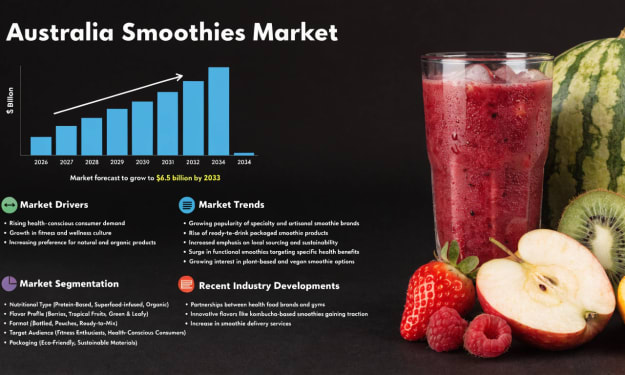
According to IMARC Group, the Australia smoothies market reached USD 504.6 Million in 2025 and is projected to grow to USD 749.1 Million by 2034, exhibiting a compound annual growth rate (CAGR) of 4.26% during 2026–2034. The market’s expansion reflects increasing consumer focus on health, nutrition, and convenience across Australia. Rising demand for nutrient-rich beverages, growing availability of ready-to-drink (RTD) options, and the proliferation of smoothie bars in urban centers are collectively strengthening Australia smoothies market share. As consumers prioritize balanced diets and functional ingredients, smoothies are becoming a mainstream component of daily nutrition.
By Shrestha Roy7 days ago in Futurism
Unofficial Challenge: Black History Celebration
Forward: February 28th, 10:53 PM, EST... The final hour of Black History Month, 2026. Hello fellow writers. I've had this challenge waiting in my drafts for most of the month. But I held off on publishing it, until now.
By Sam Spinelli5 days ago in Writers



Comments
There are no comments for this story
Be the first to respond and start the conversation.