
🎬 𝐒𝐦𝐢𝐥𝐞𝐲 (𝟐𝟎𝟐𝟐)
Smiley (2022): A Mistaken Voicemail, a Modern Love Story, and the Beautiful Chaos of Queer Romance.

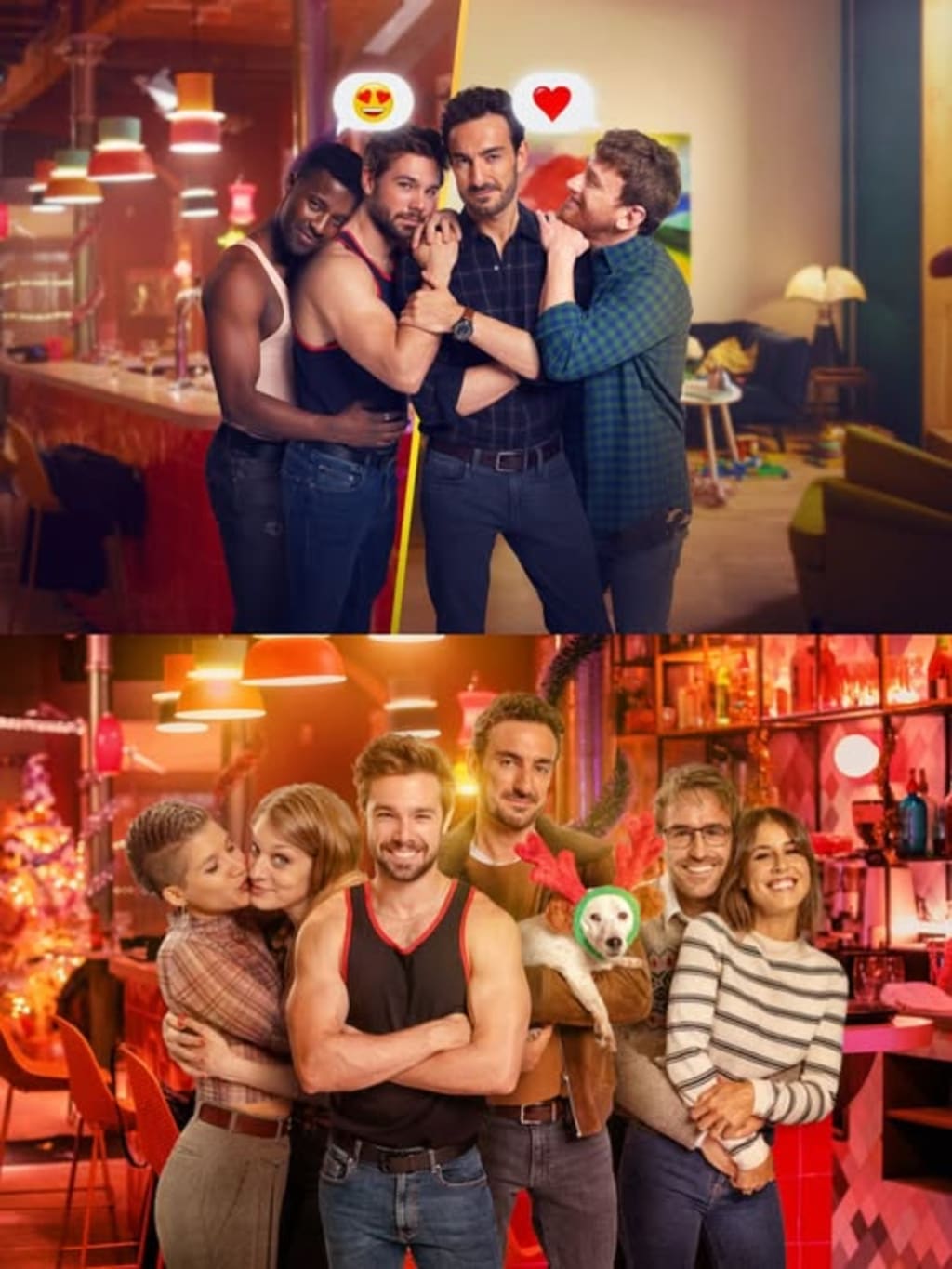
In the bustling heart of Barcelona — where narrow streets glow under warm lamplight and late-night laughter spills out from cozy cafés — a voice message is sent in anger, frustration, and heartbreak. But it never reaches its intended recipient.
Instead, it finds its way to a complete stranger.
That mistaken voicemail is the spark that sets off Smiley, a delightful Spanish LGBTQ+ romantic comedy series that transforms a simple misunderstanding into a charming exploration of love in the digital age. Based on the stage play by Guillem Clua, the series retains its theatrical intimacy while expanding outward to capture the messy, vibrant tapestry of queer relationships — filled with heartbreak, hilarity, passion, and hope.
The story begins with Álex, a bartender with a heart as big as his smile. He’s the kind of guy who feels deeply, loves openly, and lives moment-to-moment. He’s warm, impulsive, magnetic — the life of the party, but secretly tired of being ghosted, misunderstood, or used for fleeting thrills. When his latest romantic hope ends in disappointment, Álex vents all his emotions in a voice message meant for the man who hurt him.
But fate — or perhaps a playful universe — has other plans.
That message ends up on the phone of Bruno, a man Álex has never met. Bruno is everything Álex is not: reserved, logical, introverted. A successful architect with a meticulously ordered life, Bruno believes in the safety of plans and the comfort of structure. Love, to him, is something you earn slowly — not something you plunge into on a whim.
The accidental message baffles Bruno. But it also intrigues him.
What unfolds next is a dance — sometimes clumsy, sometimes electric — between two opposites pulled together by chance. Their personalities clash almost immediately. Álex finds Bruno uptight and emotionally constipated; Bruno sees Álex as reckless and overly dramatic. Yet neither can deny the pull. They argue, flirt, retreat, and inch toward each other — like magnets that repel and attract in equal measure.
Smiley thrives on this tension. But what makes it truly shine is its refusal to reduce the romance to a single storyline.
Around Álex and Bruno orbit a constellation of characters — friends, exes, coworkers — each navigating their own romantic journeys. From seasoned couples questioning their future to queer women searching for connection and belonging, the show paints a broad, inclusive picture of LGBTQ+ love in all its forms. It’s not just about falling in love — it’s about staying in love, redefining love, and surviving the heartbreaks that come in between.
What keeps the series from tipping into cliché is its honesty. Yes, it’s funny — often very funny — with whip-smart dialogue and brilliantly timed awkward moments. But beneath the humor lies a sincerity that’s disarming. The characters are allowed to be flawed, to screw up, to doubt themselves. They overthink texts. They misread intentions. They fear vulnerability. In short — they feel real.
Álex, played with infectious energy and depth by Carlos Cuevas, is more than just the "fun" guy. Beneath his playful charm is a soul searching for something lasting — someone who fears that his tendency to leap into love will forever leave him hurt. Bruno, portrayed with subtle precision by Miki Esparbé, is not just the cold intellectual he appears to be. His walls are built from years of self-protection, and watching them slowly crumble is one of the show’s quiet delights.
Their chemistry is electric, not because it’s perfect, but because it’s complicated. They challenge each other. They bring out sides of themselves they didn’t know were there. Their story is filled with near-misses, bad timing, and second guesses — the kind of romantic chaos that feels frustratingly familiar to anyone who’s ever fallen for someone who shouldn’t work on paper, but somehow does.
But Smiley also uses its romantic core to explore broader questions. What do we want from love? Is it passion? Stability? A mirror or a counterbalance? The show gently interrogates how our expectations — shaped by past trauma, social pressures, and internalized fears — often sabotage the very connection we crave.
In this way, the “smiley” emoji becomes a metaphor. It’s the face we put on to make others feel comfortable. It’s the softener at the end of an uncertain message. It’s the mask that hides our deeper fears — of rejection, of not being enough, of wanting too much.
Stylistically, the show is as charming as its characters. Barcelona becomes more than just a setting — it’s a romantic playground, a witness to longing glances and impulsive kisses, to teary confessions and hopeful reconciliations. The cinematography is warm and intimate, capturing the moodiness of late-night conversations and the magic of unexpected connections. The editing keeps things brisk, never lingering too long in one emotion before pivoting — much like love itself.
What sets Smiley apart from typical romantic comedies — even queer ones — is its theatrical soul. Perhaps due to its stage roots, the dialogue often feels elevated, reflective. Characters monologue their truths. Moments are allowed to be felt — not just joked away or rushed through. There’s a rhythm to the show, a balance between laughter and longing that stays with you.
By the final episodes, what started as a mistaken voicemail becomes something more profound: a story about learning to listen — not just to each other, but to yourself. About taking chances, even when logic says no. About letting go of perfect timing, and embracing messy, real love.
Smiley is lighthearted but never shallow. Romantic, but never naive. It celebrates the giddy highs of connection, yes — but also honors the slow, often painful work of emotional honesty.
In a world filled with dating apps, unread messages, and love filtered through screens, Smiley reminds us that sometimes, a genuine mistake can lead to something beautifully unexpected.
And that maybe, just maybe, the love we need is hiding in the most unlikely of inboxes — waiting for us to stop overthinking and hit send.
About the Creator
Shoaib Rehman
From mind idea to words, I am experienced in this exchange. Techincally written storeis will definetely means a lot for YOU. The emotions I always try to describe through words. I used to turn facts into visual helping words. keep In Touch.
Keep reading
More stories from Shoaib Rehman and writers in Filthy and other communities.
🎬🎬 Movie: No Hard Feelings (2023)
In the sun-bleached coastal town of Montauk, where the waves crash against fading dreams and beachside diners hum with low-season quiet, lives Maddie — a sharp-witted woman with a busted car, a dwindling bank account, and a house she’s about to lose. This is the backdrop for No Hard Feelings, Gene Stupnitsky’s offbeat 2023 comedy that arrives wearing the loud, chaotic clothes of a raunchy sex farce, only to quietly slip into something far more thoughtful.
By Shoaib Rehman8 months ago in Filthy
How Cultivating Intimacy Can Transform Monogamous Relationships
Good monogamous relationships are based on emotional intimacy. It entails the exchange of ideas, emotions, and weaknesses with an intimate partner in an environment of safety and trust. When couples develop emotional intimacy, they have a better understanding, empathy, and connection. Sharing emotions, talking about fears, and sharing success enhances attachment and develops a sense of security. Emotional intimacy enhances understanding and builds communication that helps the partners to overcome difficulties together. Emphasizing emotional attachment, monogamous couples form a strong bond that keeps the passion, trust, and long-term satisfaction, changing relationship patterns of dull companionship to an emotional bond of a united partnership.
By Robert Smith4 days ago in Filthy
Real-Time Strategies To Cultivate Intimacy And Trust In Relationships
The development of intimacy and trust start with presence. When coupled couples are busy with their daily chores, they mostly talk when they are either distracted by phones, work or they are still stressed out. Intimacy in real-time needs attention. Eye contact and device-free time and active listening are indicators of emotional availability. Reflect when you hear your partner, just to ensure you get him. This mere gesture minimizes misunderstanding and enhances emotional security. Being there sends a message of respect and priority, which makes the relationship significant. With time, through a good level of care, a base of trust is established, and this is critical in maintaining trust and emotional intimacy.
By Tiana Alexandra3 days ago in Filthy
A Historic Declaration
We the People of the Husbands of the United States of America, in Order to form a more perfect Union, and I mean you...with me...establish Justice, insure domestic Tranquility, provide for the common defence, promote the general Welfare, and secure the Blessings of Liberty to ourselves, after Puberty, do ordain and establish this Declaration of Co-Dependence.
By Gerard DiLeo4 days ago in Humans


Comments
There are no comments for this story
Be the first to respond and start the conversation.