
Progress Made in Dockworkers' Contract Talks as Strike Deadline Nears
East and Gulf Coast Ports Edge Closer to Deal with Dockworkers as Strike Deadline Approaches

With the threat of a major strike looming, there has been some movement in negotiations between the International Longshoremen’s Association (ILA), which represents 45,000 dockworkers, and the U.S. Maritime Alliance (USMX), which represents 36 East and Gulf Coast ports. As the strike deadline approaches, both sides have exchanged wage proposals, offering a glimmer of hope that a deal may be reached before work stoppage hits key U.S. ports.
Background: What’s at Stake?
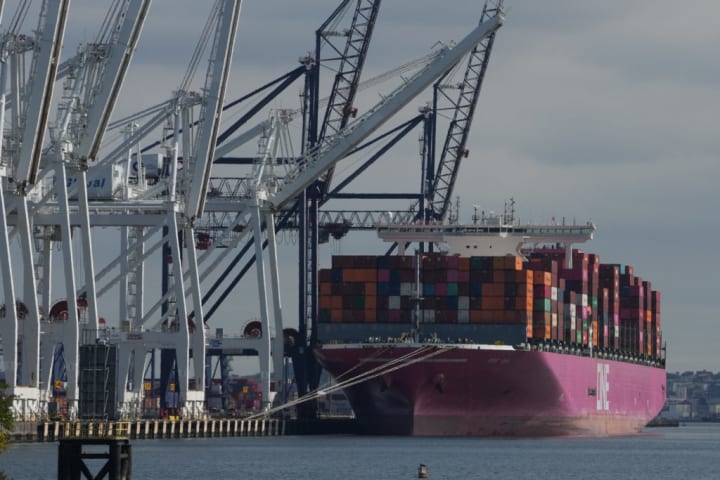
The potential strike would impact 36 ports from Maine to Texas, which handle about half of all U.S. import and export cargo. These ports are critical to the U.S. economy, and any disruption could lead to delays in goods reaching businesses and homes, potentially worsening inflation. The strike could also affect the upcoming holiday season, leading to shortages of consumer products like toys, electronics, and even groceries.
If the two sides don’t reach an agreement by 12:01 a.m. on Tuesday, dockworkers are set to walk off the job, halting operations at some of the busiest ports in the U.S. This could have an immediate impact on the supply chain, as businesses across the country depend on goods moving smoothly through these ports.
Progress in Wage Talks
The U.S. Maritime Alliance issued a statement saying both sides had moved from their previous positions, exchanging new wage offers. The Alliance’s most recent offer includes a 50% wage increase over six years, with additional improvements to retirement plans and health care benefits. The offer also maintains current language limiting automation in ports, a key issue for the union.
In contrast, the ILA has demanded a 77% wage increase over the same six-year period, arguing that dockworkers need significant raises to keep up with inflation. While many dockworkers can earn over $200,000 per year, the union says this often requires significant overtime hours, making their call for higher pay more urgent.
The ILA has also been firm in its demand for a total ban on automation in ports, including the use of automated cranes, gates, and trucks that move containers. Union leaders argue that automation could reduce job security for their workers in the long run.
Despite the exchange of wage proposals, the union has remained quiet on whether it will extend the current contract or proceed with the strike as planned. A message was left for union officials on Monday evening, but no response had been received as of yet.
The Economic Impact of a Strike
A work stoppage would disrupt the nation’s supply chain significantly. If the strike goes on for weeks, it could lead to delays in essential goods, increased shipping costs, and potential price hikes for consumers. Retailers, already preparing for the holiday season, could face challenges in stocking shelves with items like toys, artificial Christmas trees, and other seasonal goods.

Some businesses may also be forced to pay additional fees to shippers for delayed deliveries. This could affect anything from automobiles to coffee and fresh fruit, like bananas. According to the American Farm Bureau Federation, the affected ports handle about 75% of the nation’s banana supply, with 3.8 million metric tons passing through these ports annually.
Jay Dhokia, founder of logistics firm Pro3PL, warned that a strike could have ripple effects that stretch well into 2025, causing ongoing disruptions in the supply chain. He added that while the East Coast ports are the immediate focus, shipments are already being diverted to West Coast ports, further adding to congestion and delays.
The Government’s Role
President Joe Biden could potentially intervene in the situation under the 1947 Taft-Hartley Act, which allows the president to request a court order for an 80-day cooling-off period if a strike is deemed to endanger the national economy. However, Biden has signaled that he has no plans to invoke this authority. When asked by reporters on Sunday if he would intervene in the potential strike, Biden responded with a clear “no.”
Still, the White House has been actively involved in trying to keep negotiations moving. The administration has been in regular contact with both the ILA and the U.S. Maritime Alliance, urging them to reach an agreement that reflects the recent financial successes of shipping companies while also considering the contributions of dockworkers.
On Monday, Biden directed his Chief of Staff, Jeff Zients, and National Economic Council Director, Lael Brainard, to meet with the alliance’s board members. Their goal was to encourage a swift and fair resolution to the dispute.
What Happens Next?
As the clock ticks down to the strike deadline, all eyes are on the negotiations. While progress has been made in wage discussions, other issues, including the union’s demands for job security and limitations on automation, remain unresolved.
If the strike does go forward, it would be the first by the International Longshoremen’s Association since 1977. The outcome could have significant economic consequences, not only in the U.S. but globally, as trade partners like the United Kingdom depend heavily on goods shipped through these ports.
For now, businesses and consumers alike are hoping for a deal that avoids a work stoppage. However, if an agreement isn’t reached soon, the U.S. supply chain could face significant disruptions, with long-term consequences for the economy.
In the coming days, it will become clear whether the negotiations are successful or whether the nation will have to brace for another major supply chain disruption.
About the Creator
How Mindfulness And Lifestyle Choices Improve Relationship Satisfaction
Mindfulness is the act of complete attention and being present at the present moment free of judgment. Popularized in Western psychology, such as the mindfulness-based stress reduction program at the University of Massachusetts Medical School, which was created by Jon Kabat-Zinn, mindfulness has since gained widespread credit of enhancing mental health. Nevertheless, it has a greater impact than personal health. Mindfulness helps in relationships to enhance emotional awareness, decreases reactivity, and promotes mindful communications. Partners feel seen, heard, and valued in a more intellectual manner when they are around one another.
By Kellee Bernier2 days ago in Filthy
Huddles and Harmonies (p2)
1st part 3 Oh-vation Chapter Rating: NC-17 (for some spicy dreams and self-pleasure) Sleep that night was impossible. My body was a bundle of live wires, my hormones like an electric current. I ached between my legs. I had never been so turned on. Reaching down into my panties, I discovered my inner thighs and folds slick with arousal.
By CT Idlehouse7 days ago in Filthy
Review of 'Man on the Run'
My wife and I saw Man on the Run, a nearly 2-hour documentary on Amazon Prime, about Wings, Paul McCartney's group that flew around the world from shortly after The Beatles broke up in early 1970 to shortly after John Lennon was murdered at the end of 1980, making a Beatles reunion forever impossible.
By Paul Levinson4 days ago in Beat




Comments
There are no comments for this story
Be the first to respond and start the conversation.