
Kevin Barrera: The Unsolved Tragedy Captured by Aerial Images
Most disturbing things on the internet

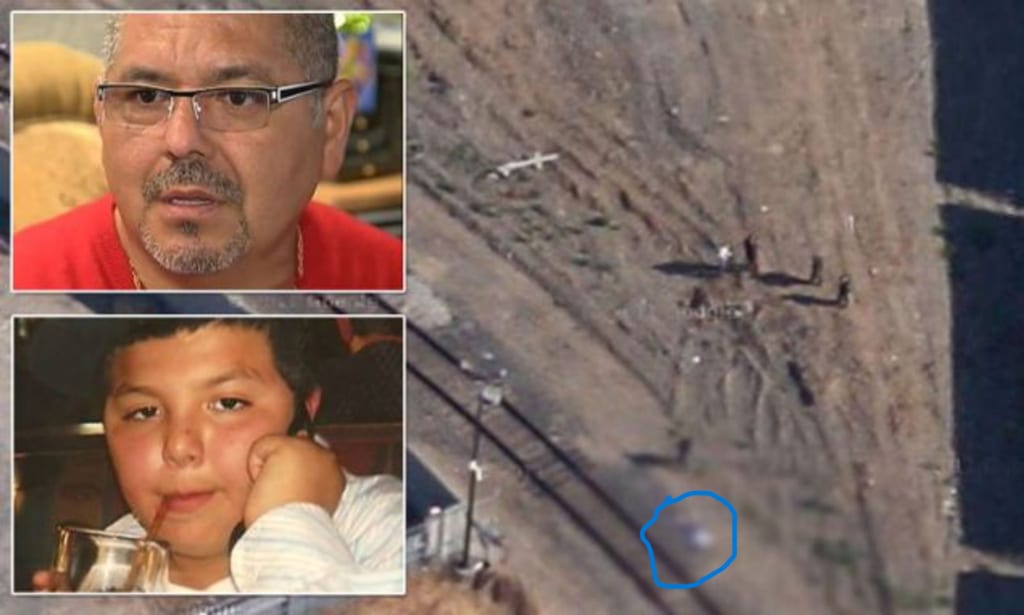
In 2009, the tragic case of 14-year-old Kevin Barrera sent shockwaves through his community in North Richmond, California. The death of the young boy, which initially seemed like a local tragedy, soon gained widespread attention after an aerial image was inadvertently captured by Google Maps. The image, which showed police activity at the scene of the crime, prompted intense public interest and a media frenzy. The controversy surrounding this case raised uncomfortable questions about privacy, the power of technology, and the consequences of digital documentation of real-life events.
On that fateful day in 2009, Kevin Barrera was found lying on the tracks in North Richmond, having been fatally shot in an incident that police later determined to be gang-related. The details of the crime were unclear, and the investigation quickly became a point of concern for local authorities. Kevin's death, in a neighborhood plagued by violence and gang activity, was seen as just another statistic in a long line of senseless killings.
However, what made Kevin’s case so distinct—and what thrust it into the public eye—was not the crime itself but the series of events that followed. At the time, Google Maps was continuously updating its satellite imagery, and in one of these updates, an aerial image of the area surrounding Kevin's death was made publicly available. In the image, police officers can be seen gathered near what appeared to be the crime scene, surrounded by the familiar outline of police vehicles. The image quickly captured the attention of those who recognized the site, and the public began to speculate about the connection between the image and the tragedy.
While it might seem that aerial images captured from space would offer only a glimpse into the landscape below, the Kevin Barrera case revealed how easily such images could be misinterpreted, shared, and sensationalized. The photo of the police activity at the scene was a stark and haunting reminder of the crime, but it also became a focal point for debate about the ethics of digital surveillance and the unintended exposure of sensitive information.
When the image began to circulate, social media exploded with speculation. Some argued that it was an invasion of privacy, a violation of the dignity of a family already in mourning. Others pointed to the broader implications of having such graphic depictions of real-world tragedies so easily accessible online. The image, although intended to document public spaces, inadvertently became part of a larger narrative—a point of intersection between technology and real human suffering.
The image of Kevin’s crime scene did not simply raise ethical concerns for the digital community; it also deeply affected his grieving family. Kevin’s father, Jose Barrera, expressed his anger over the exposure of the crime scene image, arguing that it was disrespectful to his son’s memory and to the family’s mourning process. For many, the online sharing of the image was seen as an act of insensitivity that turned a deeply personal loss into a public spectacle.
The family’s protests were echoed by privacy advocates, who pointed to the broader implications of unregulated digital imagery. They argued that, even in cases where no overt crime was involved, the act of capturing real-life events from above could cause undue harm by turning private moments into public content. In Kevin’s case, his death had already been tragic enough—yet the posthumous exposure of his body through satellite imagery added another layer of trauma for his family and the community.
In the wake of the incident, the Barrera family reached out to Google, demanding that the image be removed from public access. In response, Google initially declined to take down the image, citing its policy on the public availability of satellite imagery. However, after a petition was started and national media attention grew, Google eventually removed the image from their platform, citing the sensitive nature of the content. This decision raised important questions about the responsibilities of companies like Google in moderating their digital content—questions that continue to spark debate today.
The incident also prompted legal discussions about the intersection of privacy laws and digital documentation. The concept of “right to be forgotten” became central in this case, with privacy advocates arguing that Kevin’s family should have the ability to control how their son’s death was represented online. The case was not just about one tragic image—it was part of a larger conversation about the ownership of digital space and the ethical implications of digital surveillance.
While the legal response was somewhat limited, the incident led to calls for greater regulation of satellite imagery and stricter guidelines on what types of images should be made publicly accessible. The case underscored the need for clearer standards on digital content, particularly when it comes to sensitive material involving the deceased. Furthermore, it sparked ongoing debates about the role of tech companies in moderating content and how those companies should balance public access with ethical responsibility.
The case of Kevin Barrera serves as a stark reminder of the complexities of modern digital life. With technology evolving rapidly, there are growing concerns about the balance between transparency, privacy, and the potential harm caused by the unintended exposure of sensitive material. While aerial images and satellite technology offer incredible benefits—such as helping to track environmental changes or providing crucial information for disaster management—they also present challenges when it comes to respecting the privacy and dignity of individuals.
In the years since the incident, there has been increased attention on the ethics of digital content sharing, particularly when it comes to graphic and sensitive material. This tragedy has spurred discussions about how best to protect vulnerable individuals from harm and how digital platforms can better regulate the sharing of content that could cause lasting emotional and psychological damage.
Today, the legacy of Kevin Barrera’s case remains a powerful example of the dangers that come with the rapid spread of digital content. It serves as a poignant reminder that, while technology can bring us closer to understanding the world around us, it also raises profound ethical questions about the representation and commodification of human suffering.
The incident forces society to confront the idea that the digital realm is not always an impersonal space—it has real-world consequences. Kevin Barrera’s story is not just about a crime; it is about the way technology can amplify tragedy, turning private moments into public spectacles. As we move forward in an increasingly connected world, the lessons learned from this tragedy must guide our approach to digital ethics, ensuring that technology is used responsibly and with respect for those who are affected by it.
About the Creator
Keep reading
More stories from Sandun Nayanajith and writers in Filthy and other communities.
The Bizarre Hoax That Captivated the Internet
In the vast and often anonymous landscape of the internet, viral content can spread like wildfire, drawing attention and inciting reactions that often go far beyond expectations. One such event, a bizarre hoax that captivated millions, stands as a grim reminder of the power of digital manipulation and its ability to blur the lines between fact and fiction. A video that appeared to document a series of extreme body modifications set off a chain reaction of intrigue, horror, and widespread media coverage. This is the story of the hoax that fooled the internet, sparked debates on digital responsibility, and left a lasting impact on how we perceive the authenticity of online content.
By Sandun Nayanajithabout a year ago in Filthy
The Silk Code: A Ghost Dance Over the Oil Fields
The world no longer breathes through its borders; it breathes through its cables. As I sit in the quiet hum of my study tonight, the blue light of the monitor reflecting a reality that feels increasingly fragile, I realize that a line of code is being born in the shadows. This code is not just data; it is a silent architect, capable of shifting the price of a gallon of fuel at a station thousands of miles away before the sun even rises. Looking at the global radar in March 2026, I don’t see the rigid, colored maps we were forced to memorize in school. I don’t see the static, dusty lines of the United States, the golden sands of Saudi Arabia, or the rugged, ancient highlands of Iran. Instead, I see a glowing, pulsing web of information—a "Silk Code" that has begun to connect the muzzles of cannons to the valves of oil pipelines. We are not witnessing a traditional conflict of infantry and tanks; we are watching a tectonic shift where the heavy lead of the 20th century meets the weightless silicon of the future.
By Alex Sterling about 4 hours ago in Filthy
Sam’s Stories
Sam texted Lila, asking if he could call. Of course he could—Lila always took Sam’s calls. He asked about her writing, which had become lucrative since last time they fell apart. Sam’s divorce wasn’t even final yet, he already had a new girlfriend, and he was reaching out to Lila. Could be a recipe for disaster.
By Harper Lewis3 days ago in Filthy


Comments
There are no comments for this story
Be the first to respond and start the conversation.