
Kamala Harris Faces Tough Questions on Economy, Immigration, and More on 60 Minutes
Vice President Defends Economic Record and Immigration Policies Amid Election Pressure
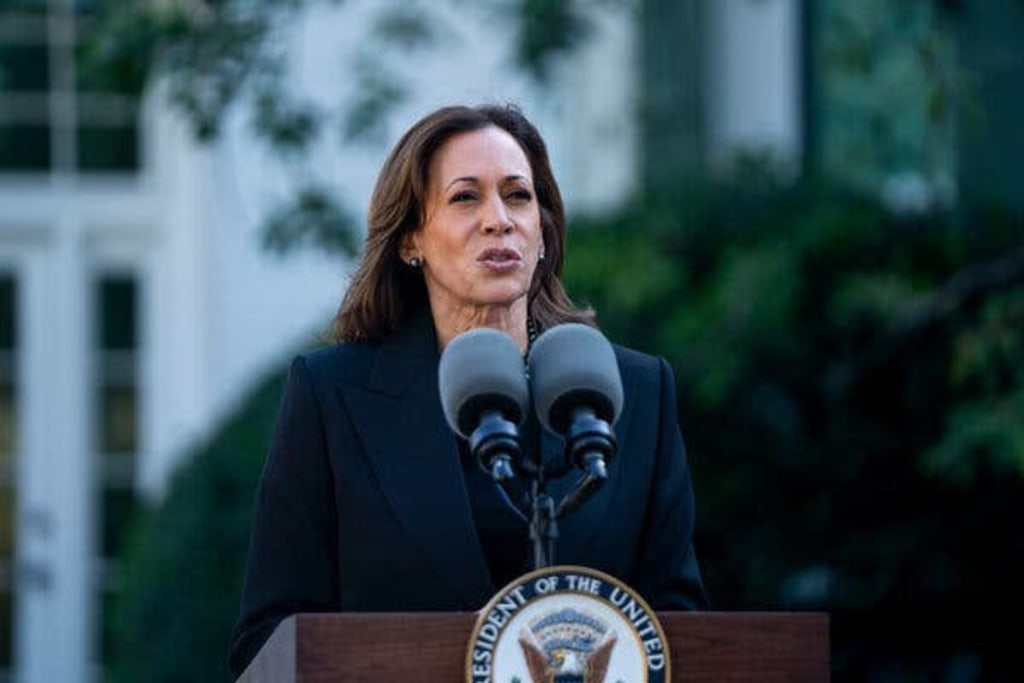
Vice President Kamala Harris sat down for a challenging interview with CBS correspondent Bill Whitaker on 60 Minutes, where she was pressed on her economic plans, immigration policies, and other key issues. With Election Day fast approaching and the political climate heating up, Harris’s responses were closely scrutinized. While she took the opportunity to defend the Biden administration's accomplishments, Whitaker didn’t shy away from asking tough questions, and Harris didn’t hesitate to take a jab at former President Donald Trump, who declined an offer to appear on the same show.
One of the central issues in the interview was the economy. Whitaker questioned Harris on how she plans to address rising costs, including food prices. Harris responded by highlighting the administration’s record on employment, saying, *"We now have historic low unemployment in America among all groups of people."* This statement comes at a time when unemployment rates have indeed been lower than in previous years. However, data from the U.S. Bureau of Labor Statistics (BLS) reveals a slightly more complex picture. While unemployment among Black or African American workers hit a historic low of 4.8% in April 2023, the overall unemployment rate has risen slightly in 2024 for various groups, including white, Asian, and Hispanic populations. Even those without a high school diploma have seen a notable increase in unemployment by 1.3 percentage points over the past year.
Harris also claimed that the U.S. economy is *"thriving by all macroeconomic measures."* This statement, while encouraging, also demands a deeper look. Some macroeconomic indicators do point to a strong economy. For example, the U.S. has seen higher GDP growth than other major economies, including Germany, Japan, and the United Kingdom. Reports from the Organisation for Economic Co-operation and Development (OECD) and the International Monetary Fund predict that the U.S. will continue to outperform other G7 nations, with real GDP growth expected to reach 2.6% in 2024. Personal income has also increased, helping Americans keep up with rising personal consumption expenditures.
However, Harris’s claim that the economy is thriving across all measures could be seen as oversimplified. Despite impressive GDP growth and low unemployment rates, other economic factors are less positive. For instance, the U.S. trade deficit continues to grow, and there has been an increase in the international transaction deficit. Moreover, while the overall unemployment rate remains low, year-over-year figures show slight increases in 2024 for various demographics.

Whitaker further challenged Harris on the potential impact of her economic plan on the federal deficit. Citing the nonpartisan Committee for a Responsible Federal Budget, Whitaker pointed out that Harris’s economic policies could add $3 trillion to the federal deficit over the next decade. Harris defended her position by referencing analyses from respected institutions like Goldman Sachs, Moody's, and the Wharton School of Business, as well as endorsements from 16 Nobel laureates. She argued that her economic plans would strengthen the economy in the long run. However, as Newsweek pointed out, some of these claims may be overstated. For instance, while a Goldman Sachs report favored her policies, the investment bank's CEO later clarified that Harris had exaggerated their findings. Moody’s Analytics, on the other hand, confirmed that her claims align with their research.
On immigration, Harris claimed, *"We have cut the flow of illegal immigration by half."* This statement is partly backed by data. U.S. Customs and Border Protection (CBP) reported a significant decrease in Southwest border encounters in 2024 compared to the previous year. For example, there were 107,503 encounters in August 2024, compared to 232,963 in August 2023. These figures suggest progress, especially considering the high number of encounters in December 2023. However, it’s worth noting that overall immigration levels remain higher than when Biden took office in 2021, meaning Harris’s claim, while accurate in some respects, doesn’t capture the full picture.
Harris also made a bold claim about drug enforcement, stating, *"We have cut the flow of fentanyl by half."* However, available data doesn’t clearly support this. While there have been months in 2024 where the number of fentanyl seizures was half of what it was during the same month in 2023, other months showed significant increases. For instance, seizures in January and July 2024 were higher compared to the same months the previous year. Thus, Harris’s claim requires further clarification.
In summary, Vice President Kamala Harris used her appearance on 60 Minutes to defend the Biden administration's record and outline her economic and immigration policies. While she cited positive economic trends and reductions in border crossings, some of her claims were met with skepticism, and data reveals a more nuanced reality. As the election approaches, voters will likely continue to scrutinize these claims as they weigh their options at the polls.
About the Creator
Emily Ratajkowski Models Lingerie-Garter Look in New Selfie
Emily Ratajkowski recently made a spark in a fiery red lingerie set, which looked incomparable on her. She took to Instagram to post a reel of herself wearing the lingerie. The divine lacy lingerie set, along with garters, from Lounge worked like magic for the author-model. Suffice to say, the pretty, bright shade was just perfection at play.
By Dena Falken Esqabout 18 hours ago in Filthy
How to Succeed at the Benson Directory®
Congratulations and welcome to the Benson Directory® employee #22391! As our newest call handler, you will have the privilege of speaking with dozens of unique and interesting people on a daily basis as well as the opportunity to earn bonuses for high performance. Contained within this handbook you will find a set of ease to follow instructions designed to help you settle in to your new role and begin paving the way to success.
By S. A. Crawford4 days ago in Fiction




Comments (1)
wow