
10 Unique Vining Fruit Plants to Transform Your Garden with Fresh Harvests
Here is a artical about 10 unique vining fruit plants....

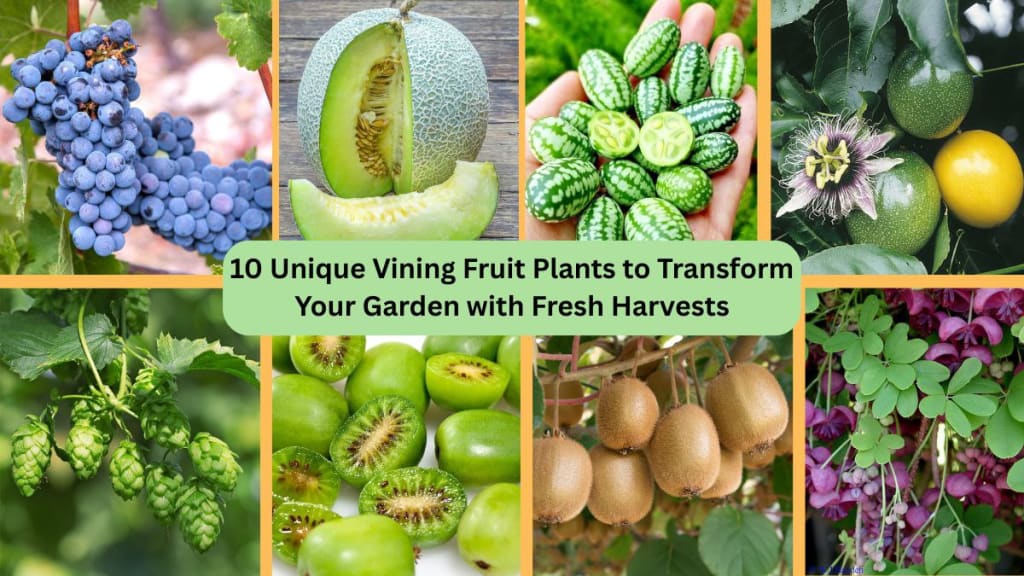
Introduction
Gardening is more than just a hobby—it's a journey into the wonders of nature, a canvas of color and taste, and a sanctuary for sustainability. For those looking to diversify their home gardens and enjoy an abundant harvest, vining fruit plants offer an exciting opportunity. These climbers don't just save space—they elevate your garden vertically, providing aesthetic beauty, shade, and mouth-watering fruits. These vining fruits, which come in a variety of flavors, are ideal for making edible sculptures out of fences, pergolas, patios, and trellises. In this article, we’ll dive deep into 10 of the most unique vining fruit plants that can revitalize your garden. Each entry includes a detailed botanical profile, growth requirements, care tips, harvesting guidelines, and culinary uses, ensuring you’re fully equipped to grow and enjoy your own fruitful vertical paradise.
1. Passion Fruit (Passiflora edulis)
Botanical Overview
Passion fruit is a tropical vine that originated in South America and is renowned for its intricate, fragrant flowers as well as its tart, sweet fruit. It belongs to the Passifloraceae family and is widely cultivated for both ornamental and edible purposes.
Growth Habits and Climate
USDA Zones: 9–11 (in cooler regions, containers can be used to grow) Sunlight: Full sun
Soil: Well-drained, slightly acidic soil
Watering: Regular watering, especially in dry periods
Benefits
Rich in vitamins A and C
Supports digestion and immune function
Attracts pollinators
Growing Tips
Install a sturdy trellis, as vines can grow 15–20 feet.
Prune after fruiting to control size and boost productivity.
Protect from frost with mulch or greenhouse cultivation.
Harvesting and Uses
When the fruit falls naturally or becomes wrinkled, harvest it. Use in juices, desserts, sauces, or eat fresh with a spoon.
2. Hardy Kiwi (Actinidia arguta)
Botanical Overview
Unlike the fuzzy supermarket variety, hardy kiwis are grape-sized, smooth-skinned fruits with a similar taste but more cold-hardy. Native to eastern Asia, they’re perfect for temperate climates.
Climate and habits of growth USDA Zones: 4–8
Sunlight: Full sun
Soil: Slightly acidic, rich, and well-drained
Watering: Consistent moisture
Benefits
abundant in vitamin C Good source of fiber
Attractive ornamental foliage
Growing Tips
fruit requires both male and female plants. Use a strong arbor or pergola for support
Regular pruning can control vigor. Harvesting and Uses
In the fall, before the first frost, harvest. They are delicious raw, in smoothies, or dehydrated as snacks.
3. Hops (Humulus lupulus)
Botanical Overview
Though primarily known for its use in beer brewing, hops are fast-growing vining plants that produce attractive cones and provide dense shade.
Growth Habits and Climate
USDA Zones: 3–9
Sunlight: Full sun
Soil: Loamy, well-drained, and slightly alkaline
Watering: Requires moderate to high water
Benefits
Natural sedative and sleep aid
Ornamental flowers and quick coverage
Deters some pests
Growing Tips
Needs strong vertical support
Dies in the winter; is slashed to the ground Best propagated through rhizomes
Harvesting and Uses
Harvest cones when they feel dry and papery. Use in home brewing, teas, or as a natural sleep remedy.
4. Sechium edule chayote The Botanical Framework Also known as vegetable pear or mirliton, chayote is a tropical vine bearing green, wrinkled fruits with a mild taste—used as both fruit and vegetable.
Climate and habits of growth USDA Zones: 8–11
Light: the entire sun Soil: A rich, loamy soil that drains well. Watering: Regular watering required
Benefits
high in vitamin C and fiber Versatile in culinary uses
Can yield dozens of fruits per plant
Growing Tips
After the risk of frost has passed, plant whole fruits. Provide a substantial fence or trellis. Fertilize monthly during the growing season
Using and Harvesting Pick when about 4–6 inches long. can be eaten raw in salads, sautéed, boiled, or grilled. 5. Maypop is an incarnate Passiflora Botanical Overview
Maypop is a tough variety of passionflower that grows in the southeastern United States. It has beautiful flowers and fruit that are the size of eggs. Climate and habits of growth USDA Zones: 6–10
Sunlight: Full to partial sun
Soil: Tolerant but prefers sandy, well-drained soil
Watering: Moderate; drought-tolerant once established
Benefits
Edible and medicinal fruit
Attracts butterflies and bees
Spreads quickly as ground cover or vertical climber
Growing Tips
Control the spread by using root barriers. Mulch to retain moisture
Tolerates neglect and poor soils
Using and Harvesting Harvest when fruit turns yellow and drops off. Can be juiced or eaten fresh.
6. Malabar Spinach (Basella alba/rubra)
Botanical Overview
Although technically not a fruit, Malabar spinach is a heat-loving vine that grows quickly and produces small, edible berries. It is ideal for tropical and subtropical gardens. Growth Habits and Climate
USDA Zones: 9–11 (annual in colder zones)
Lighting: full sun to some shade Soil: Moist, fertile, and well-drained
Watering: Regular moisture is required. Benefits
Nutritious leaves and berries
Rapid vertical growth
Ornamental red or green vines
Growing Tips
Grow from cuttings or seeds Provide trellis or pole support
Harvest leaves frequently to promote growth. Harvesting and Uses
The leaves are used like spinach; berries can be used as natural dye or in jams.
7. Akebia (Akebia quinata)
Botanical Overview
Known as the chocolate vine for its scented flowers, Akebia is a fast-growing ornamental that produces sausage-shaped fruit with a jelly-like pulp.
Growth Habits and Climate
USDA Zones: 4–9
Sunlight: Full sun to part shade
Soil: Adaptable to various soils
Watering: Moderate
Benefits
Fragrant flowers in spring
Unusual edible fruit
Great for privacy screening
Growing Advice Invasive in some regions—check local restrictions
Needs support like arbors or walls
To control the spread, prune Harvesting and Uses
When the pods split open late in the summer, harvest them. Scoop out pulp to eat raw or in desserts.
8. Hylocereus spp. dragon fruit Botanical Overview
A tropical cactus vine with stunning flowers and exotic-looking fruits, dragon fruit (pitaya) is as decorative as it is delicious.
Growth Habits and Climate
USDA Zones: 10–11
Light: the entire sun Soil: Well-drained sandy soil Moderate watering; drought-tolerant Benefits
Rich in antioxidants and fiber
Night-blooming flowers
High-yield with proper care
Growing Tips
In cooler climates, plant in pots. Needs a climbing frame or vertical post
Avoid overwatering
Using and Harvesting Pick when the fruit turns bright pink. Eat raw, in smoothies, or make dragon fruit bowls.
9. Loofah (Luffa aegyptiaca)
Botanical Overview
Famous as a natural sponge, the loofah plant also produces edible young fruits similar to zucchini.
Growth Habits and Climate
USDA Zones: 7–11
Sunlight: Full sun
Soil: Fertile, well-drained soil
Watering: Frequent watering during fruit set
Benefits
Use for both food and the bathroom Fast-growing and decorative
Perfect for trellises, these long vines Growing Tips
Start seeds early indoors in cool zones
Support the vertical plane. Harvest young for eating, mature for sponges
Harvesting and Uses
Eat when fruits are under 6 inches. Mature fruits can be dried, peeled, and used as scrubbing sponges.
10. Vitis vinifera and Vitis labrusca grapes The Botanical Framework One of the oldest cultivated vining fruits, grapes offer beauty, bounty, and flavor. With countless varieties, there’s a grapevine for almost every garden.
Growth Habits and Climate
USDA Zones: 4–10 (variety dependent)
Sunlight: Full sun
Soil: Well-drained loam
Watering: Deep but infrequent
Benefits
abundant in antioxidants Ornamental foliage and shade
Can be used for wine, juice, or fresh eating
Growing Advice Prune during dormancy for productivity
Provide horizontal trellis for best yield
Monitor for pests like aphids and mildew
Using and Harvesting Harvest when fully colored and sweet. Use in wines, jams, jellies, or fresh as table grapes.
Conclusion
Incorporating vining fruit plants into your garden isn’t just about maximizing space—it's about cultivating beauty, flavor, and biodiversity. From tropical climbers like passion fruit and dragon fruit to hardy performers like grapes and kiwi, these ten unique vines offer a world of color, scent, and taste to transform any garden.
By carefully choosing varieties suited to your climate, providing proper support structures, and practicing attentive care, you’ll soon enjoy a vertical Eden teeming with vibrant harvests. Whether you're a seasoned gardener or a novice grower, these vining fruits can elevate your gardening experience to delicious new heights.
About the Creator
Krypton
Be happy,Be calm,Be Better,Be honest,Be Strong,Be faithful,Be Loving,Life is journey&I am a traveler.
How Emotional Intelligence Can Help Singles Navigate Casual And Open Relationships
Emotional intelligence is the skill of identifying, comprehending, and controlling personal feelings and being able to know how other people feel. This skill is vital to the single individuals who seek casual and open relationships. In comparison to the traditional relationship structures, casual and open ones tend to have a range of emotional variables, changing expectations, and less clearly defined boundaries. In the absence of emotional intelligence, confusion and anger can emerge within a short period of time. Individuals that develop self-awareness and empathy tend to better understand the emotional messages, act rationally, and have healthy relationships within the complicated dating contexts.
By Willian James2 days ago in Filthy
Trending Relationship Questions About Balancing Career And Love
It is a frequent problem of the contemporary life as it is necessary to follow both the career goals and the love affair. Singles and couples could not easily manage to devote their time and energy to work and emotional relationship building. To achieve priorities, it is necessary to consider both individual and interpersonal objectives. The knowledge of what is important enables people to organize and take calculated choices regarding time management. Career and relationship development do not necessarily need to be mutually exclusive and through proper planning, respect will be given to each of the two. Providing certain priorities, people will feel less stressed, they will not be able to neglect their partners, and they will have time to be close to their significant other and at the same time achieve professional success.
By Willian James3 days ago in Filthy




Comments
There are no comments for this story
Be the first to respond and start the conversation.