

Chapter 1: The Echoes of Catastrophe
The year was 2026, and it had been almost three years since the deluge struck, an event etched into human history as nature's most formidable war against humanity. With a global population of 8 billion, approximately 3 billion had been unaccounted for in the aftermath of the cataclysmic deluge.
The world had become a shadow of its former self. It seemed as if nature itself had declared war on humanity. The relentless rain that had fallen for weeks had turned into a devastating flood, submerging coastal cities and regions. The survivors could hardly believe their eyes as their homes and communities were swallowed by the rising waters. Panic and chaos had reigned supreme as people scrambled for safety, many succumbing to the deluge's unforgiving force.
But the deluge was only the beginning. As the floodwaters receded, revealing the decimated remains of once-thriving cities, the Earth's fury had not yet been spent. Mega-earthquakes, of a magnitude unseen in human history, reverberated across the globe. The tremors had been relentless, tearing apart buildings and fracturing the Earth's crust, causing chasms that stretched for miles. From the skies, volcanoes erupted, spewing ash and molten rock, further plunging the world into darkness and despair.
It was in the wake of these catastrophic events that humanity had been pushed to the brink. The Earth's crust was forever changed, and the planet itself was fractured. As survivors emerged from the ruins of civilization, they found themselves in an altered world where the very ground beneath their feet was treacherous.
Chapter 2: The Great African Divide
The Great African Divide, as it came to be known, was a gaping chasm that stretched from the northeast to the southwest of the continent. Once, the people of Africa had lived in a diverse tapestry of cultures, languages, and communities. Now, it was as if a colossal wound had torn through their shared identity, severing ties and communication.
The survivors on the eastern side of the chasm were cut off from their western counterparts. Families and friends found themselves on opposing cliffs, unable to bridge the immense gap. Where there had been unity, there was now a palpable sense of isolation.
Tribal lands, regions, and territories had been divided in half. The rivers that had once provided sustenance to communities now flowed as barriers, uncrossable by ordinary means. Former neighbors were now strangers, and the bridges that had connected their lives had been obliterated.
As communities tried to adapt to this fractured reality, the question of resources emerged as a pressing concern. The Earth's upheaval had disrupted the flow of water, impacting agriculture and access to fresh water. What was once a fertile land was now marred by fractures and sinkholes, making farming and food production a daunting challenge.
On both sides of the chasm, the survivors were faced with the harsh truth of their new world. They were trapped in a land forever changed by the wrath of the Earth. The western survivors had the vast, untamed wilderness to contend with, while those on the eastern side faced the remnants of devastated cities and the haunting memories of a life forever lost.
In this altered landscape, leadership and governance had to evolve. Former nations had fragmented into smaller groups, each seeking to protect its own interests and ensure the survival of its people. With no means of communication with neighboring regions, they faced a future that was as uncertain as the ever-shifting Earth.The Great African Divide, a scar on the continent's surface, bore witness to the profound changes humanity had undergone. While the rift seemed insurmountable, it also symbolized the resilience of those who had survived against all odds. The divide was not just a physical chasm but a metaphorical one, a reminder of the rift in the collective human spirit. However, the survivors had not given up hope, and they knew that it was in their unity, no matter how fractured, that their strength lay.
While the Earth itself had torn apart, the bonds of humanity, though stretched thin, were not completely broken. The echoes of the catastrophe were not just of despair; they were also the whispers of resilience and determination, a testament to the unyielding spirit of those who remained.
Chapter 3: The Call of the Wild
In the aftermath of the cataclysmic events, the eastern survivors of the Great African Divide were forced to adapt to their new surroundings. As nature steadily reclaimed the remnants of civilization, the survivors grappled with an existential challenge: to embrace the wilderness or attempt to reclaim their former way of life.
The urban centers, once thriving with human activity, were now desolate, haunted by memories of the past. The survivors who had established makeshift communities in these places faced relentless difficulties. The survivors who were once office workers, shopkeepers, and teachers now found themselves having to scavenge, hunt, and gather to feed their families. The old hierarchies crumbled, replaced by the raw necessity of survival.
On the western side of the Great African Divide, the survivors had already turned to the land as a means of sustenance. Nomadic tribes and villagers had formed alliances based on shared resources and skills. Some had become skilled hunters and gatherers, while others had developed agricultural practices suited to the new, fractured landscape.
As the survivors on both sides of the chasm adapted to their new environment, they began to experience a profound connection with the natural world. Gone were the boundaries of cities and towns; now, their lives were inextricably linked with the rhythms of the Earth. They learned to read the signs in the wind, the rustle of leaves, and the patterns of animal migrations. The skills and knowledge of their ancestors, often neglected in a modern world, now held the key to their survival.
However, nature, too, was awakening. The rain-drenched Earth had breathed life into the wilderness. Plants, previously tamed and confined, grew wild and uncontrollable. Animals, once caged or domesticated, roamed freely. In the heart of this untamed world, there was a sense of rebirth and renewal. Life had persevered.
But with nature's beauty came its dangers. As humanity struggled to adapt, the survivors encountered the formidable challenges of the wild. Predatory animals and unexpected weather patterns posed constant threats. The elements that had once been harnessed for human comfort were now forces of nature to be reckoned with.
Despite these hardships, a spirit of camaraderie had taken root among the survivors. They shared knowledge, techniques, and resources to overcome the challenges they faced. Communities thrived in unlikely places, as people came together to protect one another and their way of life.
The Great African Divide had left humanity fractured, but it had also triggered a profound transformation. A newfound appreciation for the natural world, and the realization that humanity was but one thread in the intricate tapestry of life, drove them forward. The call of the wild echoed through the hearts of those who had survived the world's upheaval.
As the survivors adapted to their new lives, they began to understand that while the Earth's scars ran deep, so did their own resilience. They were not merely pawns of fate but active participants in a world forever changed. The wilderness beckoned, and the survivors embraced it as an integral part of their existence, proving that even in the face of cataclysm, the human spirit could endure.
Chapter 4: A New World Order
The survivors on both sides of the Great African Divide had spent years adapting to their untamed surroundings. Their new way of life was a fusion of ancient knowledge and innovative thinking. However, the passage of time had not just altered the landscape; it had also reshaped society.
In the eastern territories, where remnants of urban life still clung to memory, a semblance of order had been reestablished. These communities had worked hard to retain elements of their former world. The survivors had relearned essential skills and had even established small-scale agriculture. Yet, the grip of modern life had slackened, and the survivors no longer yearned for the luxuries they had once enjoyed.
The urban centers that had been abandoned were slowly giving way to nature's reclamation. Parks, streets, and entire neighborhoods had become overgrown with flora and fauna. Amidst this wild urban jungle, small clusters of survivors had found their niches. They transformed city blocks into self-sustaining gardens, cultivating produce and raising livestock. What had been a concrete jungle was now a thriving oasis of green.
In contrast, the western territories had fully embraced a different way of life. They had transitioned into nomadic tribes, each with unique customs and specialties. The communities relied on their ancestral knowledge of farming, hunting, and the movement of the land. They had become skilled at navigating the fractured terrain, making use of underground water sources, and harnessing the power of natural elements.
The tribes developed a strong sense of unity, often forming alliances to share resources and support one another. Their societies were more communal, with decision-making processes that prioritized the well-being of the group. They cherished the connection they had with the land, viewing it as both a source of life and a guardian of their collective memory.
As these two distinct societies began to find their footing in the new world order, there was a growing curiosity about the other side of the Great African Divide. Rumors and legends of the other's way of life circulated among the survivors. They yearned to explore the unknown territories, learn from one another, and reconnect the threads of a once-fractured society.There were challenges, of course. The perilous journey across the Great African Divide remained treacherous, and the land in between was still plagued by the consequences of the cataclysm. Yet, the survivors shared a common desire to bridge the gap and unite humanity once more.
As explorers ventured towards the chasm that had torn their world apart, they found themselves filled with a sense of purpose. They carried stories and experiences that had shaped their lives and would shape the world's future. Their journey was a testament to the resilience and adaptability of the human spirit.
While the two societies had grown apart, they recognized the value in reestablishing connections with one another. They understood that by doing so, they could create a more resilient, balanced, and harmonious world. The survivors on both sides of the Great African Divide were determined to embark on a new journey—a journey of discovery, reconciliation, and reconnection.
As the explorers set out, carrying the hopes of their people and the memories of the world that once was, they knew that the future was uncertain. Yet, they embraced the challenge, for they understood that in unity and cooperation, they could shape a new world order—one that honored the lessons learned from the echoes of catastrophe and the wisdom gained from their resilient journey through the untamed lands of Africa.
Chapter 5: Brotherhood and Betrayal
The explorers who ventured across the Great African Divide began their journey with a shared sense of purpose—to unite their divided society and establish connections between the eastern urban territories and the western nomadic tribes. Their desire for reconciliation was a driving force, one that overshadowed the challenges they would face along the way.
As they crossed the wild and untamed lands that separated the two worlds, bonds of camaraderie were forged. These were individuals who had once been strangers, brought together by the hope of reunification. Their unity was palpable as they navigated treacherous landscapes and overcame obstacles together.
But, as with any journey, the path was not without its trials. In the vast expanse between the territories, untamed and dangerous creatures roamed, and the land itself bore the scars of past catastrophes. Natural obstacles and unpredictable weather patterns tested the group's resolve. Yet, their shared determination and the memory of the Great Divide kept them moving forward.
However, as the group drew closer to their destination, the spirit of unity began to wane. Fractures emerged within the group. Visions of the future differed, and conflicts arose. Some believed that reuniting the divided societies was the ultimate goal, while others began to question whether it was the right path forward. Doubts and fears crept in, leading to disagreements that threatened to tear the expedition apart.
The journey had brought to light a fundamental question: What kind of society should emerge from the remnants of the old world? The explorers from the urban territories had become accustomed to a more structured and communal way of life. They yearned to rebuild a semblance of the modern civilization they had known.
On the other hand, the nomadic tribes had found strength in their adaptability and close connection to the land. They believed in preserving the wisdom of their ancestors and adhering to a more natural way of life. They saw this as the path to harmony and sustainability.
Amidst these differing ideologies, friendships began to fray. People who had once shared a common dream found themselves on opposing sides of a growing divide. As they camped along the way, there were whispered conversations and secretive alliances formed.
One fateful night, under the canopy of a starlit African sky, the unity that had sustained them throughout their arduous journey was tested. It was then that the first act of betrayal occurred. Those who had questioned the goal of reunification decided to part ways with the expedition.
The division was painful, and it marked a turning point in their journey. The explorers, once driven by a shared vision, now faced an uncertain future. The bonds of brotherhood that had united them began to unravel, and they realized that reconciliation was not a simple path.
Despite the betrayal, the remaining members of the group chose to press onward, clinging to the hope of unity. But they were forever changed by the experience, and the shadows of doubt and division now loomed over them.
As the expedition continued its journey, those who remained understood that the road ahead would be fraught with challenges. The once unbreakable bonds of brotherhood had been tested, and the echoes of their strife reverberated through the untamed lands of Africa. The explorers now grappled with the complexities of their mission, recognizing that the path to reconciliation was not only marked by unity but also by the shadows of betrayal.
Chapter 6: Land of Extremes
The journey across the divided African continent had brought the explorers face to face with a harsh and unpredictable landscape. As they ventured deeper into the heart of Africa, they encountered a land of extremes, where the natural world itself seemed to mirror the divisions that had plagued humanity.
In this vast and untamed wilderness, the explorers experienced both the breathtaking beauty and the unforgiving cruelty of the land. They witnessed sweeping savannas dotted with iconic wildlife, majestic mountain ranges, and dense rainforests teeming with life. But alongside these wonders, the harsh realities of survival came into sharp focus.
The challenges posed by the extreme environment became apparent early in the journey. Severe weather, from blazing heat to torrential rain, tested their endurance. The scorching sun bore down on them, sapping their strength during the day, while nights brought a bone-chilling cold that seemed to seep into their very souls. As they navigated this harsh terrain, the explorers found themselves constantly adapting to the whims of nature.
Water sources were scarce and often tainted by the land's unforgiving sun, forcing them to rely on their resourcefulness to find and purify the vital liquid. Food was another daily struggle. While they encountered an abundance of wildlife in the African wilderness, hunting was not without its challenges. The expedition had to learn the ways of the land, discovering which plants were edible and which animals could provide sustenance.
Amid the unforgiving conditions, the explorers were pushed to their physical and mental limits. There were moments when despair threatened to overtake them, and they longed for the comfort of the lives they had once known. Yet, the vision of reuniting their divided societies continued to drive them forward, even as the extreme environment sought to break their resolve.
The journey revealed the true essence of survival. The explorers relied not only on their knowledge and skills but also on the bonds they had formed. Acts of kindness and support were exchanged between those who had once been strangers, and they became a family forged in the crucible of the African wilderness.
But the land of extremes had another facet—the people they encountered along the way. As the explorers drew closer to their destination, they crossed paths with various indigenous tribes. These communities had thrived in the African wilderness, each with its own customs, languages, and ways of life. For the explorers, these encounters were a lesson in the richness of diversity and a reminder that the societies they sought to unite were themselves products of the diverse world.
In the land of extremes, the explorers had come to understand that nature was not the only force capable of testing their unity. The diversity of the land and its inhabitants offered new perspectives on the complexities of the human experience. While the journey had been marked by both challenges and beauty, the explorers were about to encounter the most formidable test of all—a struggle for resources that would redefine their mission and alter the course of their expedition.
Chapter 7: The Oasis
After weeks of navigating the unforgiving terrain of the divided African continent, the explorers stumbled upon an unexpected marvel—a hidden oasis. The sight of this lush and vibrant sanctuary amidst the harsh African wilderness was nothing short of miraculous.
As they approached the oasis, the explorers could hardly believe their eyes. Towering palm trees provided shade, their leaves rustling in the gentle breeze. Beneath them lay a pool of crystal-clear water, shimmering in the sunlight like a sapphire jewel. Colorful birds filled the air with melodious songs, and vibrant wildflowers painted the landscape in vivid hues.
The oasis was a stark contrast to the arid, unforgiving landscape that had challenged the explorers at every step of their journey. It was a haven of life, a reminder that even in the most desolate places, nature could offer moments of respite and rejuvenation.
Weary from their journey and in need of nourishment, the explorers eagerly made their way to the oasis. They quenched their thirst with the pure water, feeling its revitalizing effects flow through their bodies. Fruits from the palm trees provided sustenance, their sweet flavors a taste of paradise.
The oasis became a place of refuge, a sanctuary where the explorers could rest and recover. They decided to spend some time in this idyllic spot, making the most of the oasis's offerings. Under the cool shade of the palm trees, they shared stories of their respective societies and the divisions that had once torn them apart.
It was at the oasis that the explorers began to reflect on the journey that had brought them here. They realized that it was not just a quest to reunite divided societies; it was a journey of self-discovery and transformation. They had been shaped by the challenges they faced, the landscapes they traversed, and the people they had encountered.
With renewed energy, the explorers decided to document their experiences at the oasis. They used their cameras and journals to capture the beauty and serenity of this hidden paradise, knowing that these memories would stay with them forever. They made a pact to remember the oasis as a symbol of hope and unity, a place where humanity could find common ground even in the most extraordinary circumstances.
The oasis had a profound impact on the explorers, and they left it with a sense of purpose and determination. Their mission to unite divided societies had taken on new meaning. They now carried with them the knowledge that even in the harshest of environments, cooperation and understanding could thrive.
As they continued their journey, the explorers knew that the oasis would remain in their hearts—a testament to the resilience of the human spirit and the enduring quest for unity. It was a reminder that, in a world of extremes and divisions, there were still places where harmony and cooperation could flourish, and where the echoes of catastrophe could be replaced by the whispers of hope.
Chapter 8: The Quest for the Oasis
The oasis had been a sanctuary, a place of hope and rejuvenation, but it was also a limited haven amidst the vast African wilderness. The explorers knew they couldn't remain there indefinitely. The pressing need for their mission to unite divided societies compelled them to leave the oasis behind.
As they set out from the oasis, their hearts were heavy, but their resolve was stronger than ever. The beauty and serenity of the oasis had given them a glimpse of what the world could be—unified, harmonious, and resilient in the face of adversity.
Their journey continued across the harsh and divided lands of Africa. The explorers encountered various challenges along the way. They crossed arid deserts, dense jungles, and treacherous mountain ranges. They navigated through territories where different societies had established their own systems of governance and survival.
Despite the hardships, the explorers carried the oasis's memory with them like a beacon of hope. They believed that their mission was not only about physical reunification but also about bridging the gaps between different ways of life and fostering cooperation among diverse communities.
The explorers faced new obstacles as they ventured further into Africa. They encountered societies that were distrustful of outsiders and reluctant to engage in diplomatic discourse. Suspicion and fear were pervasive, as many believed that the outsiders were responsible for the recent cataclysmic events.
The explorers knew they had to tread carefully and respect the autonomy of these societies. They sought to build connections based on trust and mutual understanding. Their experiences at the oasis had taught them the value of diplomacy and the potential for cooperation, even in the face of adversity.
In their quest for unity, the explorers often found themselves in situations where diplomacy was the key to progress. They offered assistance to societies in need, sharing knowledge and resources. Gradually, they began to gain the trust of some communities, who saw the explorers not as threats, but as allies in the pursuit of common goals.
The journey was arduous, and the road ahead remained uncertain. The divided societies of Africa had endured unimaginable challenges, and it was not easy to convince them to set aside their differences. However, the explorers were driven by the belief that humanity's survival depended on unity.
Their quest for the oasis had transformed into a quest for a greater purpose—a mission to bridge divides and rebuild a world fractured by catastrophe. They continued their journey, guided by the memory of the oasis, and inspired by the possibility of a future where humanity could rise above its divisions.
The echoes of catastrophe still resonated in the world, but the explorers were determined to replace them with the symphony of cooperation, understanding, and hope. The quest for the oasis was no longer just a search for a physical location; it was a search for the very essence of humanity, a testament to the resilience of the human spirit in the face of adversity.
As they pressed forward, they knew that their mission would not be easy, but they were ready to face the challenges, inspired by the belief that the quest for unity was a journey worth undertaking. In the heart of divided Africa, the explorers continued their pursuit of a better world, one step at a time.
Chapter 9: The Promise of Renewal
The explorers' journey through the divided lands of Africa was a testament to their unwavering commitment to unity. Chapter after chapter, they faced challenges, overcame obstacles, and fostered alliances among the diverse societies they encountered. Yet, their quest was far from over.
As they ventured deeper into the heart of Africa, they reached a region known for its fertile plains and abundant natural resources. The promise of renewal and rebuilding beckoned from this land, and the explorers couldn't help but be filled with hope.
This region had remained untouched by the cataclysmic events of the past, and its inhabitants had thrived by embracing sustainable agricultural practices and communal living. It was here that the explorers witnessed the potential for renewal and the embodiment of what their mission represented.
The society they encountered was led by Malaika, a wise and compassionate leader who understood the importance of cooperation. She welcomed the explorers with open arms, recognizing that their mission aligned with the values her community had upheld for generations.
Malaika and the explorers engaged in heartfelt discussions about their shared goals. They spoke of a future where the divisions among societies would be replaced by collaboration, where the echoes of catastrophe would be drowned out by the harmony of coexistence.
Together, they planted the seeds of hope, both literally and figuratively. The fertile lands of this region held the potential to feed not just the people who resided there but to sustain the surrounding territories as well. It was a beacon of promise and renewal in a world still scarred by the cataclysm.
The explorers worked alongside the local community, sharing their knowledge and resources. They discussed strategies for building a network of self-sustaining societies that could trade resources and provide mutual support. This vision was the culmination of their quest—to create a united front against the challenges that lay ahead.
As time passed, and more societies in the region joined the alliance, the promise of renewal grew stronger. The once-divided lands of Africa began to witness the emergence of a new world order, one where unity, compassion, and resilience were the guiding principles.
The explorers and the local communities worked tirelessly to rebuild and fortify their lands. They implemented sustainable practices, ensuring that the rich resources of this region would be used wisely and shared equitably. The echoes of catastrophe still lingered in the memories of the older generations, but the younger ones began to embrace a future built on unity and hope.
While the journey had been fraught with hardships and challenges, the promise of renewal ignited a spark of optimism. It was a testament to the human spirit's capacity for change and growth, even in the face of adversity. The explorers knew that their mission was far from over, but they were fueled by the belief that they were steering humanity toward a better future.
With the fertile lands of this region as the backdrop, the explorers and the united societies forged a powerful alliance. They had taken the first steps toward rebuilding a world fractured by catastrophe, working together to create a future where the echoes of unity drowned out the echoes of catastrophe.
In the heart of Africa, amidst the lush plains and thriving communities, the promise of renewal had taken root. The world was changing, and a new chapter was being written—one where humanity stood united, resilient, and ready to face the challenges that lay ahead.
Chapter 10: The Battle for Dominance
As the united societies in the heart of Africa continued to thrive and collaborate, they knew that their vision of renewal was under threat. Despite their remarkable progress, the divisions and struggles that had defined the world before the cataclysm still lingered.
While the united communities believed in the promise of renewal, there were those beyond their lands who remained entrenched in old ways, driven by power and dominance. It was a stark reminder that the echoes of catastrophe could still be heard in the world's darkest corners.
These opposing factions, scattered across the continent, saw the united societies' growth as a challenge to their own authority. They were unwilling to relinquish control, and their leaders sought to expand their influence and resources at any cost.
As whispers of these factions' intentions reached the united communities, a somber reality set in. The promise of renewal and unity was inspiring, but it was not universally embraced. The inhabitants of the heart of Africa found themselves facing a critical crossroads—should they continue their mission of peaceful collaboration or prepare for a potential conflict with those who sought dominance?
Malaika and the explorers found themselves in the midst of a dilemma. Their commitment to a world built on unity remained steadfast, but the looming threat of external aggression couldn't be ignored. It was a difficult decision that weighed heavily on their hearts.
In a gathering of leaders from the united communities, passionate discussions ensued. The room echoed with voices advocating for different courses of action. Some believed in the power of diplomacy and continued collaboration, hoping to convince the opposing factions of the benefits of unity.
Others, however, argued that preparation and self-defense were necessary. They couldn't afford to be passive in the face of potential aggression, especially when the promise of renewal was at stake.
The leaders of the united communities, guided by the principle of collective decision-making, arrived at a compromise. They would continue their mission of peaceful collaboration, reaching out to opposing factions with open arms and offering the chance to be part of the greater alliance.
At the same time, they recognized the need for vigilance and defense. Plans were put in place to fortify their lands and ensure the safety of their people. They trained not for war but for protection, for they wished to uphold their vision of unity without compromising their principles.
As the leaders of the united communities announced their stance to their people, hope mingled with uncertainty. The promise of renewal had brought them together, but the battle for dominance was a reminder that the world remained a complex and challenging place.
They braced themselves for the journey ahead, where the echoes of catastrophe would be countered by the resounding chorus of unity. The battle for dominance loomed on the horizon, and the united societies were ready to defend their vision of a world rebuilt from the ashes of catastrophe, a world where compassion, cooperation, and resilience reigned supreme.
Chapter 11: The Legacy of Catastrophe
With their decision made, the united communities of the heart of Africa moved forward with both determination and trepidation. The echoes of catastrophe were a constant reminder of the fragility of their world and the battles yet to be fought.
Their commitment to peaceful collaboration remained unwavering, and they continued their efforts to reach out to opposing factions. Diplomatic envoys, led by Malaika and the explorers, embarked on journeys across the vast lands, seeking to share the vision of unity.
These diplomatic missions were met with a mixed reception. Some opposing factions, recognizing the benefits of cooperation and the promise of renewal, cautiously considered joining the united communities. Their leaders, influenced by the persistent efforts of Malaika and her team, began to see the potential for a more harmonious world.
However, not all were open to change. There were factions that clung to their old ways, viewing the united communities as a threat to their dominance. These groups remained resolute in their pursuit of power, raising concerns about the potential for conflict.
As they navigated this intricate diplomatic landscape, the explorers couldn't help but reflect on the legacy of catastrophe. The cataclysmic events that had shaken the world were, in many ways, responsible for the divisions and conflicts that had persisted for so long.
Yet, amidst the legacy of catastrophe, a new legacy was emerging. The united societies of the heart of Africa had shown that it was possible to set aside old grievances and work towards a common goal. Their commitment to unity and renewal had already begun to inspire change in the world beyond their lands.
In the midst of these diplomatic efforts, the explorers found themselves fostering connections that transcended borders. They realized that their mission extended beyond diplomacy; it was about the exchange of ideas, the bridging of cultures, and the building of bridges between communities.
The legacy of catastrophe had indeed left scars on the world, but it was a reminder of the resilience of humanity. The explorers remained hopeful that, by sharing their vision and working towards unity, they could inspire others to let go of the past and embrace a future free from the echoes of catastrophe.
As they continued their diplomatic missions and exchanged stories and knowledge with neighboring factions, the united communities of the heart of Africa held steadfast to their promise of renewal. They understood that building a new world required patience, compassion, and unwavering dedication to the ideals of unity and peace.
Their journey was far from over, but they were determined to ensure that the legacy of catastrophe would eventually be replaced by a legacy of hope, cooperation, and shared humanity.
Epilogue
Years passed, and the united communities of the heart of Africa continued to strive for unity and renewal. They had faced their fair share of challenges, but their determination remained unshaken. The legacy of catastrophe had transformed into a legacy of hope, and their collaborative efforts had yielded remarkable results.
Diplomatic ties had been established with numerous neighboring factions, fostering a sense of camaraderie and shared purpose. Trade routes had been reopened, and cultural exchanges flourished. The heart of Africa had become a beacon of cooperation and progress in a world still reeling from past cataclysms.
But as the united communities looked toward the horizon, a new challenge loomed in the distance. Rumors had spread of a fiery catastrophe that threatened to engulf the world once more. It was an impending disaster of unprecedented scale, one that would require the combined strength of all nations to overcome.
The explorers, who had played a pivotal role in uniting the heart of Africa, now faced their greatest mission yet. They were tasked with spreading the message of cooperation and unity beyond their lands, reaching out to distant factions and urging them to put aside their differences.
The legacy of catastrophe had taught humanity the importance of solidarity in the face of adversity. Now, the united communities were determined to extend their hand in friendship to all who would listen, knowing that the fiery catastrophe ahead could only be extinguished through collective efforts.
As the explorers embarked on their new mission, the people of the heart of Africa watched with hope and determination. They had already proven that humanity could rise above division and build a brighter future. Now, they were ready to face the fiery catastrophe, armed with the lessons of their past and the unity of their present.
The echoes of catastrophe had shaped their world, but they were determined to ensure that the legacy left behind was one of resilience, cooperation, and unwavering hope. Yet, as they looked back, they also mourned the loss of three billion souls to the earthquake catastrophe, a stark reminder of the challenges that still lay ahead.
The world was once again poised on the brink of nature's fury, and humanity faced yet another battle for survival. The united communities of the heart of Africa knew that the road ahead would be treacherous, but they were determined to carry the torch of unity forward.
As the world braced itself for the impending catastrophe, the heart of Africa stood as a symbol of what could be achieved through cooperation and resilience. The legacy of past cataclysms would serve as a guiding light in the dark days to come, a reminder that even in the face of nature's wrath, humanity could endure and, with unity, emerge stronger.
About the Creator
Keep reading
More stories from Haris Hadzic and writers in Fiction and other communities.
ANCIENT OAK V
"Memoria cadentium manebit in cordibus nostris," Elara chanted, her voice imbued with reverence, the ancient Latin spell resonating through the sacred grove. The coven members stood under the silvery light of the moon, their eyes reflecting the solemnity of the moment.
By Haris Hadzic2 years ago in Fiction
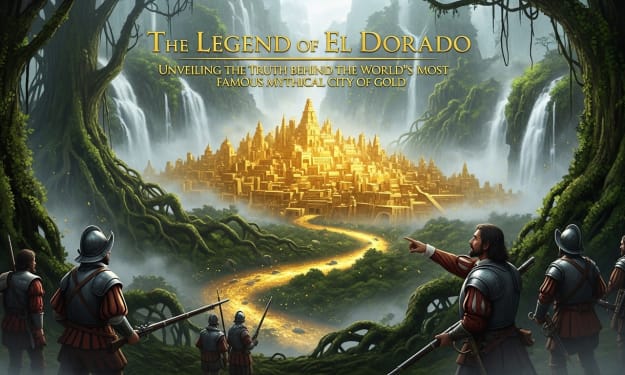
The Legend Of El Dorado
For centuries, humanity has remained captive to the mesmerizing glow of gold. Throughout history, this precious metal has driven nations to war, kings to madness, and explorers to the ends of the earth. Yet, within the annals of history, there exists a name that sparked more obsession than any other — El Dorado. This was the legendary city said to have streets paved with gold, palaces covered in pure sheets of the precious metal, and a king who dusted his entire body with gold powder before diving into a sacred lake. It was the ultimate dream of wealth, a mirage that lured thousands to their doom.
By Literary fusion5 days ago in Fiction



Comments (1)
I think you could start to hint at the potential conflicts and challenges that the two societies may face in the future. How will they interact with each other? Will they be able to cooperate and learn from each other, or will they come into conflict? I hope these suggestions are helpful. Keep up the great work!