
Wood Chips
Based On A True Story


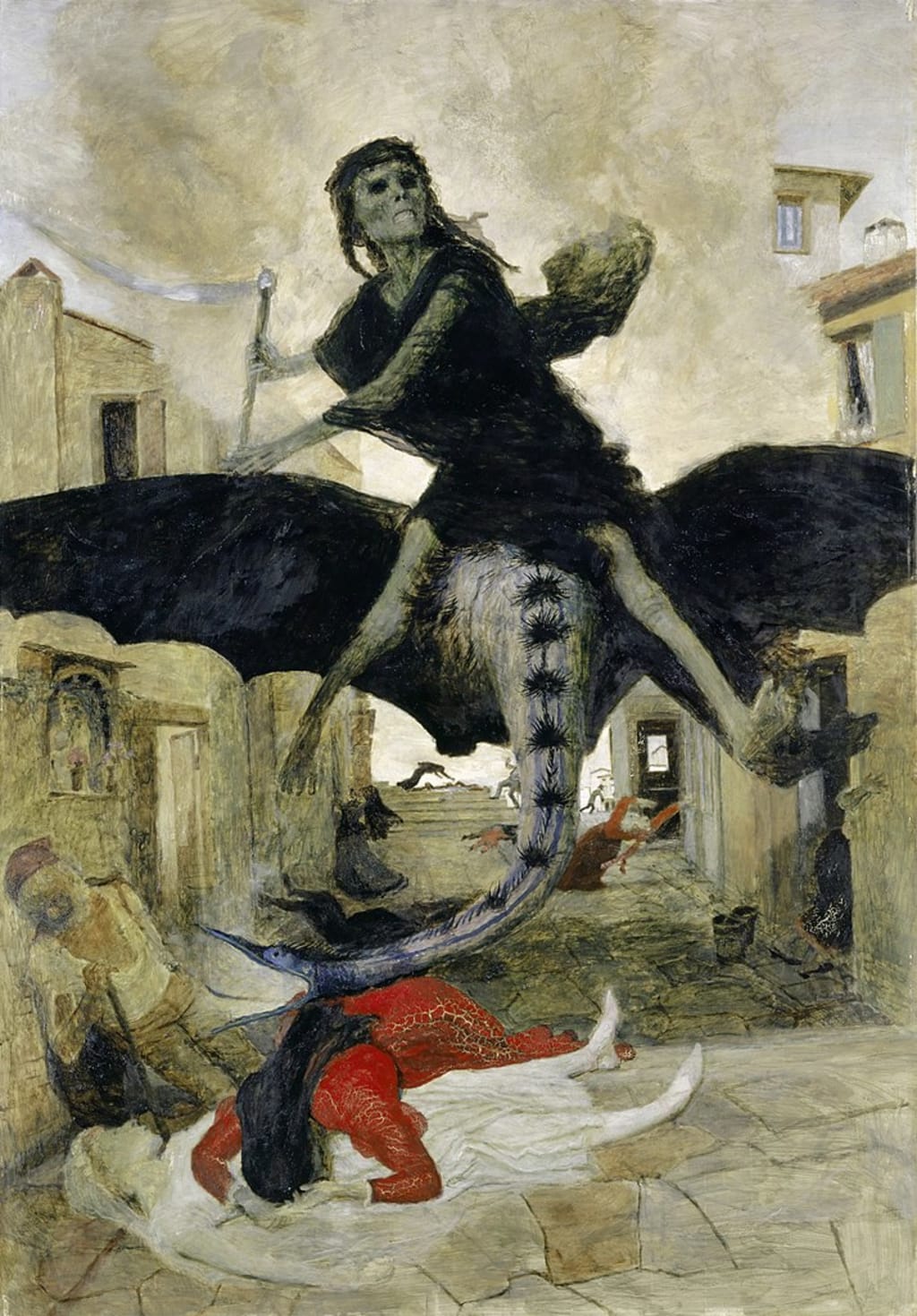
It was years after the war when the government of Kleptotania told my people that we would be the proud witnesses to the might of empire.
By the time I was born, the village of Soral, in the province of Katintan, had already been under the rule of the greater Kleptotanian empire for thirty years.
The empire fought a vicious war alongside the Scurrilitians and other allies against a seemingly implacable threat, but after that war was won, the allies quibbled over the spoils and became enemies.
We were so evenly matched that we were in a deadlock. No one could act, but no one retracted their claims to new territory or dared back down in the face of aggression.
We also had ideological differences with the Scurrilitians, which grew more strained as the world seemed to divide itself between supporters of their ideology and ours.
We learned that the Scurrilitians built a weapon of such power that it would make them unstoppable, unless we built such weapons to match them!
It wasn’t long before the military came in and built roads and erected new buildings.
Before then, my village was a grazing ground for herdsman, a planting ground for farmers. Though we’d long been part of the Empire this was the first time we were gifted new technology.
They replaced our huts with houses, ran electricity, and introduced us to marvels which we did not even know existed. We could drive cars and be educated on how to build and maintain these things ourselves.
We became part of the modern world.
I recall how proud my father was. He told me we were the vanguard of a new race of people, loyal subjects hand chosen to participate in a grand expansion.
The first time they were to demonstrate their new weapon they sent scientists door to door to bid us witness the spectacle.
We would witness it many times after as well. They tested it casually, frequently, assuring us we were at a safe distance.
When I was only cresting twenty years of age, and studying at the School for Agriculture, thirty of my fellow students and I were out on a land survey when the bomb erupted in the distance.
An orange and green glow thrust high into the air a cloud which mushroomed out for miles into the atmosphere and rained black ash down on us as we travelled along in our mechanical rovers.
We laughed and brushed it off our skin.
It is a thunderbolt from God, I thought, but was careful to keep that thought to myself, as the Kleptotanian empire frowned on religion.
Later we found a nearby lake, which one student remarked he’d never seen before.
Some supposed it was made by the bombs.
We decided to take a swim to cleanse ourselves of the dust and ash our new superweapon kicked up.
Now I lay in hospice, dying at twenty-nine.
I can’t help but think it has something to do with the mighty weapon which was supposed to save my people from the aggression of the Scurrilitians.
I am the last of the thirty-one people who went on that survey only nine years ago. All my fellow students have since fallen ill and passed from this earth. So too with others in our province, many too young for it to be mere coincidence.
My sister, Aliya, visits often. She says that our people’s attempts to petition the Kleptotanian government only garnered one consistent answer: we suffer from a mass paranoia.
According to them, we got it into our heads that a few untimely deaths are the results of the tests.
Our symptoms, they say, are psychosomatic.
If belief could end this excruciating pain, I would certainly make it so.
I should not want to be caught praying to a God in which I am not supposed to believe, but I pray silently anyway.
I pray for relief, even if in death, and would take my own life if it were not for the further hurt it would cause my family.
Aliya cleans at the military bases, which are conspicuously much farther from the test sites than our village. She overheard two prominent military men talking about the devastating illnesses which continue to befall us.
In a dismissive tone, one of them said: “When we chop wood, chips fly.”
She wept at my bedside as she told me this.
Of course, the implication is clear.
We were not the recipients of a great honor.
Just another part of the experiment.
I will get no justice, but I sincerely hope that if there is a God, He will exact it in my stead when I am gone.
***** * *****
The true story on which this is based is recounted by survivors and their descendants in the 2014 documentary The Polygon, on which I further expound in this Horror to Culture article.
About the Creator
C. Rommial Butler
C. Rommial Butler is a writer, musician and philosopher from Indianapolis, IN. His works can be found online through multiple streaming services and booksellers.
Keep reading
More stories from C. Rommial Butler and writers in Fiction and other communities.
Ghost Kitten Rise
There is another world that exists parallel to our own. It sits right beside us, and above us, and below us, and all around us, yet we never see it, and only very few of us ever sometimes feel it. That feeling may come as a cold chill, or a whisper from an empty room, or a tingle running down the spine, or any of a million other barely noticed disturbances to our ordinary everyday lives. We only notice because the feeling is so non-ordinary, so different from what we expect and are used to. Some people call it the spirit world, or another dimension or heaven or hell, but the name is not important, at least not for purposes of this story. What is important to understand about this other world is that it is inhabited by many creatures, some of which are formerly living beings from our own planet earth. Most people refer to these as ghosts, and they are feared by the still living. Some of these ghosts should be feared, but others are innocent and kind, even helpful to the living. There are other things in that world that are much more fearsome than the former living. They are natives of that world, and it is all they have ever known. However, they also know of the ghosts, and they know they come from another place. They very much desire to know what this other place is, where it is, and how to get there. They wish to conquer that world, our world, and make it their own. The reasons for this are not understood and there may be no reason, at least not one we could ever hope to comprehend. For countless millennia these beings have waited and watched and plotted and planned and made attempt after attempt to breach into our world.
By Everyday Junglistabout 19 hours ago in Fiction
"Scream 7" (2026): Running out of Fresh Screams
This is the seventh time we’ve had a Ghostface crisis. Scream 7 is the latest edition of the Scream franchise. Sydney Prescott and her family are under attack by another anonymous killer dressed in a Ghostface costume. While having issues with her daughter, Tatum, they run from the bloody murders, trying to determine who is behind it all.
By Marielle Sabbag7 days ago in Horror



Comments (17)
Very well told, in tone I get somewhere between fable and sci-fi, but the rumble of your stark message can't be ignored. Weirdly in keeping with my recent delving.
Congratulations on Top Story!! - Well Deserved!!!
" I will get no justice, but I sincerely hope that if there is a God, He will exact it in my stead when I am gone. Same thoughts. Congrats on Top Story.
Congratulations on a well-deserved top story!! My grandmother had wide spread cancer and she talked about how the area she worked in was sprayed and she thought that was the cause of her widespread cancer. My mother claimed it was our diet. The chemicals sprayed on our food.
That is so tragic. Congrats on the TS.
I agree with DK. This is a very chilling story, especially when it is so easy to see its modern analogue in our present reality (or unreality if you prefer). Great writing, Rommi. Congratulations on your Top Story! Richly deserved!
Nice story. “When we chop wood, chips fly.” I like this line. Congratulations on top story.
Back to say congratulations on your Top Story! 🎉💖🎊🎉💖🎊
What a tragic and profound story. Despite the sadness, I love your storytelling here :) Wonderful work!
Absolutely chilling. Masterful storytelling, Rommi. And congrats on Top Story it is very well deserved.
This is a fantasy story that smacks of real life. Good job.
This was so disheartening and yet it continues into this day. Will there ever be a solution to man's curiosity of creating weapons of mass destruction? The answer is simple, no. Like the evolution of technology in general, weapons fall right on that timeline. What the world needs is to smoke a bong and chill. Leave each other alone.
This is written on such a wonderful way that measles makes us feel for the MC How false trust and belief can be our undoing And all based in truth, which is scarier than the story
So tragic. Such a sad read. Thanks for sharing with us, Charles.
Oh man, Rommi. This was brilliantly told. Such trust placed only to discover that your fate can be dismissed as an unfortunate by-product. Well-wrought. This is going to sit with me a while.
I pray for relief, even in death. Sentiments too familiar. What an excellent job recounting such tragic events.
That was so tragic and devastating 🥺 It's even more heartbreaking to know that it's based on true events