
Whispers of the Tide: A Story Told in Shells
How a Simple Seaside Scene Captures the Poetry of Nature, Memory, and the Eternal Rhythm of the Ocean

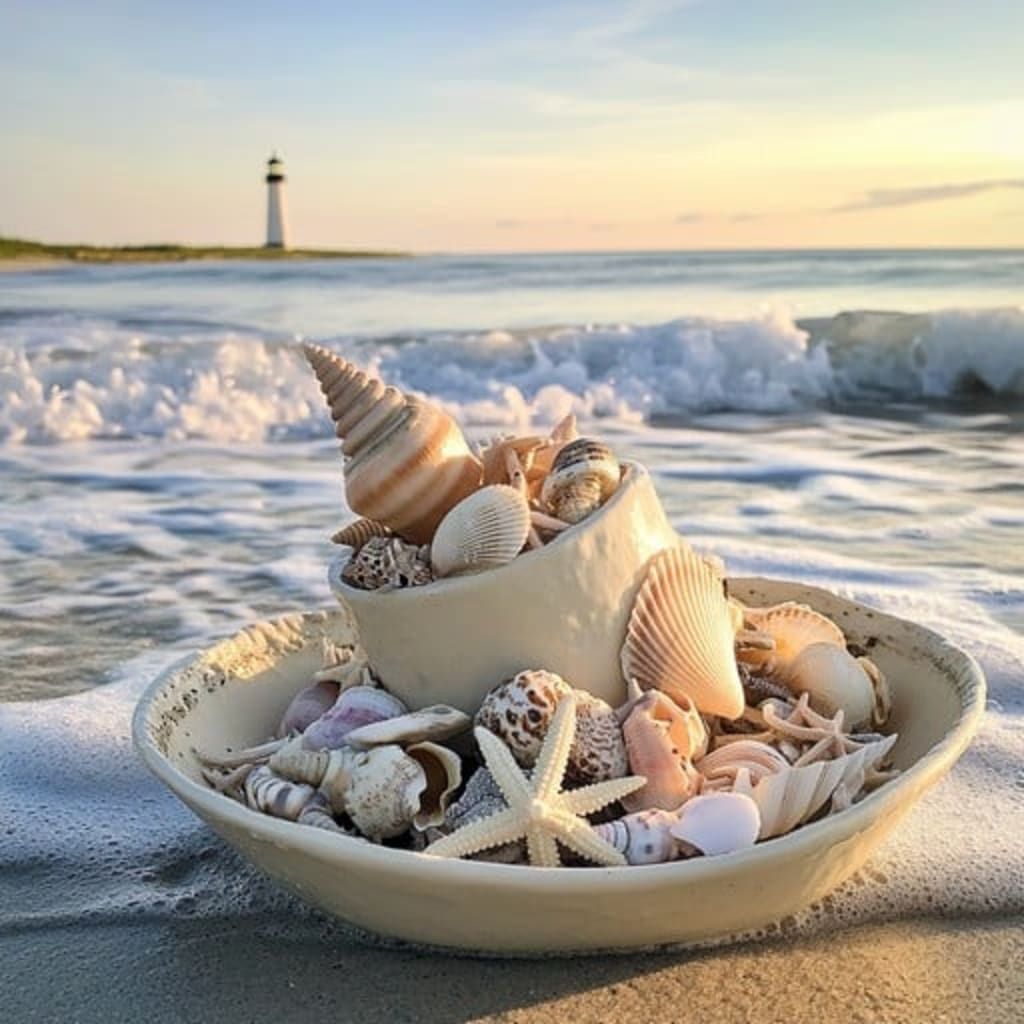
At first glance, the image is simple—serene, even. A ceramic bowl, resting gently on the damp sand, cradles an exquisite collection of seashells. They sit nestled together like quiet thoughts, each one shaped by time and tide. Beyond this peaceful arrangement, the shoreline stretches toward a glowing horizon, golden with the touch of evening light. A lighthouse stands distant and steady, a silent witness to the sea’s ever-shifting moods.
But look closer, and this moment—this one quiet image—begins to unfold like a story. It is not just a picture of seashells on the beach. It is a frozen verse of a larger poem written by nature, infused with history, solitude, and the passage of time.
The Bowls of the Ocean: Nature’s Keepers of Time
The shells in the bowl are not merely decorative. They are artifacts—minute remnants of life. Each shell once protected a creature within it, housed a soft body, or echoed with the sound of breathing beneath the waves. Their whorls and ridges are like the rings of trees, marking the years, storms, and seasons that shaped them.
There’s a quiet metaphor here: life shelters itself in fragile armor, eventually leaving behind its casing. The bowl cradles these remains not as a graveyard, but as a museum of the ocean’s life—humble, anonymous, but beautiful. The delicate balance of spirals and ridges, the starfish like a frozen dancer at rest, all whisper of a world beneath the waves that most never see.
And yet, through this collection, we are allowed a glimpse—not just into the ocean’s biology, but into its soul.
The Shoreline’s Liminal Magic
This image was captured at the water’s edge—where sea meets land, where wave meets world. The shoreline is a place of transformation. Every moment here is transition: tides rise and fall, shells are delivered and reclaimed, and stories are etched in sand only to be erased seconds later. This is where permanence is an illusion, and beauty exists precisely because it is so fleeting.
The bowl, set at the brink of the incoming tide, rests in a moment of precarious peace. Will the sea reclaim the shells? Will a wave tip the bowl and scatter its treasures? Perhaps. Perhaps not. The tension between stillness and movement, possession and loss, is part of what makes the image so haunting.
There’s a quiet lesson here, too. We often try to contain what is meant to move—be it memory, people, or time itself. The bowl is our effort to hold the ocean still, to possess its wonder in a graspable form. And yet, even in this photograph, we know it cannot last.
The Lighthouse: Distant Guardian of the Past
In the background, the lighthouse rises, solitary and symbolic. Its presence is subtle but significant. For centuries, lighthouses have stood as guides, protectors, and witnesses to both tragedy and triumph at sea. They are buildings with memory, their stones soaked in salt and storm.
Here, the lighthouse is quiet, perhaps unused in modern times, but still noble. It speaks to resilience, to the quiet endurance of things that weather the storms. While the bowl of shells suggests fragility and the ephemeral, the lighthouse stands for continuity and endurance. Together, they form a poignant contrast—two aspects of the human condition and of nature itself.
It also reminds us of perspective. The shells are the ocean's whisper. The lighthouse is its echo. The former intimate and immediate; the latter vast and historical.
Colors of Solitude and Wonder
The color palette of the image is soft and reverent: blush pinks and sandy creams of the shells, the silver-blue foam of the sea, and the golden light of the setting sun. These are not bold colors that shout. They are the hues of memory and meditation, reminiscent of faded photographs and quiet evenings.
The composition feels almost sacred—an altar to the natural world, arranged not by chaos but by a gentle human hand, as if someone, moved by the sea’s offerings, decided to make a tribute. The bowl becomes a chalice, the shells its communion.
The starfish at the front is particularly evocative. Traditionally seen as a symbol of regeneration, it adds to the quiet narrative of rebirth and return. No matter how many times the tide pulls things away, it brings them back again, different, but not gone.
The Human Presence: Seen but Unseen
There are no people in the picture, but their presence is implied. Someone placed that bowl. Someone gathered those shells. And someone, camera in hand, paused long enough to witness this moment and frame it forever. That quiet act of observation and appreciation connects us all.
In many ways, this image is a mirror. We see our own longing to pause the moment, to collect beauty, to resist the passage of time. We too are collectors of memories, of fragments, of emotions worn smooth by experience.
And just like the shells, we carry the marks of our environment—weathered not by salt and sea, but by joy and sorrow, love and loss.
A Scene That Sings of Stillness
This picture is not about action. It does not demand urgency or drama. Its power lies in its stillness. It offers the viewer a place to rest, to reflect, and to simply be. In a world that moves quickly, it is a gentle reminder to slow down—to notice the curl of a shell, the softness of the light, and the quiet curve of the tide.

Perhaps that’s why this image resonates so deeply. It’s not just about the sea or the shells or even the photograph itself. It’s about presence. About what it means to pause, to hold something delicate in our hands, and to understand that its beauty lies not just in how it looks—but in what it means.
Conclusion: A Poem in Sand and Shell
This image, deceptively simple, is a meditation in visual form. It invites the viewer to see with both eyes and heart—to recognize the elegance in nature’s smallest details and to reflect on the human urge to find meaning in them.
In the bowl of shells, we find a story of time, fragility, and awe. In the lighthouse, we see memory, steadfastness, and the quiet dignity of watching over the world. And in the meeting of shore and sea, we see ourselves—always standing on the edge between what was and what will be.
The tide may take the shells back. The sun will set. The bowl may one day be empty. But the moment—this moment—is eternal.
And that is the gift this picture gives. A whisper of the tide. A fragment of a poem. A memory without words.
About the Creator
Fazal Malik
"Welcome ! We're dedicated to making learning fun and accessible. Subscribe for educational videos, tutorials, and resources to ignite your curiosity."
Keep reading
More stories from Fazal Malik and writers in Fiction and other communities.
It Lurked in Darkness
Ray enjoyed investigating abandoned places with his friends. It was something of a hobby now that they all started as just a fun thing to do when they spent time together. This weekend they would be visiting the Halloran Manor a long since abandoned home that had been forgotten by time.
By 3rrornightshift4 days ago in Fiction


Comments
There are no comments for this story
Be the first to respond and start the conversation.