
Which Mythology Has the Most Powerful Gods?
Greek?
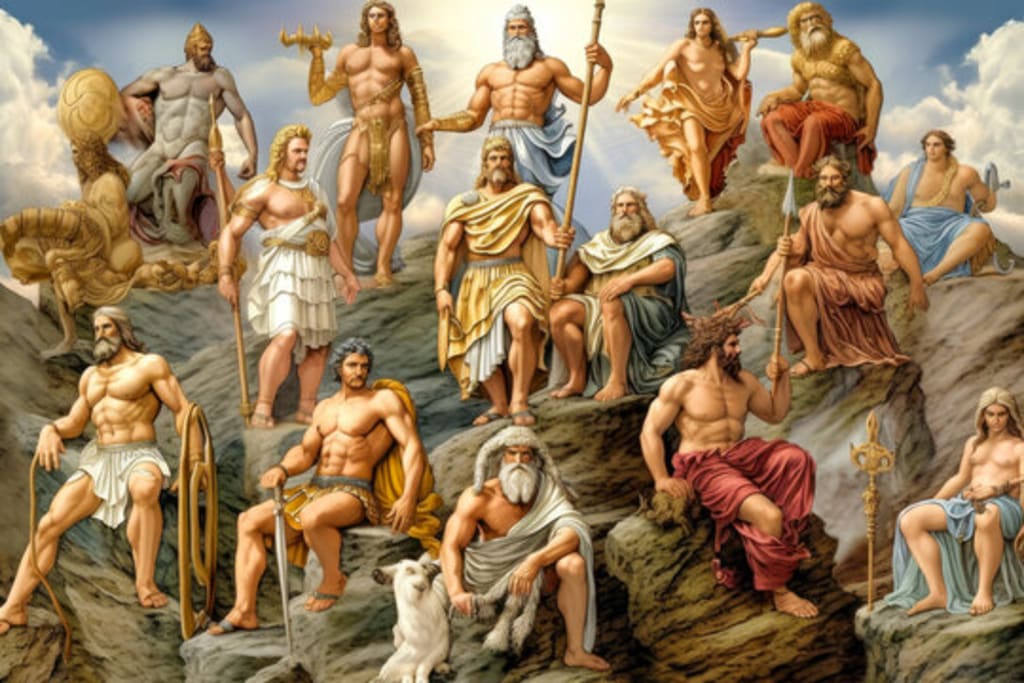
In a battle of lightning powers, who would win - the hammer-wielding warrior Thor or the mighty Zeus? Could the Sun God Ra defeat Hades and escape his terrifying underworld? And could the third eye of Lord Shiva burn Anubis into ash?
We’ll examine the feats and statements of gods from various mythologies, comparing them against their own pantheons and their mightiest cosmic contemporaries around the world. Once we’ve analyzed the evidence and crunched the numbers, we’ll have definitive proof of which mythology has the most powerful gods.
But before we start, we want to make it clear that our findings are not meant to disparage anyone’s genuine spiritual beliefs. Our depictions of these legendary figures and gods should be taken with a grain of salt and the understanding that we don’t claim to write the canon. With that small caveat out of the way, let’s begin this celestial skirmish with some of the most well-studied gods in the world: the Olympic pantheon of Greek mythology.
We’ve got some serious contenders, folks, from the lightning bolt-hurling sky god Zeus to the lord of the sea, Poseidon, and the master of the underworld, Hades. These three brothers set the standard for powerful mythological gods. While many other Greek gods and goddesses are mighty in their own right, none can match the prestige or power of Zeus, Poseidon, and Hades.
After the Titanomachy, a grand conflict where the gods overthrew the primeval Titans for control of the universe, Zeus and his two most famous siblings gambled among themselves to determine who would lead the pantheon. Although Zeus won the coveted spot as Father of Man and leader of the gods, the fact that the brothers chose a game of chance implies that their combat skills were comparable enough that a three-way battle between them would have had an uncertain outcome. Each brother possesses unique abilities: Hades has the supernatural power of invisibility, Zeus commands lightning, and Poseidon controls the seas and causes earthquakes.
Hades' power of invisibility, though not as destructively potent as Zeus' lightning or Poseidon's oceanic storms, provides a significant advantage for surprise attacks and battlefield retreats. This stealth capability, combined with his geokinesis, makes him a formidable foe. For example, when Hades abducted Persephone, he opened the earth to take her and disappeared back below, all without being stopped by the other gods. Despite Zeus' eventual intervention leading to a compromise, it's clear Hades wields great power within his underworld domain. However, his powers are limited to the dead and the underworld, reducing his effectiveness in battles against other gods.
Poseidon, the god of the sea, has a more direct influence over the living. He can cause earthquakes and stir up powerful storms and tidal waves. His greatest feat, creating horses, revolutionized warfare and transportation. Yet, his powers remain limited compared to Zeus, who controls the sky and can shake the earth while also dropping lightning bolts from above. Zeus’ victory over the monster Typhon by hurling a mountain at him and his ability to shapeshift into anything, from a bull to a beam of sunlight, underscores his supremacy among the Greek gods.
Through these three brothers, we understand that a powerful god must command the elements and hold an unchallenged position of authority within their pantheon. Now, let's see how these Olympians stack up against the Norse gods.
The Norse cosmology reveals a pantheon residing within nine realms, mostly controlled by their leader, Odin. A wise and shrewd chief god, Odin sacrificed greatly for his power. He gained infinite knowledge by dropping his eye into the Well of Mimir, the power to compel others through poetry by questing for the Mead of Inspiration, and mastery over runes and their magical properties by impaling and suspending himself from the tree of life for nine days. Although Odin isn’t depicted in combat as often as some other Norse gods, he is a god of war due to being the ruler of Valhalla, the hall for warriors who died in battle. Odin’s wisdom and foreknowledge of all events within his nine realms place him a cut above other chief gods.
Odin’s most celebrated offspring is Thor, the Norse god of thunder, who trivializes Zeus’ lightning bolts with his divine weapon, Mjollnir. This hammer can kill most beings in the nine realms with a single blow and summon storms and lightning. Thor’s other artifacts, such as the Megingjord belt that doubles his strength, and his chariot-pulling goats that break mountains, further emphasize the Norse gods' superior power level. However, their vulnerability to prophecy, specifically their destined demise in Ragnarok, limits their immortality and combat effectiveness.
To explore a higher level of divine might, we look to the gods of the Ancient Egyptian Pantheon. With their control over universal concepts like order and life itself, these gods exhibit immense power. Osiris, who survived his murder to become a guardian of the underworld, shares afterlife responsibilities with Anubis. The cyclical adventures of Ra, the Sun God, demonstrate his transcendence over death as he battles chaos every night and returns with the sun every morning. Ra’s power over the secret names of all things, allowing him to speak beings into existence, further cements his status as a being beyond the limitations of death.
Yet, there is one pantheon that reaches an even greater level of divine might: the Trimurti of Hindu mythology. This trio of supreme deities governs the creation, preservation, and destruction of the universe. Brahma, the god of creation, can return from absolute nothingness, making him invulnerable to any force of destruction. Shiva, known as The Destroyer, embodies necessary change and can reduce anything to ashes with his third eye. Vishnu, the preserver, tends to the universe through his many avatars, often matching Shiva in combat. Their interplay highlights a balance of creation, destruction, and preservation at a cosmic level.
Comparing the chief gods across these mythologies, the Trimurti rank highest in terms of power, followed by Ra, then Odin, and finally Zeus. But the world is much bigger than these mythologies, with many other gods out there.
About the Creator
Keep reading
More stories from Shinzou Wo sasageyo and writers in Fiction and other communities.
The fastest speedsters ranked
Like many of you, I often ponder who the fastest on-screen superhero is. Our curiosity drives us to seek the speediest without the "furious." We have a need for speed, both on the small and big screens. We'll rank the ten fastest speedsters by their speed and feats, choosing only one candidate per franchise to keep it diverse.
By Shinzou Wo sasageyoabout a year ago in Fiction
Miss Persephone's Manual to a Seemingly Ordinary Life
Miss Persephone was found at the dining table, her blue eyes swollen, her tears arriving and retreating like the tides of the ocean. Earlier that day, her family had visited her in the retirement home where she had lived for eight years. It was her eightieth birthday.
By Imola Tóth3 days ago in Fiction
Instructions for Returning to a Place That No Longer Exists
I. Purpose of This Document These instructions exist because return has been explicitly requested. Please note that they are not an endorsement of the request, nor should their existence be interpreted as confirmation that return is advisable, safe, or even possible in any way commonly understood. This document addresses procedure only.
By Shannon Hilson5 days ago in Fiction


Comments