
Where Healing Waits
How a hospital room became a place of hope
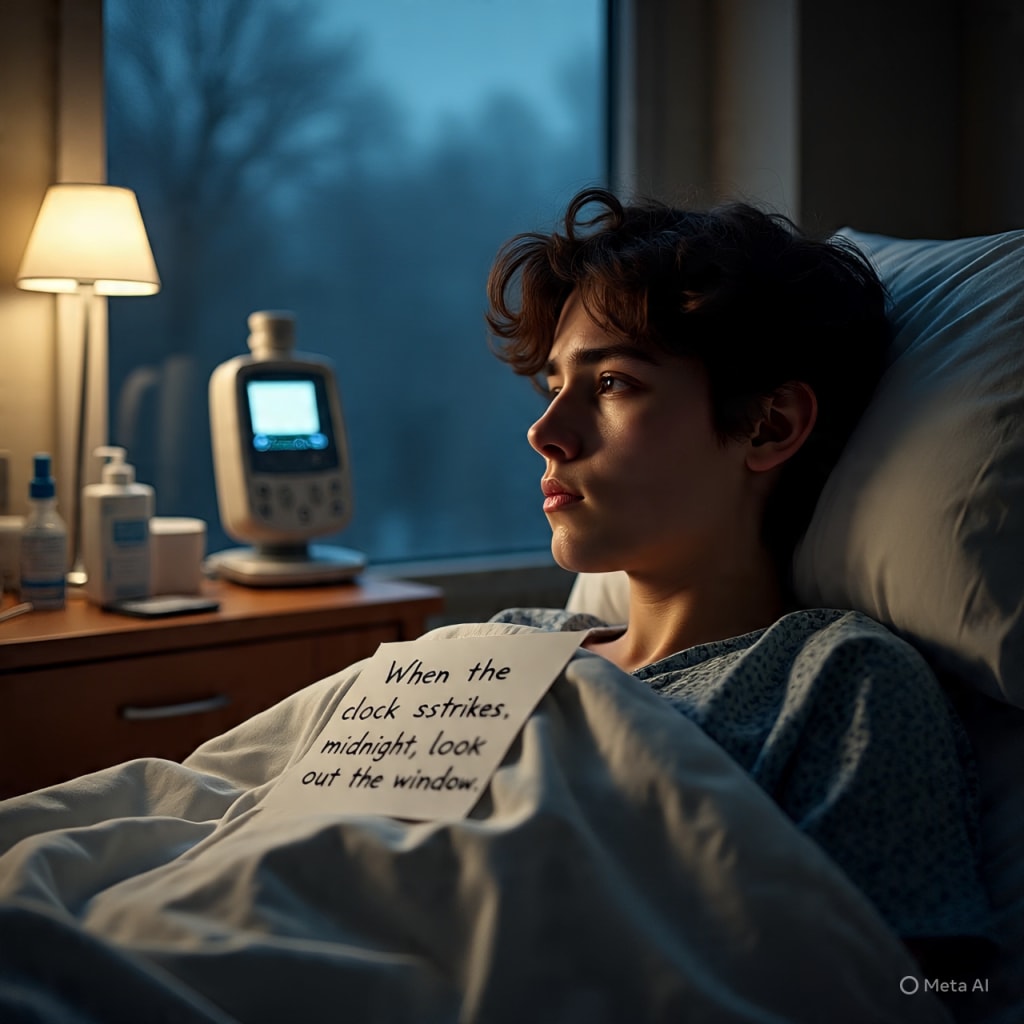
Hospitals have a way of folding time. Minutes stretch into hours, hours collapse into blinks, and whole days feel like they belong to someone else. The smell of antiseptic clings to the walls, the fluorescent lights hum without rest, and the quiet is always interrupted by beeping monitors or footsteps in the corridor.
For Daniel, Room 405 had been his world for nearly a month. At twenty-seven, he had never imagined spending so much time in a hospital bed. A sudden car accident had broken more than just bones; it had scattered his sense of direction. The cast on his leg, the dull ache in his ribs, and the slow march of recovery left him restless.
But the room had a window. From it, Daniel could see a patch of city skyline and a single elm tree in the courtyard below. That tree became his anchor. Every morning he watched its leaves flutter, every night he traced its shadow against the pavement.
One Tuesday morning, as he sipped lukewarm coffee from the plastic cup a volunteer had brought, Daniel noticed someone in the courtyard. It was an older woman, perhaps in her seventies, sitting in a wheelchair near the elm tree. A nurse stood nearby, adjusting a blanket on her lap. The woman tilted her face upward toward the sky, eyes closed, smiling as if she were gathering sunlight.
The next day, she was there again. And the day after. Each time Daniel looked out the window, he found her near the elm, sometimes with a book in her hands, sometimes just resting. She became part of his daily rhythm, as steady as the nurses’ rounds.
On the fifth morning, curiosity got the better of him. When Nurse Patel came to check his vitals, Daniel asked, “Who’s the woman outside? The one in the wheelchair.”
Patel glanced at the courtyard. “Ah, that’s Mrs. Alvarez. She’s been here a long time—longer than you. She likes the tree.”
“Does she… get better?” Daniel asked hesitantly.
Patel’s eyes softened. “She has her good days.” Then, with a gentle pat on his arm, she added, “Sometimes healing looks different for everyone.”
That answer stayed with him.
Later that week, Daniel persuaded the staff to wheel him down to the courtyard for some fresh air. The sunlight hit his face like a forgotten friend. He could smell grass, faint but real, and the breeze carried a whisper that the sterile room upstairs never could.
Mrs. Alvarez was already there. She turned her head toward him as he was parked a few feet away. “You’re the young man from the window,” she said, her voice thin but lively.
Daniel laughed. “I guess I am. I’ve seen you here almost every day.”
She nodded, her eyes crinkling. “This tree reminds me of the one outside my childhood home. When I sit here, I feel like I’m not just waiting. I’m living a little.”
They spoke for a while, about trees, about books, about the way the city looked different depending on the season. For Daniel, it was the first conversation in weeks that wasn’t about pain, medication, or progress charts.
Days turned into a new routine: therapy sessions, rest, and courtyard visits. Each time, he and Mrs. Alvarez shared fragments of their lives. She told him about her children, scattered across states, and how she once taught music. He told her about his love of hiking, about how he missed the crunch of gravel under his boots.
“Someday soon,” she said, “you’ll hike again. And when you do, think of this tree for me.”
Daniel promised he would.
One morning, Daniel woke to find the courtyard empty. The elm tree stood alone. He waited all day, glancing out between therapy sessions, but Mrs. Alvarez didn’t appear. The next day was the same. On the third day, Nurse Patel came in quietly, carrying his chart, and Daniel already knew.
“She passed peacefully,” Patel said, her voice gentle. “Her family was here.”
Daniel looked out at the elm tree, its branches swaying in the wind. He felt a tightness in his chest, not just of grief but of gratitude. Mrs. Alvarez had given him something the doctors couldn’t prescribe: a reminder that even in the middle of uncertainty, life could still be found—in sunlight, in conversation, in a tree outside a hospital window.
Weeks later, when Daniel was finally discharged, he asked to be wheeled through the courtyard one last time. He reached out and touched the elm’s rough bark, grounding himself in its quiet strength.
As he left the hospital, crutches under his arms, he carried more than the weight of healing bones. He carried the memory of a woman who taught him that waiting could also be living.
About the Creator
Keep reading
More stories from Princess Ladly and writers in Fiction and other communities.
Gold Price on the Move: A Mirror of Global Uncertainty
The world often forgot that prices were stories. On a glowing chart in some financial terminal, the price of gold looked like nothing more than a jagged line—up, down, sideways. But behind every tick lived human hopes, fears, and calculations, as tangled as the veins of gold hidden in the earth.
By Princess Ladly7 months ago in Fiction
Lightning Never Strikes Twice
The distant rumble, the sudden deluge, the crescendo of sound, the flash of light, the explosive energy — it never gets old. I became an amateur storm chaser about two years ago. My wife, Cindy suggested it. Sort of. She said, "Alex, you know this cancer is killing me. I've come to terms with that, but you're smothering me. Go join a band, write a book, or become a storm chaser, for all I care. I love you, but you need a hobby."
By Julie Lacksonen4 days ago in Fiction
Mr Pig
There once was a pig who lived on a farm, in a truly magnificent pen. His home was surrounded by delightful sights and other farmyard animals. But Mr Pig decided early on (when he was just a new pink piglet) that he would not be concerned with matters of material value.
By Angie Allanby6 days ago in Fiction
Who is your "Person"?
It's important to recognize that you cannot go through life as easily on your own. My name is Elizabeth and I'm a survivor of child abuse and horrific trauma. Healing from trauma is not a quick fix and recognizing that it will take time, is part of the struggle.
By Elizabeth Woods2 days ago in Psyche




Comments
There are no comments for this story
Be the first to respond and start the conversation.