
When the Sun Didn’t Rise for 30 Days
A Tale of Survival, Fear, and Hope in the Longest Night


When the Sun Didn’t Rise for 30 Days
A Tale of Survival, Fear, and Hope in the Longest Night
The sun is something most of us take for granted. We wake up with its first light, and we rest when it sets, knowing it will return the next morning without fail. But imagine a world where one day the sun doesn’t come back. Not for a few hours. Not for one long night. But for thirty days in a row.
This is not just science fiction it is a terrifying scenario that has been imagined in literature, movies, and even whispered about in small towns close to the Arctic Circle where long polar nights are real. But what if it happened suddenly across the entire world? What would people do? How would life continue? And most importantly, how would humanity cope when the sky itself refused to turn bright again?
The First Day: Confusion
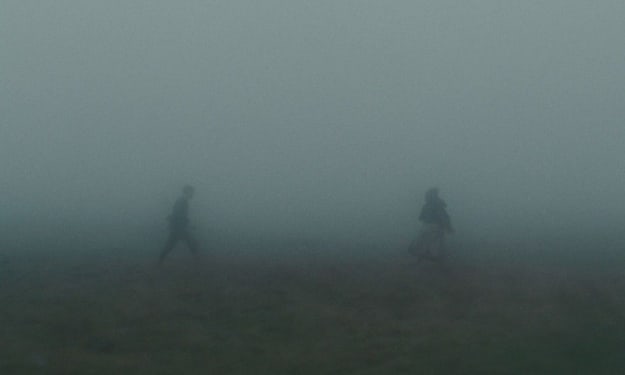
It all began like any ordinary morning. People woke up, expecting to see the first golden rays of sunlight. But the sky remained stubbornly dark. At first, many thought it was just an unusual solar eclipse or maybe an atmospheric event. Governments assured citizens that it was temporary. Schools opened late, businesses ran on generator lights, and people joked about “bonus sleep time.”
But as hours turned into a full day, uneasiness spread. Streetlights that were supposed to switch off never did. Farmers looked at their fields with worry. Parents held their children closer. Social media exploded with hashtags like #WhereIsTheSun and #DarkDay.
The First Week: Fear
By the seventh day, the jokes stopped. Without the sun’s warmth, the earth’s temperature began to drop rapidly. Places near the equator felt like late autumn, while regions further north and south plunged into freezing cold. Crops started failing. Animals behaved strangely birds stopped migrating, cows refused to produce milk, and even pets seemed restless.
Scientists worked nonstop, trying to explain the phenomenon. Some said it was a shift in the Earth’s rotation, others claimed it was a cosmic shadow, and some even suggested alien interference. Theories flooded the internet. But the truth was no one knew why the sun had disappeared.
Religion and spirituality also surged. Temples, churches, mosques, and shrines filled with people praying for light. Ancient prophecies about endless nights were dug up and shared. Fear turned into panic in some places as people looted stores, fighting over batteries, fuel, and food supplies.
The Second Week: Darkness in the Heart
The longer the darkness lasted, the more fragile human emotions became. Depression and anxiety rose sharply. Without sunlight, the human body lacked Vitamin D, and people’s circadian rhythms collapsed. Insomnia spread like a silent disease. Doctors reported cases of “darkness psychosis,” where people could no longer distinguish dreams from reality.
Governments declared emergencies. Cities ran on artificial lighting, but power plants struggled to keep up with the demand. Rolling blackouts became common. Transportation slowed as airports faced constant danger in the unending night sky.
Yet, amidst this, acts of kindness shone. Communities formed night-markets and distributed hot meals. Volunteers checked on the elderly. Artists painted glowing murals, and musicians performed to bring hope. Humanity discovered that when the sun disappears, the light within people becomes more important than ever.
The Third Week: Adaptation
By the 20th day, survival instincts took over. People had started adjusting to life in darkness. Farmers built giant greenhouses with artificial lights to keep food production alive. Cities introduced “light zones” areas where massive LED panels mimicked daylight to help mental health. Scientists invented emergency solar simulators to give small doses of UV light.
Technology companies became heroes. Drone fleets delivered supplies in areas cut off by snow and ice. Social media transformed from a place of panic to a hub of community survival tips teaching people how to make improvised heaters, conserve fuel, and cook in low light.
Still, hope was fragile. Rumors spread that the sun would never return, that this was the beginning of a permanent ice age. But every culture, every language, carried the same prayer: “Let the dawn come back.”
The Fourth Week: The Edge of Collapse
By day 28, the world was on the edge. Energy shortages worsened. In some regions, law and order broke down completely. People abandoned cities to search for warmth in the countryside. Oceans began to freeze in unusual patterns, and wild animals crept into human settlements, searching for food.
Scientists warned that if the sun did not rise within two more weeks, Earth could face irreversible climate collapse. Entire species might vanish. Humanity itself might be pushed into survival mode for generations.
And yet, even in the darkest of times, stories of resilience surfaced. A small town in Norway held a 24-hour “Festival of Darkness” where they sang, danced, and lit thousands of candles to defy despair. In India, villagers gathered every night to share meals under lanterns, saying, “If the sun cannot rise, we will rise for each other.”
The Thirtieth Day: Dawn
Then, just when hope seemed impossible, it happened. On the morning of the 30th day, a faint glow appeared on the horizon. At first, people thought it was another illusion. But the glow grew stronger. Orange, pink, and gold painted the sky. The sun had returned.
All around the world, cheers erupted. People flooded the streets, crying, hugging, praying, singing. Strangers embraced as if they were family. Scientists wept with relief, children danced, and bells rang from every corner of the world.
The thirty days of darkness had ended. But the experience left humanity forever changed.
Lessons from the Longest Night
The disappearance of the sun, even for a short time, taught humanity unforgettable lessons. It showed how fragile our world truly is, how much we rely on nature’s balance, and how quickly life can turn upside down. But it also revealed the strength of human unity, kindness, and creativity.
We learned that light is not just in the sky it is also in our hearts. And even in the darkest night, as long as people stand together, hope can never be extinguished.
About the Creator
Farooq Hashmi
Thanks for reading! Subscribe to my newsletters.
- Storyteller, Love/Romance, Dark, Surrealism, Psychological, Nature, Mythical, Whimsical
Keep reading
More stories from Farooq Hashmi and writers in Fiction and other communities.
The Last Call From My Father
The Last Call From My Father A Story of Love, Regret, and the Words Left Unspoken The night was heavy with silence when my phone lit up with a familiar name Father. It was late, almost past midnight, and I hesitated before answering. We hadn’t spoken properly in weeks. Work deadlines, city life, and my own stubbornness had built an invisible wall between us. But something in me, perhaps instinct, pushed me to swipe the green button.
By Farooq Hashmi5 months ago in Fiction
Bomb Scare
It was 2027, and the world never thought it would happen. A missle hit the United States, but it wasn't where they had anticipated. A little town in the northeast was hit by a missile strike, they didn't know why, and they didn't know exactly where it hit, but they did know it was a coastal community, somewhere between Maine and Delaware.
By Gregory Payton3 days ago in Fiction



Comments
There are no comments for this story
Be the first to respond and start the conversation.