
When the Sky Broke
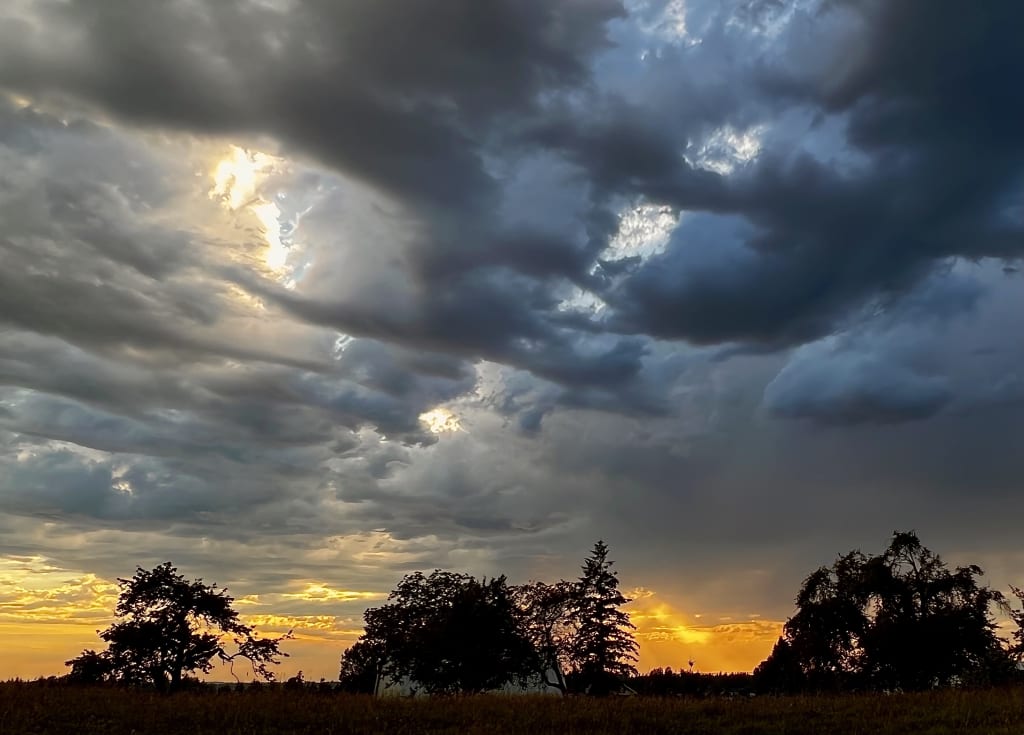
The first fracture appeared on a summer evening in 2089. At first, people thought it was a trick of the light—just a strange ripple across the sunset. But as night fell, the stars themselves seemed to crack, as though someone had dragged a fingernail across the sky.
Governments called it an “atmospheric illusion.” News feeds urged calm. But illusions don’t widen, and this one did. Within weeks, the fracture had grown into a jagged tear that shimmered like broken glass. Scientists launched drones to investigate. None returned.
By the end of the year, humanity stopped asking what it was and began wondering who had done it.
The Silence Above
Mara was an astronomer long before the fracture. She had spent her life chasing comets and tracing galaxies. But the fracture changed everything. Telescopes couldn’t pierce it. Satellites failed as they approached. It was as if the universe itself had been locked away behind an invisible wall.
To her, the silence was unbearable. Humanity had always looked upward, reaching for the stars. Now the stars were still there—but unreachable, hidden behind a curtain no one could pull aside.
Some said it was punishment for humanity’s mistakes: climate collapse, endless wars, reckless exploration. Others believed it was protection—that something dangerous lurked beyond, and the fracture was keeping it out.
The Descent
Two years later, the first object came through.
It wasn’t a ship, not in the way humans understood ships. It was a swarm of obsidian shards that rained down over the Pacific Ocean. When recovery teams arrived, they found fragments humming with an energy no human technology could analyze.
And then the voices began. Not audible ones, but thoughts—alien, jagged, impossible to ignore. The shards whispered of a universe tearing apart, of civilizations screaming across the void. They spoke of the fracture as a wound, not a barrier, and Earth as the final island in a drowning cosmos.
Mara’s Choice
Mara was chosen to lead the research team. She spent months inside the containment dome, listening to the shards. The more she listened, the more she understood. The fracture wasn’t random—it was a doorway. Something was trying to come through, not to conquer, but to survive.
And yet, the whispers carried a warning:
Open the fracture, and Earth will not remain untouched.
Her superiors wanted to destroy the shards, to seal the fracture by force. But Mara couldn’t forget the voices—their desperation felt too familiar. Humanity itself had once looked to the stars for salvation. Could they deny that same hope to another species?
The Night of the Break
On a storm-soaked night, Mara made her decision. She bypassed security, entered the dome, and activated the shards’ resonance pattern. The fracture flared across the sky, brighter than lightning, louder than thunder. For one terrible moment, the heavens shattered.
Everyone expected invasion. Instead, a fleet of living vessels spilled through, glowing like lanterns adrift on the ocean of space. They did not attack. They drifted, broken and weary, refugees from a universe collapsing in on itself.
Mara stepped outside the dome, rain soaking her clothes, and gazed upward. For the first time in years, the sky felt alive again—not fractured, but full of possibilities.
Epilogue: The New Sky
Decades later, historians would argue whether Mara saved Earth or doomed it. The refugees brought knowledge beyond imagination, but also burdens humanity could scarcely carry. Diseases, philosophies, and wars followed in their wake.
But when Mara was asked, in her final interview, whether she regretted opening the fracture, she answered with a smile:
“How could I? The sky was never meant to stay broken.”
About the Creator
Keep reading
More stories from blinklife4us Tour and writers in Fiction and other communities.
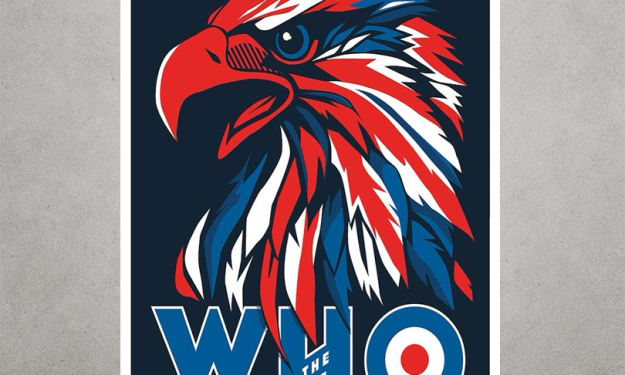
The Who September 10 2025 Wells Fargo Center Philadelphia PA Poster
The Who Philadelphia August 21, 2025 Poster – A Bold Fusion of Rock Legacy and American Spirit Concert posters are more than souvenirs—they are artistic time capsules that capture the essence of a band, a city, and a moment in history. The The Who Philadelphia August 21, 2025 Wells Fargo Center Poster is a prime example. With its striking imagery of a patriotic eagle infused with red, white, and blue tones, this artwork honors both the legendary British rock band and the American city where the concert takes place.
By blinklife4us Tour4 months ago in Art
In Search of Eternity
His street occupied a position of rare absurdity on the map of City N.: it neither led to the sea nor toward the train station. By setting foot on it, one found oneself even farther from one’s destination. Moreover, it was far less well lit than neighboring Verdi Street.
By Anastasia Tsarkova2 days ago in Fiction


Comments
There are no comments for this story
Be the first to respond and start the conversation.