
When Dinner Was a Struggle to Survive
The Quiet Battle for Food in the Middle Ages

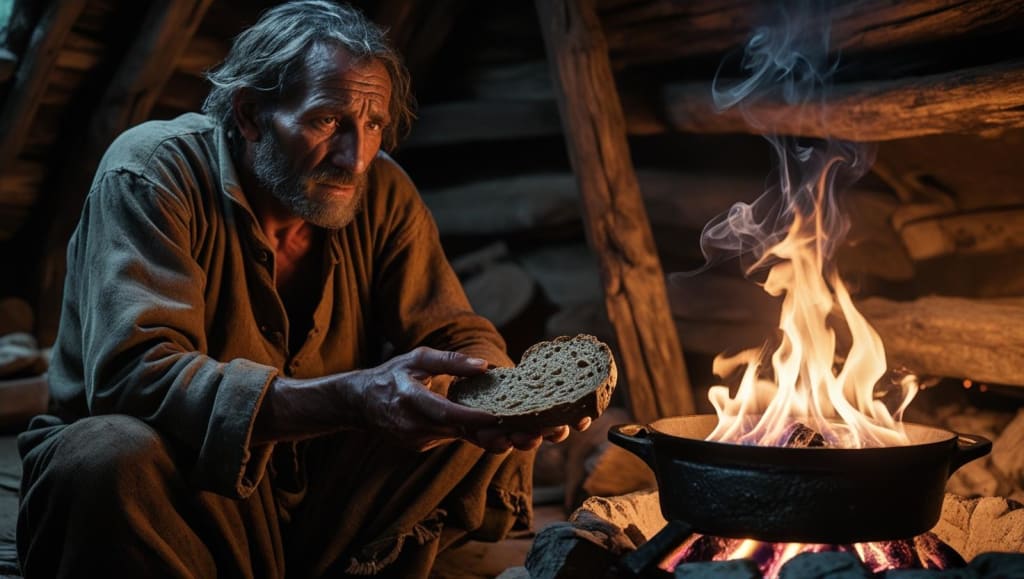
If you think choosing what to eat from your fridge is hard—imagine living in a world where dinner meant survival.
In medieval Europe, especially among peasants and villagers, life revolved around one haunting question: Will there be anything to eat today?
Their meals were simple, not by choice but by necessity. Bread was the centerpiece of most diets, but forget the soft, warm loaves we enjoy today. Medieval bread was dark, hard, and often made from rye, barley, or oats. If harvests were poor, people mixed in tree bark, straw, or even ash. Yes, ash.
Meat? That was rare unless you hunted it yourself—or stole it from the lord’s land, which could get you hanged. Most meals consisted of pottage—a thick, soupy mush of grains and vegetables, slowly boiled over open fires. Spices were expensive and exotic; salt was precious. Imagine eating the same tasteless stew every day for years.
Ale was safer than water, which was often contaminated. So yes, even children drank ale—but it was weak and brewed at home, often by women known as “alewives.”
Hunger was a shadow that followed everyone, especially during the winter or in years of famine. A failed crop didn’t mean higher grocery bills. It meant death.
Food wasn’t just nourishment—it was survival, power, and faith. Monasteries grew herbs, nobles feasted on meat and spices, and peasants prayed for rain.
Today, we throw away leftovers. Back then, people fought to find a single meal.
So next time you sigh at your full pantry or skip lunch, remember—there was a time when a piece of stale bread was a blessing.
About the Creator
Shohel Rana
As a professional article writer for Vocal Media, I craft engaging, high-quality content tailored to diverse audiences. My expertise ensures well-researched, compelling articles that inform, inspire, and captivate readers effectively.
Keep reading
More stories from Shohel Rana and writers in Fiction and other communities.
A Love Rewritten
In the summer of 2025, in a world tethered to screens and algorithms, Emma Grayson found herself untethered from love. At 32, she was a Seattle-based graphic designer, her days filled with pixel-perfect designs and her nights with the hum of notifications. Her last relationship had ended in a flurry of miscommunication, leaving her skeptical of romance in an era where hearts were swiped left or right. Yet, Vocal Media’s trending stories of raw, authentic love—tales of second chances and soul-deep connections—stirred something in her. They whispered that love could still be real, even in a digital age.
By Shohel Rana6 months ago in Fiction
The Red Hatred
Sometimes I feel like I hate you. A kind of red magma forms inside me, in my chest, and rises to my throat. In that moment, I want to destroy. I want to grab a plate and smash it into pieces. I want to take scissors and shred that red, sexy underwear I bought to please you.
By Anastasia Tsarkovaabout 7 hours ago in Fiction




Comments
There are no comments for this story
Be the first to respond and start the conversation.