
What Was Earth Like Before The Dinosaurs?
Exploring the Fascinating Creatures and Tragic Extinction of the Permian Era

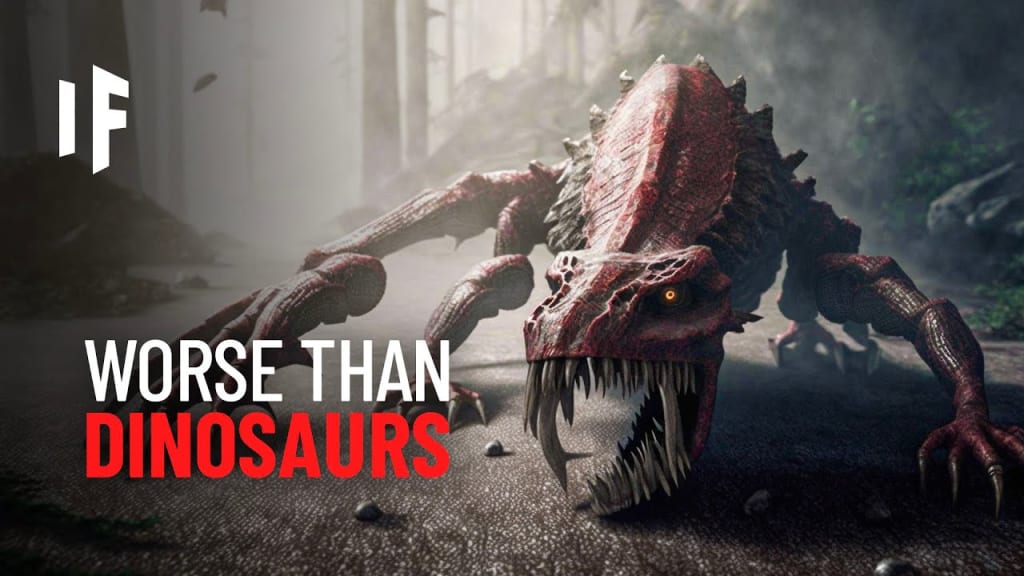
Millions of years ago, our planet appeared vastly different. All the continents were fused into a single supercontinent called Pangea, and life teemed across the land, both awe-inspiring and terrifying. Even before the age of dinosaurs, other colossal creatures ruled the Earth. Welcome to the Permian period, a chapter that began approximately 300 million years ago.
During the early Permian, Earth emerged from an ice age, and temperatures gradually warmed, transforming the planet into a lush environment with a diverse array of plants and rapid evolution of insect and animal life. However, change was an inevitable part of our ever-evolving blue marble. Over the next 50 million years, Earth grew hotter and drier, leading to an event known as the "Great Dying," the most catastrophic mass extinction in Earth's history.
But before we delve into the gloom and doom, let's embark on an epic journey back in time to the Permian period, where some of the most incredible species of our young planet emerge. If we could time travel 300 million years into the past, we would find ourselves amid the supercontinent Pangea, occupying one-third of the Earth's surface. The atmosphere would contain less oxygen than today, but still be breathable. However, you would need a jacket, as temperatures could be as chilly as four degrees Celsius on average.
By the end of the early Permian, the ice age was waning, and Pangea transformed into a verdant world, shaped by volcanic activity, climate shifts, and evolving life forms. As giant swamp forests dried out, plants had to adapt. It was during this time that the first seed-bearing plants, called gymnosperms, emerged. These plants dispersed their seeds through cones and proliferated across the supercontinent. The ancient evergreen forests of the early Permian concealed familiar creatures such as cicadas, beetles, and even giant cockroaches, although not the cockroaches we know today. These prehistoric vermin reached the size of birds. Fortunately, they did not dominate the prehistoric land.
One of the most captivating creatures roaming Pangea was the now-extinct ancestor of primitive mammals, Dimetrodon. This fascinating yet terrifying creature would have been a sight to behold. Measuring up to five meters in length and weighing 225 kilograms, Dimetrodon possessed a large sail running down its spine. Scientists believe this sail helped regulate its body temperature, absorbing warmth during the daytime and dissipating excess heat during the cooler nights. Walking towards you with a crocodile-like gait, Dimetrodon was an apex predator of its time, armed with a combination of sharp and flat teeth.
During the middle Permian period, other mammal-like reptiles, known as "therapsids," dominated the planet. These reptiles had strong jaws, sharp teeth, and a partially upright stance, with legs situated underneath their bodies. The diversity of therapsids ranged from the "omnivore pterosaurs", measuring around five meters in length, to the smaller meat-eating canopy, one-fifth of that size. Remaining in the middle Permian would offer encounters with an abundance of fascinating therapsids.
As Earth continued to heat up during the late Permian, with an average global temperature reaching about 25 degrees Celsius, and volcanic activity releasing greenhouse gases into the atmosphere, sea levels fluctuated. Marine life adapted and thrived. Taking a dip in the prehistoric super ocean would allow you to swim alongside ancient sharks and primitive bony fish.
Complex marine species flourished and vanished as the environment constantly shifted.
In the late Permian, you might have a friendly encounter with another reptile known as Listrosaurus. Resembling a cross between a lizard and a pig, Listrosaurus was an herbivore measuring approximately one meter in length. Another adorable mammal-like lizard, the cynodont, evolved during this period. With a resemblance to a giant rodent, the cynodont possessed whiskers and fed on small animals and insects.
However, during this time, a looming catastrophe was brewing in the air. Intense volcanic activity disrupted the oxygen levels in the atmosphere, reducing it to as little as 10 percent compared to the present-day level of 21 percent. Breathing in such an environment would be challenging. As temperatures continued to rise, reaching an average of about 28 degrees Celsius, the once-lush prehistoric world transformed into an oven. Sadly, this period would come to a particularly brutal end approximately 252 million years ago, marked by the "Great Dying."
The "Great Dying" stands as the most devastating mass extinction event in Earth's history. Approximately 90 percent of all plant and animal life perished during this catastrophic event. Its cause remains a topic of debate among scientists, with theories suggesting that explosive volcanic activity triggered a series of events. Enormous volcanic eruptions released copious amounts of ash into the atmosphere, blocking sunlight and causing a rapid drop in global temperatures. This led to the death of plants, disrupting the food chain and ultimately resulting in the extinction of countless animals. Carbon dioxide emissions from the eruptions eventually caused temperatures to rise again, exceeding previous levels. As a consequence, the super ocean lost much of its oxygen, leading to the demise of over 95 percent of marine species and more than 70 percent of land animals.
Reflecting upon this mass extinction event, one might be tempted to wish for the return of all the lost creatures, including the dinosaurs. However, that is a tale for another "what if" scenario.
As we journeyed through the Permian period, we witnessed the wonders and catastrophes that unfolded. It serves as a reminder of the ever-changing nature of our planet and the fragility of life. By exploring Earth's prehistoric past, we gain a deeper appreciation for the resilience of life on our blue marble and the importance of preserving and protecting it for future generations.
About the Creator
Miss Persephone's Manual to a Seemingly Ordinary Life
Miss Persephone was found at the dining table, her blue eyes swollen, her tears arriving and retreating like the tides of the ocean. Earlier that day, her family had visited her in the retirement home where she had lived for eight years. It was her eightieth birthday.
By Imola Tótha day ago in Fiction



Comments
There are no comments for this story
Be the first to respond and start the conversation.