
What the Moon-Eyed People Left Behind
A Story of Twilight and Survival (What the Myth gets Wrong challenge)

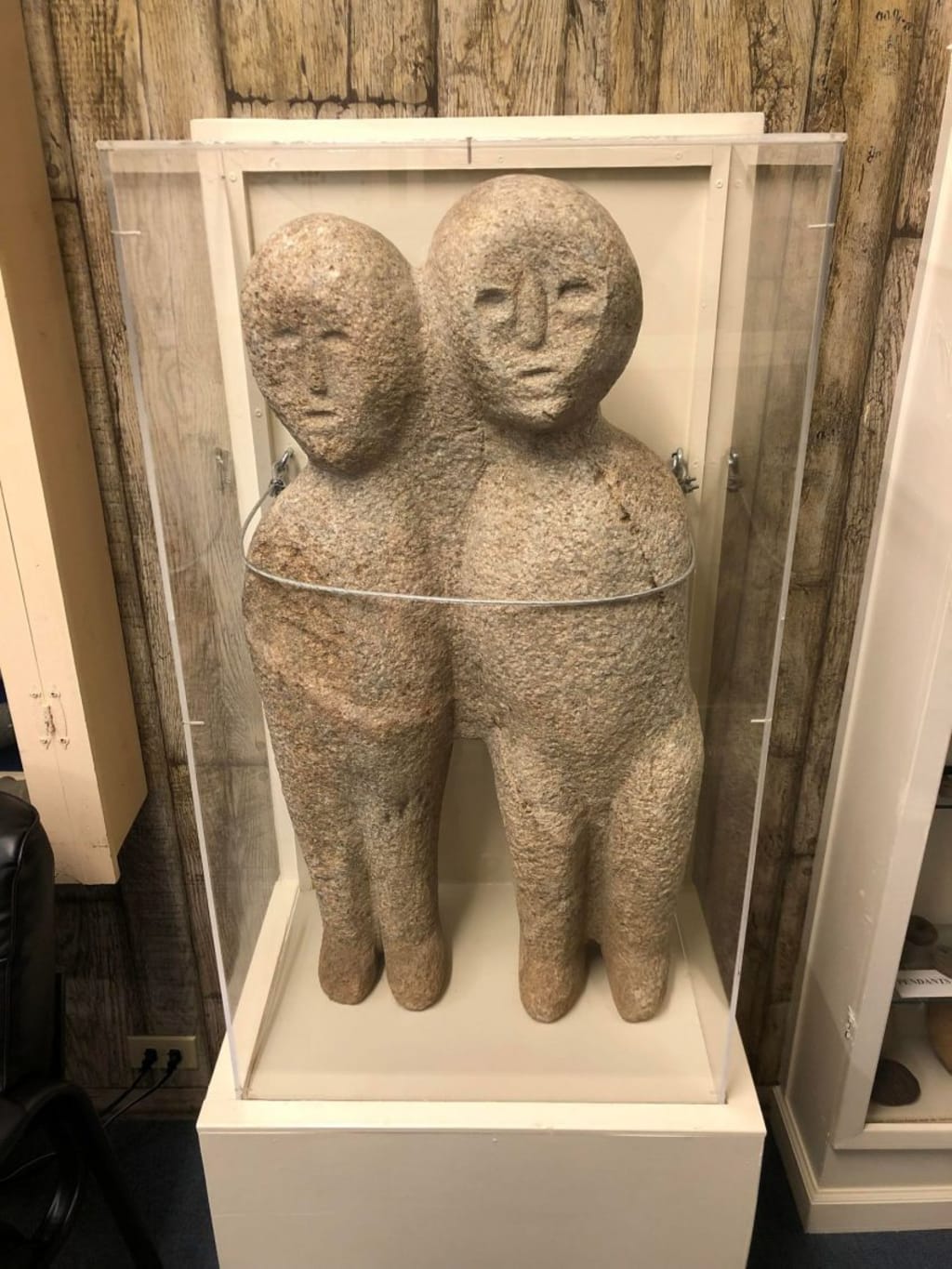
The story goes that before the Cherokee came to the Appalachian Mountains; there lived a race of pale people who could only see at night. They had large, round eyes sensitive to daylight, and they built stone walls and earthworks across the valleys. When the Cherokee arrived, they drove the Moon-Eyed People west, and that was that. The pale night-dwellers vanished, and the Cherokee claimed the land.
That's what the story says.
What it doesn't mention is that some of them stayed. Not by choice, exactly, but because they couldn't leave.
My grandmother told me about Lena Whitcomb when I was about twelve, after I'd found the old stone foundation behind our barn and asked what it was.
"That's where Lena lived," Grandma said. "Back when she was still living."
"When did she die?"
"1847," Grandma said. "But she was born in 1823, and her mother was born in 1801, and her grandmother before that in 1779. You do the math on how long that family's been here."
I did the math. It didn't make sense with the Cherokee removal in 1838, or with any of the settlement dates I'd learned in school.
"Who were they?" I asked.
Grandma looked at me for a long moment. "Descendants," she said finally. "Of the ones who couldn't go west."
The Moon-Eyed People weren't driven out all at once, Grandma explained. The Cherokee didn't sweep through in a single campaign. It took years, maybe decades, of skirmishes and negotiations and slow displacement. And during that time, some of the Moon-Eyed People did what people always do when facing extinction: they adapted.
They married Cherokee. Had children. Learned to live in a world that hurt their eyes.
But the trait didn't disappear. It surfaced, generation after generation, in children born with pupils too wide and sensitive, who cried in sunlight and could navigate total darkness like it was noon.
The Cherokee called them the Twilight Born. They were neither fully one thing nor another, and that made them sacred, dangerous, and useful.
When the Trail of Tears came in 1838, some Cherokee hid in these mountains rather than march west. The Twilight Born helped them. They knew every cave, every hidden valley, every place where darkness offered shelter. They guided families through night routes, carried children over ridges after sunset, found water in places where daylight travelers saw nothing but rock.
Lena Whitcomb's grandmother, Ruth, was one of those guides. She was sixteen in 1838, with eyes so pale they looked almost silver. She could see a rabbit move at midnight from two hundred yards away. Could tell you if someone was coming by the way they disturbed the darkness.
She married a white trapper named Edmund Whitcomb in 1840. Had three daughters. Taught them everything she knew about moving through darkness, about reading what couldn't be seen.
But she also taught them to hide.
"Why?" I asked Grandma.
"Because by then, people were starting to forget," Grandma said. "The Cherokee who'd survived were trying to prove they belonged here, that they were 'civilized.' The white settlers wanted land and didn't care about old stories. And the Twilight Born were proof of something nobody wanted to remember: that this place had belonged to someone else first, and that conquest is never as clean as people pretend."
Ruth told her daughters: wear hats. Stay inside during bright days. Squint when you must go out. Pretend the sun hurts less than it does. Marry men who won't ask too many questions.
Let people forget what you are.
Lena, Ruth's granddaughter, followed those rules her whole life. She married a logger named Thomas Garrett in 1840, had four children, worked her farm, attended church on Sundays. She wore a bonnet that shadowed her entire face. She told people she had a delicate constitution, that the sun gave her headaches.
Nobody questioned it. Women were expected to be delicate.
But at night, Lena became someone else.
She walked the ridges in absolute darkness, checking traps, hunting, gathering herbs that only grew in places sunlight barely reached. She could hear a copperhead move through dry grass. Could track a deer by the warmth it left behind.
People came to her for help finding lost livestock, missing children, animals that had wandered off at dusk. She always found them. Always knew exactly where to look.
"How does she do it?" people would ask.
"Good instincts," her husband would say.
But Thomas knew. He'd seen her eyes shine in lamplight, seen her move through their cabin in total darkness without hesitation. He'd watched her track a wounded buck for three miles at midnight, following something he couldn't see.
He never said anything. That was part of the bargain.
Lena's youngest daughter, Mary, inherited the eyes. Not as strongly as Lena, but enough. She could see better than most people at dusk, could navigate a dark barn without stumbling. She married a blacksmith and had six children, and one of them, a son named Jacob, had eyes that glowed gold in certain light.
Jacob left in 1889. Packed a bag one night and walked west, following some instinct nobody could name.
"Where's he going?" people asked.
"To find his people," Mary said, though she didn't know if any remained.
He never came back. Never sent word. Mary died in 1920 wondering if he'd found anything, or if he'd just walked into darkness and disappeared.
My grandmother's mother was Mary's granddaughter. She had normal eyes, normal vision, but she remembered the stories. Remembered being told: don't forget what we came from. Don't forget that we're here because someone survived what they weren't supposed to survive.
"Why are you telling me this?" I asked Grandma.
She looked at me. Really looked, the way she did when she was measuring something important.
"Because you've been squinting since you were six," she said. "Because you hate bright days and love twilight. Because last week I watched you walk to the barn at midnight without a flashlight, and you didn't stumble once."
I felt something cold settle in my stomach.
"I don't glow," I said.
"Not yet," Grandma said. "Maybe not ever. It skips generations sometimes. But you've got enough of it that you should know where it comes from."
She stood, brushed off her skirt. "The story says the Moon-Eyed People were driven out. That they vanished. People like that version because it's simple. Conquest, displacement, end of story. But people don't vanish. They adapt. They hide. They become something new while keeping something old."
She looked at the stone foundation behind the barn.
"Lena lived there alone for the last three years of her life, after Thomas died. She stopped wearing the bonnet. Stopped pretending. She only came out at night, and people said she'd gone strange. Mad, maybe. But I think she was just tired of hiding."
"What happened to her?"
"Died in her sleep," Grandma said. "Buried in the family plot, though nobody marked which grave was hers. Didn't want people asking questions."
I thought about that. About generations of people teaching their children to squint, to lie, to pretend they were something they weren't.
"Is it worth it?" I asked. "Hiding like that?"
Grandma shrugged. "Depends on what you're trying to protect. Lena thought it was worth it. Ruth thought it was worth it. They wanted their children to survive, and survival meant fitting in."
"But Jacob left."
"Jacob chose differently," Grandma said. "That's the thing about adaptation. Eventually someone decides they're tired of changing and wants to find out what they actually are."
She looked at me again, those sharp eyes that missed nothing.
"You'll have to decide too," she said. "Whether to keep hiding or to stop. Either way, you should know the truth: the Moon-Eyed People didn't vanish. They're still here. They're standing in this yard, asking questions."
I didn't know what to say to that.
The story ends with displacement, with vanishing. It's cleaner that way. Easier to tell.
But I wear sunglasses now, even on overcast days. I work night shifts when I can. I know which neighbors have children who hate bright mornings, who navigate darkness too easily, whose eyes catch lamplight strangely.
We don't talk about it. That's the bargain we've inherited.
But sometimes I think about Jacob, walking west in 1889. About what he might have been looking for. About whether he ever found it, or whether he discovered that home isn't a place you find but a thing you carry, hidden, through generations of people who learned to survive by becoming invisible.
The story says the Moon-Eyed People vanished.
But we're still here, squinting in the sun, waiting for twilight.
About the Creator
Tim Carmichael
Tim is an Appalachian poet and cookbook author. He writes about rural life, family, and the places he grew up around. His poetry and essays have appeared in Beautiful and Brutal Things, his latest book.
Reader insights
Outstanding
Excellent work. Looking forward to reading more!
Top insights
Compelling and original writing
Creative use of language & vocab
Easy to read and follow
Well-structured & engaging content
Excellent storytelling
Original narrative & well developed characters
Expert insights and opinions
Arguments were carefully researched and presented
Eye opening
Niche topic & fresh perspectives
Heartfelt and relatable
The story invoked strong personal emotions
Masterful proofreading
Zero grammar & spelling mistakes
On-point and relevant
Writing reflected the title & theme
Keep reading
More stories from Tim Carmichael and writers in Fiction and other communities.
Someone Else’s Memories
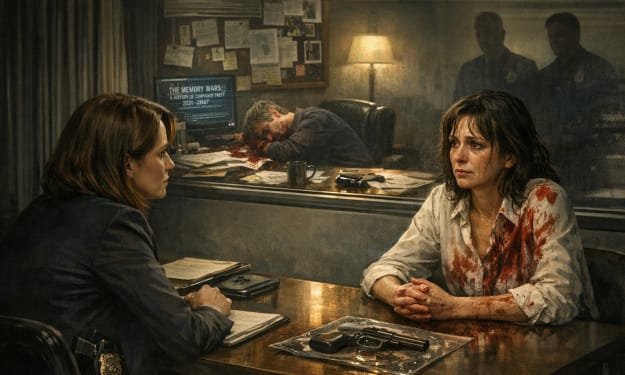
Case #4721-B Status: CLOSED Date: October 31, 2047 Officer: Detective Sarah Vance, Homicide Division Victor Mendez died at 11:47 PM on October 29th from a single gunshot. His body was discovered in his study, slumped over his desk. Gun belonged to his wife, Margaret Mendez. She confessed immediately.
By Tim Carmichael2 days ago in Fiction
Free Loveseat
Every other night, I notice the variation of kipple that loiters—the many monuments littering the city—of every single different kind of leather chair, plush recliner, and loveseat, and Art Deco sofa, many of which end up abandoned, deteriorating the crumbling, and most definitely paper-thin, sidewalks of the street. They rest discarded, like departed souls, or perhaps, the poor souls of Black folk, neglected by the bluest of eyes. Of all of the rubbish, chairs are my fancy. There’s a lot of character in the shape of a chair; the subtle curves especially remind me of the night women who stand on the curb.
By Thomas Bryant7 days ago in Fiction


Comments (1)
Before I left for work this morning, I read this opening: "The story goes that before the Cherokee came to the Appalachian Mountains" and bookmarked because I knew I'd be late for work if I even finished that sentence. Good call on my part, as this is a story that a reader wants to sit quietly with and let it resonate after the reading is finished. I'm absolutely mesmerized by your genius in poetry and prose, and I'm honored and humbled that you read my work.