
What remains of celeste
The leather maiden (chapter 4)

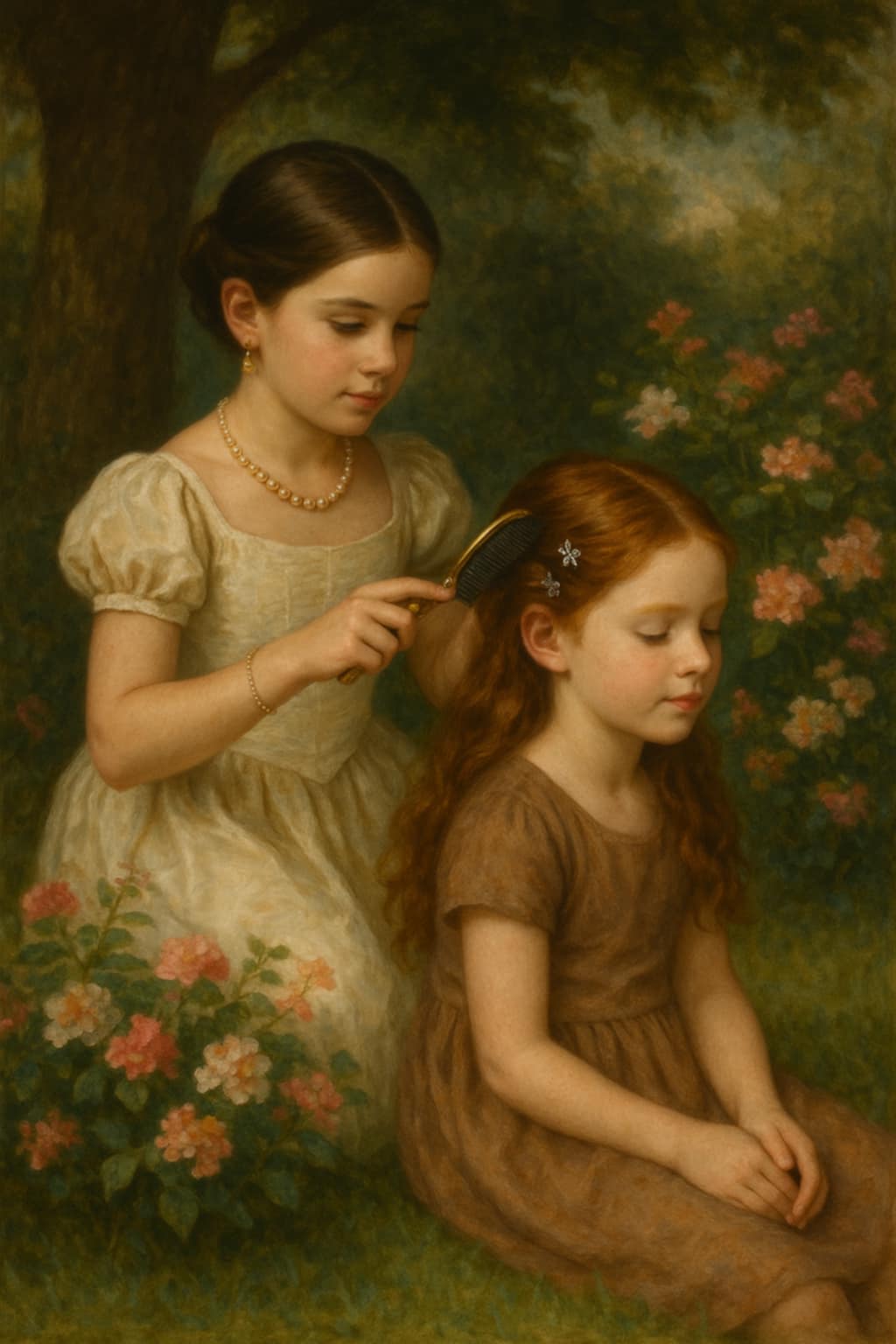
Adeline’s empire rose like silk smoke in a shallow sky—graceful, untouchable, and ever-expanding. Her atelier became a shrine for the world’s most elite; fashion editors called her a visionary, collectors called her bags immortal. She smiled for the cameras, always with that glint—one part charm, one part shadow.
And beneath it all, the world moved too fast to notice the cracks.
The stories of missing girls—brief, flickering headlines—were buried beneath celebrity gossip, political scandals, wars and tech unveilings. Names vanished from posters just as quickly as they appeared. No one connected them. No one dared.
Adeline’s hands stayed clean. Her legacy stitched in silence, lined with flesh, masked in perfection.
And the world kept buying.
The city never stopped moving. Neon light, couture shows, clinking champagne flutes. Somewhere in the background, missing posters fluttered against walls before being peeled off, replaced by ads for a new season of handbags.
Adeline had long stopped noticing. Her world had grown quiet.
Her name still echoed in fashion houses, whispered with reverence. But in her workshop, the mirrors were covered, the windows sealed. She hadn’t taken a client in months. Not since the bag returned. Not since the rot set in — not in the leather, but in her.
She tried to forget Celeste’s scent. She failed. She tried to forget the way her skin felt beneath her hands when she did that to her. She failed. The perfection she had captured in that first bag — no other could match it. No other would.
One night, Adeline stood in her workshop, candles lit, the scent of preserved oils and decay thick in the air. She laid out tools with the precision of ritual. Clean blades. Stretched canvas of tanned hide. A sketch of a new design.
But there was no hide waiting on the hooks.
Just her.
She faced the mirror for the first time in years. Her face had not aged poorly — not visibly. But her eyes were ancient. Her hair, still red, now fell with a brittle sadness. She studied her arm under the dim light. Pale. Smooth. Flawless.
Just enough.
The letter from Celeste was folded in the drawer. It felt like it still smelled faintly of her perfume.
Adeline read it one last time. “I forgive you. I wrongfully blamed you.”
She wept, but not from guilt. From love. From longing. She wanted to be held by Celeste again — and if she couldn’t, then perhaps she could hold herself. In leather.
She worked methodically, numbing the pain with tinctures used only in emergency tanning — chemicals that burned and preserved at once. Her arm was first. She marked the patterns with charcoal, as she had on so many hides before. Then, blade in hand, she cut.
The sound was soft. Almost like silk tearing.
The pain was distant, buried beneath layers of obsession and grief. She had trained herself to ignore it — pain was only the price of beauty. She peeled the skin in sheets, careful not to tear. Her blood stained the tiles, but she did not falter. She wrapped her arm tight, wrapped her wound with cloth one-handed with the precision of an artist, and moved on.
Only enough. Just enough for a single bag.
She dried the skin in a low-heat press, watching it cure through blurred eyes. She cleaned it, softened it with oils, treated it like sacred parchment. Then she began to sew — the final creation, made not from ambition, but from memory.
And if she couldn’t hold hands and run through the gardens with Celeste , her friend, her sister, ever again, then perhaps she could hold herself. In leather.
---
It was a small handbag, the final art made by Adeline. Two inches bigger than the palm of her hand — delicate, minimalist, almost shy in its form. She didn’t craft it for the world, not for fame or collectors. It was for her. A relic of truth. A confession stitched in flesh.
The seams were uneven, trembling from the blood loss and pain. Her fingertips fumbled, but she persisted. Every puncture of the needle was a prayer. Every thread, a memory. She lined the inside with velvet — soft, like Celeste's voice when she said goodbye.
When it was done, she held it to her chest, cradling it like a newborn. And in the dim lamplight, with her skin wrapped neatly into something beautiful, Adeline smiled.
The bag didn’t shine like her others. Because It shined brighter.
It simply existed — raw, human, perfect.
By dawn, the room was cold. Quiet.
On the workbench sat a bag — softer, sleeker, more refined than any that had come before it. Almost...human. It glowed with a strange warmth, as if the skin still remembered being touched. It bore no logo. No brand.
And it was never for sale.
When her assistants found it, Adeline was nowhere to be seen. Only the bag remained, wrapped in silk, with a note that read:
“For her. For me. For love. Let no one else wear this.”
No one ever did.
---
About the Creator
E. hasan
An aspiring engineer who once wanted to be a writer .
Bomb Scare
It was 2027, and the world never thought it would happen. A missle hit the United States, but it wasn't where they had anticipated. A little town in the northeast was hit by a missile strike, they didn't know why, and they didn't know exactly where it hit, but they did know it was a coastal community, somewhere between Maine and Delaware.
By Gregory Payton8 days ago in Fiction
Group-think, However Sanctimonious...
Excerpt from Iceman Xavier Rickles Today, I found, at the moonshiners’ old place, something glowing in the muddy ashes where the still once sat. It had been harshly secured as my first sight of That Brochure. I let Gwen know where I was and took the ladder down to the moonshine shrine, a couple of cots, and a workstation. Amongst it was a cash stash of $234,650, 3 crates of shine, a change of clothes per cot, wallet of the deceased. Plus 500 more dollars. Behind the cot, which was the first thing to your left, I found a dart. Maybe the board was once near the large metal cylinder inside a steel tub, shedding rust into the dark dirt. The tip of the dart had been caked in clay, or like I said, that rusted equipment, but also matched that of the D.C.S. Atrium. I searched the wall for the former target spread, spotting a darkness in there that made my flashlight fail like a whimpering torch, feeding off the fresh batteries to an aggravation level almost making my legs wobble. Could have been the unseeable depth and the absence of reference of where the light was truly halting. Stopped five or so feet ahead, but there's more to go...again? The dark makes this hovel feel physically unknowable. I caught a glimpse, however, above the workbench. I moved it for a closer look to find what I thought was bothering me so much, and kept looking even after the motivation in me left. It was trail.
By Willem Indigo4 days ago in Fiction


Comments
There are no comments for this story
Be the first to respond and start the conversation.