
what fish feel
What sorts of miracles do scientists believe in?

“What happened?”
When she asks me that, I honestly don’t know what to say. I suppose it all started fifteen years ago, back when I’d first been hired for the VESNA project and met my four teammates. Our first day, we’d been so awkward around each other that Angeal took us to a bar and spent a quarter of the initial grant money taking us back through our college years. Or their college years, at any rate; I was forty-six years old then, and when I’d been in college, the closest I’d ever gotten to drunk was the night I consumed a liter of my best friend’s “Death Wish” coffee and didn’t sleep for a week and hallucinated for two.
Okay, I’m losing track, and Luna’s mother is giving me a pointed glare over her shoulder. I want to complain – what’s the benefit of age if you can’t tell crazy stories? But Luna is looking at me with those huge brown eyes, guileless with childhood, and I concede.
What happened.
I begin explaining my early years as a biologist, and moving to Cougar, Washington for my new job as a researcher for a private tech-development company. That was it, too. They didn’t explain it any more than that, just told me I’d be asked to contribute my skills in biology for an indeterminate amount of time, for an indeterminate amount of money. It was September; you had just died, and I’d wanted to get as far away from anything important as possible. It was only after I moved to Cougar that I realized I’d just bought a house right under Mount St. Helen’s nose, but that’s what I get for trusting Bing (I’m all Google these days.)
“Aunt Ellen,” Luna interrupts. “I know all that.” Seriously, kids. “Tell me about the project.”
The project, right. “Well,” I say, “there was that April Fool’s where we all switched jobs for the day-”
“Aunt Ellen.”
Okay, fine. Here’s what happened.
~**~
There were five of us. I was an experienced biologist of 24 years, specialized in cellular biology, and by then a confirmed cat lady. Angeal Cutley was the team linguist, though I only figured out why we needed one after we tried selling VESNA to the Russians. Our programmer was recent college graduate Markov Eglé, a genius who had a bit of a gambling problem that the rest of us honorable folk took advantage of in unbelievable ways. Christine D’huile served in an official capacity as team neuroscientist, but was unofficially the fount of all virtue and Mexican cuisine. Poor Betty Krocker, who threatened to knock our teeth out if we ever asked her for cake, was our supervisor, and her first official act for the project was recovering from the first day’s hangover and telling the company that their money had been spent on necessary electrical components.
Necessary electrical components indeed.
Our mission was VESNA, or as Markov called it, the Legilimencer: a machine that could read a person’s thoughts. “It’s Latin,” he explained, and refused to admit he secretly wanted to marry Bellatrix Lestrange. It took us the better part of twelve years to compose, then construct a feasible design; the rest of it is actually kind of difficult to remember.
“On topic, Ellen,” Luna’s mom warns me, but I know she’s hiding a grin because she was there too. I prop Luna on my knee and continue in my best Goody Gumdrop voice.
But I remember that winter, three years ago. VESNA then consisted of a tall, thin booth of glass, with cameras, scanners, and monitors that would provide the subject’s brain activity to a computer console, which would then interpret the data to reveal exactly what the person was thinking about at any given time. We would’ve made it much simpler, but Angeal and Markov tag teamed us into making it as absolutely criminal-drama as possible. Prophetic, really, looking back on it now.
Yes, I remember that winter. Twelve years on this project, twelve years getting to know each other and how much it sucks to live next to a volcano. It ended on that night we ran the first trials of the prototype, which sounds like a huge deal but actually wasn’t because it was three in the morning and we spent the entire time trying to embarrass each other with our thoughts.
Looking back on it now, I suppose Betty should have been the one to try it first; she was the supervisor – she’d gotten us all together for it, and it must have been most symbolic, meaningful, something coming from her. But she took one look at us – Markov and Angeal sporting dangerously goofy grins and Christine swearing into her star anise tea – and decided sharply that I would be the first one to try it.
“You’re by far the best suited to make this a moment to remember, Ellen,” she said to me, somewhat apologetically.
“You mean she’s the oldest, most boring, and therefore the safest one to put in a report,” Angeal corrected. I grimaced at him, but couldn’t really do anything about it because he was probably right.
I stepped into the booth, shivering slightly as the cool, stale air seeped into my lungs. The entire time so far, we’d used Betty as our test subject to keep the data source consistent. VESNA could read her thoughts without a problem; the real test was seeing if it could apply the technology to different people with different mindsets.
That was probably why she chose me, I realized. As the oldest and most removed generationally from my younger colleagues, my thoughts probably differed from the others the most. Betty wasn’t a scientist, but she’d have made a hell of a good one. That, or she was just really sick of standing in there all day. Angeal hadn’t allowed us to make a seat in the booth (“It’s not cool enough,” he’d insisted, while wearing nothing but orange spandex, which caused the argument to derail because Christine had to sit down and laugh until she couldn’t breathe), but after three days of standing and one podiatrist visit later, Betty put a stool in the center of the booth and told him to jump in a lake.
“You are going to be the next Neil Armstrong, Catlady,” spoke Markov as he readied the computer. “What do you have to think?”
I stood there, blinking from the cool blue light shining into my eyes, like insubstantial water slipping into the brain, and thought about all sorts of things. Armstrong’s legendary one-liner, triggered by Markov, flashed through my head, brief and brilliant. I thought of famous last words (“I’d like a bulletproof vest,” said James Rodgers) and how very much I wanted to go to bed. I thought of dark sunsets, that my cat Diana would probably be mad at me for staying out so late, and how much work I’d done for this. How much I wished you could’ve been there with me.
From outside came the muffled strains of VESNA, dully repeating the words I never said but always thought.
“That’s enough,” Markov said, and they smiled at me as I stepped out, and I loved them. “It’s picking up everything.”
“How do you know if that’s true?” I asked peaceably.
This caused him to look briefly to the ceiling, as if asking a higher power why he must put up with all these old people, which I found rich coming from a young man who refused to watch any movie made after 1962.
"Because you're going to confirm it," he said matter-of-factly, as if it were the solution to all problems.
"But I could be lying."
Betty turned to me, half-alarmed. "Ellen!"
Markov frowned at me. “Your argument is self-defeating. If you’re lying, then VESNA will show that too.”
I shrugged and looked around at Christine, who was frowning into her tea. “So far, we’ve had no problem with detecting and identifying consciously worded thoughts, but what about emotions and images? We don’t usually put a word to everything.”
The tension coiled out of Markov’s thin shoulders like steam escaping, and he flopped back over his swivel chair moodily. Okay, so maybe I was enjoying needling him just a little, but it was an important question to consider, even then.
Betty looked to me thoughtfully. “Well, that’s a development for a later date,” she pointed out. “We’ve managed conscious thought. That alone is big enough to sell, and with that we’ll have the proceeds to continue researching.”
In hindsight, that was a lie. We were taken off the project shortly after Betty said that, once things started getting a little out of control. Angeal used to joke that she jinxed us with those words, but I don’t believe in jinxes, and we don’t joke about that anymore. It’s a little too real these days.
“Angeal, you next. Think in…” Betty looked to me for support.
“French,” I supplied.
“Ooh la la,” Angeal grinned beatifically on his way to the booth. “Anyzing for ze ladies.”
I didn’t think this boded particularly well, and I wasn’t wrong. Immediately, VESNA asked, “Would you share my sleeping platform?” It even said it dryly. I wondered how it had learned the significance of intonation, decided that the program had interpreted the neurochemical patterns of humor correctly, and made a note of it in my project datalog. Also, to never ask for French again.
“Russian now, please,” Betty requested, still patient. That woman was saint. “And behave.”
Angeal was about as apologetic as his mullet. After a moment, VESNA translated his thoughts.
“I will pay you twenty monetary units to pay attention to me in a premeditated setting,” it said, in the standard female voice we’d selected in honor of the occasion. Yesterday had been Sean Connery day, I remembered with a smile; Markov had owed me a favor.
“Very funny.” I ended the recording and motioned for him to step out. “You don’t even have twenty bucks.” That wiped the smirk off his face.
“If that’s a request for a pay raise, Ellen, then I’m afraid it’s not very subtle,” Betty reprimanded me. She was right, my standard was slipping. I was tired – we all were. Christine hadn’t even said anything; she just sort of sat there, mumbling nonsense at the general direction of her teacup.
“Christine’s asleep again,” I pointed out.
“Who, me?” she said intelligently. “Lunar cheese.”
“So you’ve said,” I agreed, patting her shoulder and nearly sending her flying. “Sorry. Let’s finish up the trials, then we can go to bed. We’ll send our findings in the morning.”
It happened after we’d finished several more sessions with each of us. Christine’s were the most entertaining; to our delight, we discovered VESNA could loosely interpret dreams as well. After all, why couldn’t it? A dream is a wish your heart makes, with electrochemical signals weaving a pattern that spells your desires in a brain unfettered by conscious demand. Since then, of course, the subjects of sleep and dreams have been thoroughly explored with VESNA, but I wasn’t thinking about that at the time.
While I wasn’t pondering the mechanics of unconscious thought, grand and unfathomable as the sea, I was thinking about how to use Christine’s secret-until-recently obsession with George Clooney to get a mouthwatering quesadilla for breakfast tomorrow. I was in the midst of planning a really good blackmail routine and probably would have earned a slave for life (it was that good) when something even more important than a great breakfast happened.
~**~
I know now what was really happening, but knowledge is born with discovery, and wisdom is learned through experience. It took me a long time to learn the difference, but time heals all things, anger and ignorance alike.
~**~
“I am dying,” VESNA told us. It’s interesting how bland those words were in proportion to the gravity of the message.
We stilled, all conversation and the sounds of typing coming to a halt, slamming into a mental wall with concussive force. I can’t really emphasize how unnerved we suddenly were, our nerves stretched tight by the lateness of the hour and the shock of what comes without explanation.
“What was that?” Angeal asked sharply.
A pause – we turned to look at Christine, who was by now wide awake.
“It wasn’t me,” she protested, holding up her hands unconsciously. Her blue eyes were round.
“Maybe-”
“Quiet,” Markov interrupted, eyes pinned to VESNA’s screen. “Look at that, I’ve never seen an input like that before! Christine, think about… I don’t know… what you did yesterday.”
Obligingly, she slid her eyes closed, and VESNA revealed, “I woke up at ten and ate cereal in orange juice for breakfast. Ellen dared me to try it that way, but it tasted awful.” (I can’t believe she actually did it.) And then- “This is the end.”
Christine shrieked, scrabbling at the door. She threw herself out and slammed the glass back, hard enough to make the whole booth shudder. Automatically, I flattened my palm against its walls and felt the force dissipate calmly, as though it had never happened.
We were all breathing hard, as though we’d just run a marathon. We were so nonplussed, there were no more plusses to be found in that room ever again, forever.
“That wasn’t me,” Christine reiterated. “I don’t know what that was, but it wasn’t me.”
We exchanged glances. “I believe you,” Betty assured, reaching a comforting arm around her.
“Then what?” Markov hovered over the console like a solicitous mother. “Maybe since we upgraded the linguistic core...”
Angeal started indignantly. “The linguistic core is working fine. Okay, maybe it needs a little tweaking to fix the slang interpretations,” he allowed. “But that doesn’t account for an entirely different input than what Christine was thinking.”
“A programming glitch?” Betty murmured.
Markov scowled, more offended by the term than the accusation. Nerds, I swear. “There can’t have been a programming glitch, or it would have showed up long before now,” he answered. “I’ve checked and double checked those circuits twice a day, and I debug once every two days. We’ve been clean for months.”
“If it’s not an intrinsic error, then it must be extrinsic,” I theorized, quite calm (really, I swear I was). “I bet a wire got knocked loose or something. Dust, maybe. Let’s check.”
We were halfway through basic maintenance when VESNA stirred again. “I am dying,” it said, and I’ll be damned if it didn’t sound sad. Actually sad, like the computer had suddenly developed a soul. And then it added, awfully, “Please help.”
“God,” Angeal seemed to swear. We stepped away.
“The children…”
That’s the last thing it said. We could nearly hear the dying breath fade into the air, and suddenly we were completely, utterly breathless.
I looked around at my colleagues. Angeal, Christine, and Betty were blank as a sheet of paper; Markov, the youngest, looked close to panic. I knew how they felt – I was the oldest and generally the most bitter, but even I felt unprepared for the sudden twilight zone we’d stepped into. Still, I couldn’t let it get to me: There was work to be done, and, in a way, I felt responsible for my team.
“Go home,” I said. They all jumped slightly before focusing on me, and I fought down the urge to laugh. “I’ll look it through,” I offered. “It’s late, and you all need sleep.”
“What about you?”
I looked at VESNA, gleaming palely with dark promises in the fluorescent light. “I’m not very tired, anymore.”
They left, and I was alone with a machine that may or may not be sentient. It wasn’t a very comfortable night, but I fancied myself somewhat used to those. I suppose my only regret was that I never managed to get that quesadilla from Christine.
(I tried not to think about why I was really there, tried not to think of you, and that we’d never had kids.)
I was alone with my increasingly morbid thoughts for maybe fifteen minutes before Betty came back. She breezed quietly through the door and set down a large plastic box with a thump. The grating flew open, and out strolled Her Highness. Diana was two years old at the time; I’d found her as a kitten sitting on top of a tree, and she’d rewarded me with urine in the face when I tried to get her down.
That had more or less set the tone of our future relationship.
Right then, she looked ready to do it again. I reflected guiltily that I’d completely forgotten to feed her in my excitement over the trials that day, and stretched out a hand to stroke her pretty multicolored fur.
“Please, my liege,” I said. “I humbly beg forgiveness.”
She lifted her head up high – snot-nosed little thing – and executed a perfect side glance of contempt. Your begging needs work, she seemed to say.
Betty broke out laughing, and the sound rang hollow but clear through the room, which felt oddly large. “I brought you company and some stuff,” she said unnecessarily, handing me a basket. I flicked the terry cloth aside and found half of a cherry pie and a can of Fancy Feast.
“You know me so well,” I said, and smiled warmly. “Thank you, Beatrice.”
“Don’t mention it,” she said easily, swinging down to sit beside me as I opened the can for Diana, then began to eat. “Seriously, don’t.” She looked pointedly at the pie. “I’d never hear the end of it.”
I waved the fork magnanimously, just missing an eyeball. “Do not worry, kind lady, your pie is safe with me. I will not be held accountable for the basket, however.” We both looked at it, a cute woven bamboo affair. “Seriously, that is so twee.”
She ignored this. “Anyway, I came by to see if you’re okay. You looked kind of strange, you know.”
I hummed noncommittally, appearing to focus entirely on my unhealthy dinner, but really, I was painfully aware of every word.
“Let’s talk about your husband,” she said, steady as the sea. That was Betty: she was to tact what September was to you. The thought ultimately sobered me, and I set the fork down.
“What do you want to talk about?”
“Why are you really here, Ellen?” she asked. As supervisor, she should know – she was the one who interviewed and hired me, after all. But something in her steely gray eyes told me she wouldn’t accept a deflection, not now, not when it’s important. She cared, damn her, and I was afraid I’d be betraying you for accepting it.
(It’s been twelve years, I think, I don’t think.)
“I am here,” I said quietly, “to work on VESNA.”
“Why VESNA?” she insisted. “You could’ve chosen any other project. VESNA was purely experimental, a joke project to fill the company quota. There were others far more suited to your career and line of work.”
It felt like prison bells were clanging in my ears. “Because,” I struggled to say. “VESNA reveals the truth of a person’s thoughts.” I looked at her then. “Its applications are manifold.”
She let out a breath I hadn’t noticed she was holding. “Such as in criminal justice,” she completed the thought sadly. “Ellen…”
I shrugged off her hand. “I would’ve thought it didn’t need saying,” I commented, turning back to my pie. I felt slightly sick; I took a savage bite to alleviate it, but it only seemed to make me feel a little more rotten, teeth, stomach, and all.
She watched me for a while. “I’ll never understand you scientists.”
You scientists. God, I felt so stereotyped. I raised an eyebrow. “Science is the art of understanding,” I lectured, half-lying. It isn’t really; there’s a lot more to it, in dimensions that seem as far from reach as the realities of the universe itself. But sometimes I think that’s something only a scientist can really understand. I wondered briefly why that really was. Couldn’t have been the pay, that’s for sure. The hours, maybe; nights spent over test tubes tend to make one extremely introspective. “What’s not to understand?”
Her finely manicured nails drummed into the tabletop with sharp staccato bites. “You claim to approach things logically, but we both know why you really stayed behind tonight.”
“Irrelevant,” I pointed out. “I stayed behind because I’m sentimental, and also because somebody has to check what’s making VESNA tick. That report is due tomorrow morning, or we’re in hot water again.”
“That’s not what I mean, and you know it,” she sighed. I’ve met pit bulls less tenacious than this. “You can’t actually believe Jericho could somehow be connected to this. There is no evidence that could even be possible.”
“Absence of evidence is not evidence of absence,” I quoted softly. Then I shook my head. “I know. You’re right. I’m not really thinking that… but I can’t help but hope.”
She put a hand on my shoulder, and this time I accepted the comfort. “That’s not necessarily a bad thing,” she offered.
I rested my chin on my hand, suddenly exhausted. “Sometimes, I wonder.”
We sat there for a while, listening to Betty’s watch tick slowly. The heavy moment passed over us, like a cloud across the sun, and in the brief darkness I could take out the burning coal of my grief and turn it over in my hands, wondering at its fires, before quietly putting it away again. I think that, over the years, I’ve been hoping that the further down I bury it, the closer I’ll get to extinguishing it with lack of air.
But you used to be a firefighter, remember? And you told me once that nothing seemed to work quite so well as water. I think about that often now, with Luna here and talking to me, which in itself is a miracle.
(I think I appreciate miracles more now.)
“Anyway,” I said. The shadows seemed to shake themselves awake. “That just leaves the question of what caused that glitch earlier.”
Betty grinned at me. “It’s not a glitch, remember?”
I returned the smile. I opened my mouth-
“This is not an error,” VESNA said, calm as can be. “This is me.”
~**~
In retrospect, we could have reacted a bit better. That is to say, we could have not choked on pie, as Betty did, or let our arms fall out from underneath us so our heads banged painfully against the table, as I did. There we both were, dying alternately from asphyxiation and head trauma, and VESNA’s voice washed over us again, now illuminated with scorn.
“Get up, you idiots. Must you make such fools of yourselves on a daily basis?”
It was then that I was filled with a realization, the first of many and the absolute worst. “Oh, no,” I groaned. I knew that tone…
We turned to see Diana behind the glass, sitting so primly as if to show us how it’s really done, and the feline equivalent of “cat got your tongue” in her devilish eyes.
Yes. I am not proud to say it, but yes. The cat had gotten our tongues.
“Okay.” Betty rubbed her eyes. “Okay. The cat is talking.”
I was still caught in the grip of crushing despair. “No,” I bemoaned. “Why? Why her? I have to live with her.”
Betty actually shook me. “Are you out of your mind?” she nearly screamed. “The cat is talking, and that is all you have to say?”
“Please,” I scoffed, shoving her away, though I confess that Betty was somewhat correct: At the time, my brain was busy trying to thaw. “I’ve always known that demon cat can talk. I just never wanted to hear it.”
My poor supervisor looked ready to tear her hair out. “VESNA is translating that cat’s thoughts.” She said this like she’d never see daylight again.
“Implying that it is, in fact, a sentient animal and fully cognizant.” I closed my eyes against the impending headache that was coming for me like Wile E. Coyote. “Lord have mercy.”
“What?”
“Nothing.”
“If you are quite done carrying on,” VESNA interrupted. “I think it is time for us to talk.”
Wordlessly, Betty got up from the table and wandered away. I was left alone with Diana, who became suddenly busy licking her paw clean. I was quietly relieved; it kept me from having to do or say anything until Betty came back, bearing two large mugs of coffee. I took mine with murmured gratitude – black, like my soul. Rather, I should say, cream with two sugars. Like my soul.
Betty took a deep gulp of her coffee. She must’ve been really traumatized, too, because that was piping hot and she didn’t even flinch. “You’re a cat,” she said, addressing Diana directly. “And you can form full thoughts. In a way that must be similar enough to a human, if VESNA can translate it.”
“Not necessarily human,” I added mildly. “VESNA operates by matching certain neurons firing and certain neurotransmitters being used with recognized patterns. It could very likely be that the patterns we’ve identified as human are actually shared by many animal species. I wouldn’t be surprised if many mammals could use VESNA too.”
Betty stared mournfully into her mug. “I’m going to need more coffee.”
Diana tilted her head to the side, in that freakishly adorable way that only cats and toddlers can do. “I do not understand your language,” VESNA said. “But I can safely say that the short one does not understand how this is possible, the ugly one is busily concocting theories on how it is possible, and both of you are addicted to the human equivalent of catnip that smells like something died.”
We blinked. Betty, I think, was surprised at the casual hostility; I, having been subject to it nonverbally for two years, instead naturally took extreme offense.
“It does not smell like something died,” I defended my best friend. “You’re certainly one to talk, dumping dead mice on my bed every Thursday.”
“I assume you are referring to my trophies,” Diana yawned and stretched, regarding me lazily with mismatched eyes. “I will have you know that they smell divine.”
It was scary, really, how erudite she was proving to be, even through a comparatively rudimentary system. How could we have missed something like that for so long?
“I thought you said you couldn’t understand English.”
“You are my human,” VESNA said, and now she sounded amused again. “I do not have to know your words to understand what you are thinking.”
I looked to the ceiling. The lights had never seemed to burn so brightly. “This is going to be a long night.”
By the time the rest of the team arrived that morning, I’d worked out most of my theories and had sworn off cats forever. Betty probably felt I was being a little too blasé about the situation, but truth be told, I was fifty-eight years old and I had stayed up all night with only cherry pie to fortify me; I was too tired to really react. Truly, I had been tired for twelve years.
So when Christine came in last with a plate full of her world-famous grilled quesadillas, I think I could have cried. I was that desperate.
“I knew you were going to blackmail me anyway,” she said huffily. She looked awful, blonde hair dull and uncombed; they all did. Nobody seemed to have slept much, if at all.
“You know you love me.” Not as much as George Clooney; regretfully, that would have to wait for another time.
“Did you find out what was wrong?” Markov asked, determined to get to the point.
“Later,” I said, making brief eye contact with Betty. She looked uncomfortable, though that may have been because she’d drunk enough coffee to knock out two men. “Breakfast first.”
When we finally told them what happened, I have to say that they took the news a lot better than we did. Angeal and Markov just sort of stared for a while before bursting out laughing, while Christine squinted at each of us in turn, carefully weighing our words.
“Stop it, you two,” I snapped, annoyed. “This is not a laughing matter.” Kind of ironic, coming from me.
They stopped laughing. “Wait, you’re serious?”
“Sentience in an animal,” Christine mused softly, effectively drawing all the attention. “Could such a thing be possible?”
I lifted a shoulder and grimaced. “The question isn’t whether or not it’s possible. We have undeniable proof – VESNA can only work with brain activity that signifies actual thoughts. We know that from our earlier tests with electronic models.”
“We know that only to a certain extent,” she reminded me. “We can’t jump to conclusions.”
It was at times like this that I appreciated having another scientist on this project. Betty, Angeal, and Markov were great and they tried, but they still thought Pluto was a planet no matter what the IAU said.
So she was right. I grinned at her, falling easily into the time-honored tradition that all scientists reveled in, nearly revered, and were probably the only people in the world who actually enjoyed such a contradiction. “Prove me wrong.”
We tried. We tested members of common families in each phylum of each kingdom, or at least any members the local zoos were willing to lend. We argued the entire way through.
“We’ve had a pretty firm understanding so far that cognition is only possible within certain parameters, such as brain size and lobe development,” Christine pointed out once with gritted teeth, after I insisted on testing several varieties of insects.
“And we were clearly wrong on some level,” I shouted over VESNA’s charming repetition of “food, where is food, need food, hey pretty lady!” It was like a bad Friends episode. “We’ve certainly made many assumptions along the way as to how narrow those qualifications really are.”
Christine observed the dragonfly with pursed lips. We had to strap the little thing down to keep it still long enough for the monitors to obtain an input, which basically consisted of food and flirtation, but that was infinitely preferable to the bear we’d tested last week. Even as a cub, the ghastly litany of its thoughts had us thoroughly frightened and extremely sympathetic to fish.
“I still think we’re making connections that aren’t really there,” she insisted. “Some of them seem to be thinking distinct, organized thoughts, but most of them seem to just be VESNA’s verbalization of primary instincts.”
“I still think this is whack,” was Markov’s helpful contribution.
Okay, so maybe I was jumping the gun, just a little. But it had caught my imagination, inflamed everything I thought I’d ever known. I tried to explain, “Evolutionarily speaking, there’s really no reason humans would be the only ones to develop sentience. We have a much longer gestation period than most species, and many species also have much larger brains than ours.
“We can’t really claim that only we developed sentience as a defense tactic, because millions of other species lived in much more pressing danger than we did. Or at least, do now. Humans have been on top of the food chain for thousands of years. If certain species who have suffered as a direct result of that weren’t sentient then, then they probably would be by now.”
“In what, five thousand years?” Angeal frowned at me. In the background, his pet dog was loudly proclaiming that her name was Joshua, and she wanted him to respect her life choices. “I thought evolution takes millions of years. Geological time.”
“Think relatively,” I said enthusiastically. Oddly, they didn’t seem to share my energy. “Most of the species we prey on can produce several generations within a year or less. With insects and smaller species, it can be several generations in a day.”
“You might as well start arguing for bacteria now.”
I waved dismissively. “We’ll get to that. But my point is, there is a lot of potential for change in a species that reproduces that quickly. Assuming, of course, they weren’t sentient by the time we were too. They had the same amount of time as we did on Earth, you know, a lot longer in many cases. Plants, for instance, have been thriving practically forever.”
“Oh, God,” Betty beseeched, head in her hands. “Plants.”
It was an exhausted team that finally sat down in the end to write our findings. First sent to the company, then to Nature. The rest is history.
~**~
“Of course, you know it wasn’t that simple,” I remind Luna, who now looks properly awed. “To suddenly find that we weren’t alone was one thing emotionally and mentally, but an entirely different thing legally.”
And it had been. Should they be citizens? How to address animal slavery and abuse? Pets? Not our fault, they hadn’t contacted us before. But they had no way to, they didn’t speak English, and we didn’t speak dog. Really? They couldn’t have drawn a picture or something? Hello, opposable thumbs. Never mind all that, who’s going to do all the work?
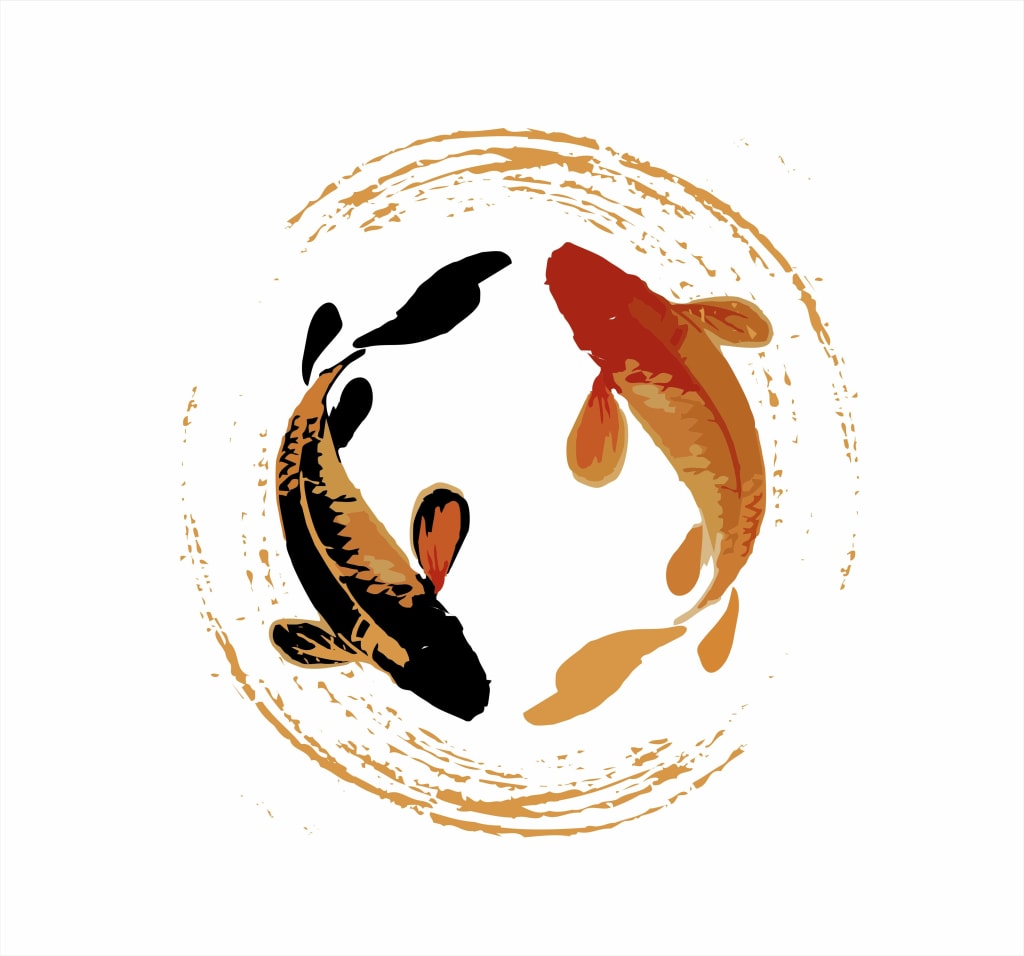
“It’s been three years since then,” I reminisce, somewhat theatrically. "By and far, we’ve managed to pull through.” Kind of hard not to, when you’re standing against a grizzly bear in court. “VESNA’s come along pretty well, too. All portable and able to translate between just about anything.” I eye the collar around Luna’s neck, gleaming brightly with the icon of circling fish, and smile.
We hadn’t done that; we’d been fired once the letters and hate mail started flowing in. The company claimed it was for PR and patent purposes, but I think they were just really mad at how much money we’d blown on necessary electrical components. Especially in those last few weeks.
She bats a paw against a similar collar I wear. “And we got these for free because you worked on the original.”
“That’s right,” I confirm. “Good thing, too. If ever we are in dire straits, we could sell one of these for millions.”
Luna’s eyes sparkle; already, she is such a business shark. Which is funny, considering that sharks these days only trade for certain brands of coffee. It really is sad, but we’ve had to reevaluate nearly all of our animal-related sayings, in the interests of political sensitivity. Angeal often boasts that he singlehandedly brought down the entire institution of figurative language. I tell him that he still looks, smells, and acts like a skunk in heat.
“Alright, you’ve had your story,” Luna’s mom interrupts. “Time to go to sleep.”
Luna complains lightly like any child, but her cute kitty yawn betrays her. I smile, just a little sadly, as she falls asleep.
Diana looks at me steadily over her daughter’s bed. “It’s been fifteen years, Ellen.”
“So it has,” I agree, slowly.
~**~
VESNA. I’d been the one to name it. It meant ‘messenger’ and it was the name you’d always wanted for our kid, if we’d had one. In a way, I think it’s fate: one poor hypothetical kid was saved from a name that would probably get him beaten up at recess, and the world got a communication link between all species.
A lot has happened since then, and I may have been fired, but I now have more than ever to live for. Discovery takes hard work; peace requires time and effort; cooperation begs a miracle.
I look at the Nobel Prize sitting on my mantelpiece, right next to the preserved remains of a poor housefly that had gotten into the prototype VESNA’s booth and unknowingly changed history.
I believe in miracles more now.
Don’t you?
~**~
What fish feel,
birds feel, I don't know--
the year ending.
Matsuo Basho
About the Creator
Mehrina Asif
Writer, editor, and marketer based in Washington, DC, passionate about biology and anthropology.
Keep reading
More stories from Mehrina Asif and writers in Fiction and other communities.
wanderer above the sea of fog
When the boy was about twelve, he ran away from home. It wasn't for the usual reasons. He had wonderful parents, a handful of siblings to play with, and a good education. They lived in a nice house on a nice street, and life was good. They never lacked for anything.
By Mehrina Asif4 years ago in Fiction
How to fill a hot water bottle. (Or, How to get through the night.)
1. Go to the cupboard where you keep all the towels and sheets. It's at the top of the stairs. Take a deep breath and roll your shoulders back. For this will take some effort. Reach up and dig into the mountain of materials. Past the scratchy towels, the creased sheets, the mismatched pillowcases, the marooned sock. Keep feeling until you find something somewhat soft. There might be a bit of matting from lack of use. With a slight hardness underneath. Grab onto it. Firmly. Begin to start pulling it out of its hole. Like a game of Jenga, don't let the mountain get on top of you. It helps to use one hand for steadying the mountain and the other hand for gripping on to the hot water bottle. Carefully slide it out. Take your time.
By Sarah O'Grady6 days ago in Fiction




Comments
There are no comments for this story
Be the first to respond and start the conversation.