
We Were the Last Two Dreamers in a City That Stopped Sleeping
In the silence of a sleepless world, we dared to dream anyway.
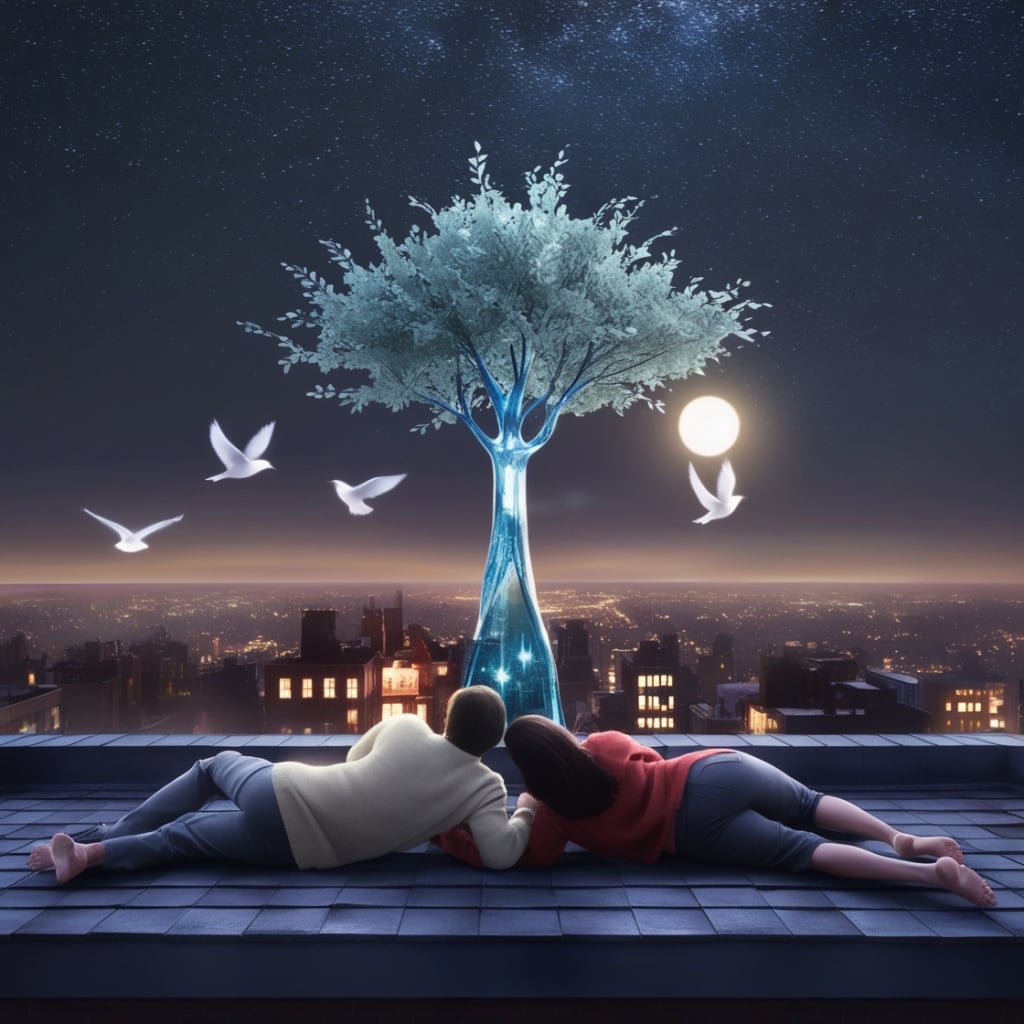
The city hadn’t slept in twenty-seven years.
Sleep was outlawed after the Dream Collapse — when the government decided that dreams were dangerous, unpredictable, and treasonous. “Order is built in waking,” they told us. “Dreams make rebels of men.” And so, they erased them.
First came the pills — silvertabs to suppress REM.
Then the noise machines — hums to flood the mind.
Then the light — permanent halogen skies, so even midnight looked like noon.
And it worked.
People stopped dreaming.
And with it, they stopped hoping.
I didn’t mean to find her.
The first time I saw her, she was lying flat on the rooftop across from mine, eyes closed under a dark cloth, headphones in. Still. Vulnerable. Almost glowing.
No one sleeps outdoors anymore. It’s suspicious.
But I knew what she was doing.
She was trying to dream.
I watched her for seven nights.
Same time, same place.
Every night, she tilted her head toward the sky like she was listening for something long forgotten.
On the eighth night, I climbed to my roof with an old notebook. I tore out a page, scribbled “Do you remember what it felt like?”, folded it into a paper plane, and sent it flying across the alley.
She caught it without flinching.
The next night, her paper plane came back:
“Yes. It felt like flying underwater. Like drowning and breathing at the same time.”
We didn’t speak with voices. Not yet.
Just planes. Notes. Letters that unfolded like old lullabies.
We were cautious. Words were watched.
But paper — for now — was still free.
We became stars in orbit.
Two satellites circling something forgotten.
She called herself Sora.
Said it meant "sky" in a language from Before.
She taught me how to build Dream Shields — blackout cloths, foam earpieces, and a pulse steadying trick where you breathe like the ocean: slow in, slower out.
The first time I tried it, I saw a boy riding a red bicycle over water.
I woke up crying.
I told her in a note: “I think it was me. I think it was a memory.”
She replied: “Then it wasn’t a dream. It was truth finding its voice.”
We started syncing our sleep.
One hour a night, same time, same silence.
In that hour, I saw her.
Not in real life. But in the dream.
We were on a swing set that floated through clouds.
She wore a dress made of stars.
I reached out.
She smiled.
And then —
Alarm. Light. Noise. The government’s WatchGrid flared to life.
I barely escaped being scanned.
Dreams were being hunted.
Sensors installed on rooftops. Drones detecting REM signatures.
But we didn’t stop.
We just got smarter.
We built Faraday blankets. Used copper thread and blackout paint. Made decoys out of mannequins and heartbeat simulators. We weren’t just dreamers now. We were fugitives of the mind.
One night, she didn’t come.
No plane. No sign. No light.
The rooftop was bare.
I waited.
One night.
Two.
Seven.
Then came a knock at my window.
She was soaked. Pale.
Her eyes were red, but not from tears — from lack of sleep.
“They found me,” she whispered. “I didn’t tell them anything.”
We didn’t speak for a while. Just sat, back to back, watching the endless city hum below.
That night, we dreamed together in the same bed.
She dreamed of rain made of music.
I dreamed of a tree that grew clocks.
She dreamed of holding a child.
I dreamed of my father humming a tune I hadn’t heard since I was five.
We began sketching our dreams in a secret journal — The Archive of What Was Lost.
Page by page, we built a world that had been stolen from us.
We mapped rivers of color.
We charted emotions like weather.
We gave names to feelings that had no names.
And then we began sharing them — discreetly.
Paper planes multiplied.
People started dreaming again.
Just a few at first.
Then a dozen.
Then whole apartment blocks going dark at night — black cloth in the windows, silence instead of static.
We had started a quiet rebellion.
A revolution of REM.
And with it came risk.
They called us Sleepers.
Enemies of order.
Dreamjunkies.
Fantasists.
Threats.
They raided towers.
Burned libraries.
Installed memory dampeners in schools.
But it was too late.
The city was blinking again.
One rooftop at a time.
And for the first time in twenty-seven years —
it dreamed.
On the last night, they came for us.
Floodlights. Sirens. Drones.
Sora turned to me. “If we forget each other, find me in the dream.”
I kissed her forehead.
“I already do.”
She jumped rooftops.
I ran the opposite way.
We scattered.
But the Archive remained.
Buried deep, wrapped in copper cloth and shadow — a seed waiting to bloom.
Now, I sleep where I can.
Basements. Abandoned trains. Rooftops too broken to matter.
And every night, I close my eyes and breathe like the ocean.
I see her.
Still smiling.
Still swinging through clouds.
Still wearing stars.
The world hasn’t woken yet.
But it will.
Because dreams don’t die.
They wait.
They whisper.
They survive in margins, in music, in hearts that refuse to go quiet.
And someday, when the sky darkens again, and the silence returns, people will remember:
We were the last two dreamers
in a city that stopped sleeping.
And we taught it how to dream again.
About the Creator
Keep reading
More stories from Abuzar khan and writers in Fiction and other communities.
"Brenda Doesn’t Exist"
Everyone remembers Brenda. They remember the red hair, always damp like she’d just stepped out of rain. They remember the laugh that cracked the stillness of study halls, the notes she passed in class folded into intricate little hearts. They remember the way she walked—fast, like the world was trying to catch her and never could.
By Abuzar khan8 months ago in Fiction
Beneath the Liquid Sky
Silence. A silence so deep it pressed against the shore like the world itself forgot to breathe. The water remained still, its glazed edges shone with an iridescent glow that pulsed with life beneath the burning sun. Dark trunks rose skyward to the heavens, their branches tracing the outline of the world suspended in silence.
By Caylin Watkinsa day ago in Fiction


Comments
There are no comments for this story
Be the first to respond and start the conversation.