
Waiting to Exhale
A Cinematic Milestone That Shaped a Generation

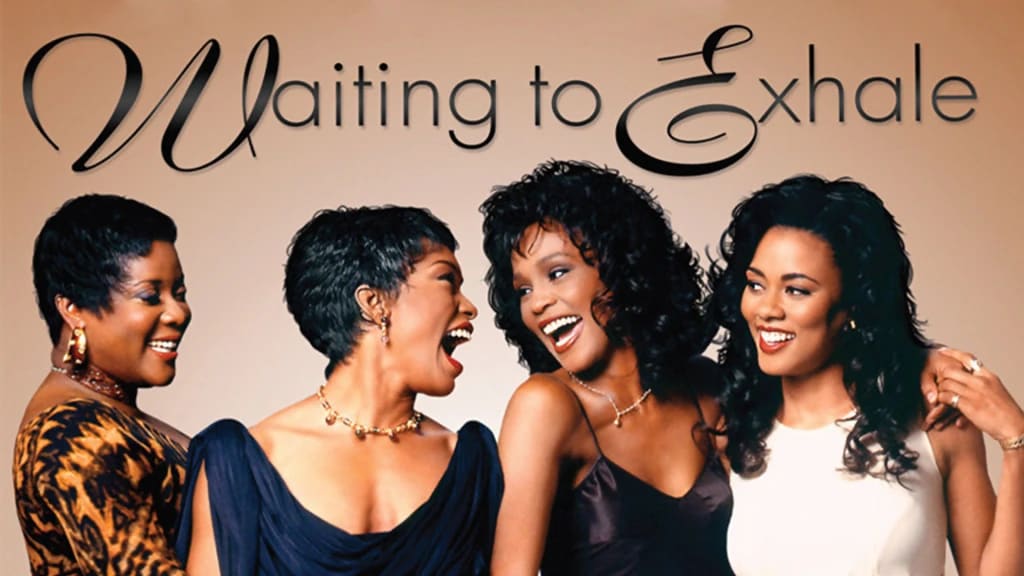
It’s 1995, and South Africa’s democracy is one year old. The air is electric with the promise of change, a new dawn where possibilities seem endless. Nelson Mandela has just celebrated his first year in office as the first black and democratically elected President of South Africa. The country is buzzing with optimism, and so are we—my girlfriends and I, young, ambitious, and eager to seize the future. I was 19, in my second year of varsity, and life felt like an open highway to success. Nothing, it seemed, could go wrong.
Recently, I found myself transported back to that era of hope and excitement when I re-watched Waiting to Exhale, the iconic film starring Angela Bassett, Whitney Houston, and a cast of incredibly talented black actors. To say the movie was groundbreaking is an understatement. For the first time, I saw a film with a predominantly black cast that depicted black women in a way that was empowering, stylish, and unapologetically bold. It was an awakening.
Back in ’95, South African media was still finding its feet, and Hollywood, particularly black Hollywood, was our window into a world we aspired to. Waiting to Exhale was more than just a movie; it was a cultural event. The buzz was inescapable—radio, TV, billboards, newspapers—it was everywhere, and the soundtrack was just as essential as the film itself. We didn’t just watch movies; we absorbed them, letting the music carry us into the narrative.
What struck me first was the production quality—flawless makeup, stunning hair, exquisite costumes, and a soundtrack that was the heartbeat of the film. It was unlike anything I had ever seen. The movie left an indelible mark on me and my friends; we talked about it for weeks, dissecting every scene, every song, every outfit.
As much as the film fascinated us, we were too young to fully grasp its deeper themes—love, heartbreak, resilience. But we recognized those stories in the lives of the women around us. We all knew someone like Bernadine, who endured a bitter divorce, or Savannah, the beautiful, successful woman who just couldn’t find love. There was always a Loretta, whose ex-husband kept coming back, or a Robin, the woman who could do so much better but seemed stuck with the wrong men. The movie was our mirror, reflecting the struggles and triumphs of the women we admired and loved.
I've watched Waiting to Exhale more than 20 times, and it never gets old. The scene that always stays with me is Bernadine’s explosive moment when she sets her husband’s car on fire, walking away from the flames with a new resolve. It’s an epic moment of catharsis, and what’s even more remarkable is that Angela Bassett’s monologue during that scene was completely improvised. The line, “I gave you 11 fucking years of my life, and you’re telling me you’re leaving me for a white woman?” echoes so powerfully with Mary J. Blige’s “Not Gon’ Cry”, with its haunting lyrics about sacrifice and betrayal. The synergy between the dialogue and the soundtrack was mind-blowing, a testament to the film’s unmatched storytelling.
Waiting to Exhale wasn’t just a movie; it was a movement. It changed how black women saw themselves and how black men saw us. It paved the way for us to demand more from our relationships, to be confident, self-sufficient, and unafraid to exhale after life’s storms.
Twenty years from now, I know I’ll still be watching Waiting to Exhale. Some films aren’t just movies; they’re milestones, markers of where we’ve been and where we’re going. And this one, without a doubt, is one of them.
About the Creator
Just Lolo
With over 10 years of experience in social justice and development. I write fiction inspired by true events, giving voice to the unheard and shedding light on stories that shape our world. Join me on this journey!
Trouble at the Tea Leafing Café
The rain had started right around the time that Annie was buttering her second thick slice of homemade toast for breakfast, and hadn’t paused since. Not that anyone could tell. The windows of the café were fogged over, and with every seat filled with happy customers munching on fresh baked pastries or steaming bowls of the delicious soup of the day, it was hardly surprising. Annie looked around the room, finally taking a moment to breathe after the lunch time rush. Her old life already felt like a bad memory, a part of her history, always, but just that. History.
By Hannah Moore7 days ago in Fiction
No Signal
The first thing Lorelei noticed was the sound. Not silence — she had expected silence — but a roaring, ceaseless, all-consuming noise. The surf. It came from every direction, a white static that swallowed everything else, and for a long, disoriented moment she thought she had gone deaf and the world had filled the gap with its own voice.
By Parsley Rose 6 days ago in Fiction



Comments
There are no comments for this story
Be the first to respond and start the conversation.