
Volume 1: Are We Alone In The Universe?
Unveiling The Search For The Extraterrestrial Life

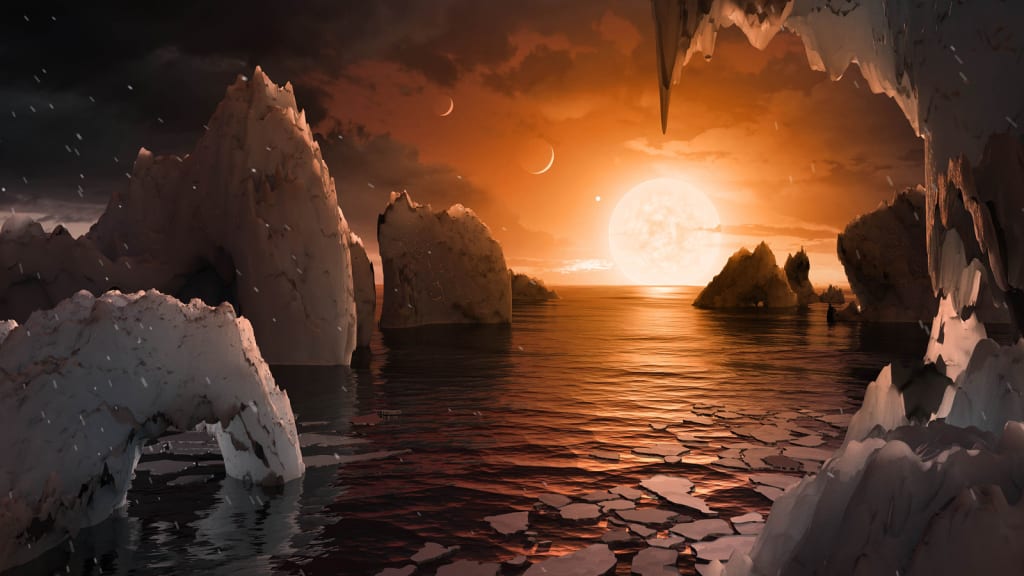
The question of whether we are alone in the universe has been a topic of speculation and curiosity for centuries. Are there other intelligent beings out there, inhabiting distant planets or galaxies? Or are we truly alone in the vast expanse of space? In this article, we will delve into the search for extraterrestrial life and explore the possibilities that lie beyond our planet.
The Search for Extraterrestrial Life
The search for extraterrestrial life is a multidisciplinary field that combines the efforts of astronomers, astrobiologists, and other scientists. Over the years, numerous missions and projects have been launched in an attempt to detect signs of life beyond Earth.
One of the key methods employed in this search is the exploration of Mars. Mars has long captured our imagination due to its potential similarities to Earth. Multiple rovers and landers have been sent to Mars to investigate the possibility of microbial life, past or present, on the red planet. While the results have been inconclusive so far, the search continues with upcoming missions aiming to study Mars in even greater detail.

Another avenue of exploration is the study of exoplanets. These are planets that orbit stars outside our solar system. With the advent of advanced telescopes and space missions like the Kepler Space Telescope and the Transiting Exoplanet Survey Satellite (TESS), thousands of exoplanets have been discovered. Scientists are particularly interested in identifying habitable exoplanets, those located in the so-called "Goldilocks zone" where conditions might be suitable for life as we know it.
The Possibilities of Extraterrestrial Life
When contemplating the question of extraterrestrial life, it is essential to consider the sheer size of the universe. There are estimated to be billions of galaxies, each containing billions of stars. The idea that Earth is the only planet with life seems statistically unlikely. Many scientists argue that the conditions necessary for life, such as the presence of liquid water and the right chemical building blocks, might exist on other planets or moons within our own solar system and beyond.
Moreover, the discovery of extremophiles, organisms capable of surviving in extreme environments on Earth, has expanded our understanding of where life can thrive. From deep-sea hydrothermal vents to acidic lakes, life has shown remarkable adaptability. This has led scientists to speculate about the potential for life in similarly extreme environments found elsewhere in the universe.
The Search for Extraterrestrial Intelligence (SETI)
In addition to the search for microbial life or habitable environments, scientists have also actively sought signs of intelligent civilizations through the Search for Extraterrestrial Intelligence (SETI). SETI involves the detection of deliberate signals or patterns emitted by alien civilizations. This can range from radio signals to laser beams or even the search for advanced technological artifacts in space.
While SETI has not yet discovered any conclusive evidence of intelligent extraterrestrial life, the search continues, expanding its reach and methods. The development of more sensitive instruments and the use of artificial intelligence in analyzing vast amounts of data offer hope for future breakthroughs.
The Fermi Paradox and the Great Filter
One aspect that adds complexity to the question of extraterrestrial life is the Fermi Paradox. Named after physicist Enrico Fermi, the paradox raises the question of why, given the vast number of potentially habitable planets, we have not yet made contact with extraterrestrial civilizations.

Some propose the existence of a "Great Filter" that acts as a barrier, preventing civilizations from progressing to the point of interstellar communication or exploration. This filter could be a series of challenges or events that halt the development of intelligent life or cause civilizations to self-destruct. If the Great Filter lies ahead of us, it suggests that we may be alone in the universe. Conversely, if it lies behind us, it suggests that the development of intelligent life is rare or that civilizations tend to self-destruct before reaching the stage of interstellar communication.
To be Continued....
Volume 2: Are We Alone in the Universe?
About the Creator
Mohammed Askee
An Enthusiastic and Energetic Content Writer, able to think topics out of the box and provide quality content and provide quality articles. Preferring the topics which are odds, movie-material and so-on.
Keep reading
More stories from Mohammed Askee and writers in Fiction and other communities.
Time Travel: Exploring the Possibilities and Paradoxes
The concept of time travel has fascinated people for centuries. The idea of being able to travel back in time and witness historical events or visit the future to see what lies ahead is intriguing. However, time travel is not just a science fiction concept. It is a topic that has been explored by scientists, philosophers, and physicists for many years. In this article, we will explore the possibilities and paradoxes of time travel.
By Mohammed Askee3 years ago in Fiction
Top tipple tricks
Been thinking a lot about drinking, lately. Not least because of a recent episode of over-indulgence and the inevitable after effects. Some readers may recall the earlier articles I wrote about beating the booze. Here I set out an experiment in techniques for cutting down on my alcohol intake. The experiment was successful, the techniques worked, and I have armed myself with an arsenal of weapons in the war against the demon drink. I have yet to fire the first round however. It's all a question of timing (perhaps procrastination).
By Raymond G. Taylor2 days ago in Psyche



Comments
There are no comments for this story
Be the first to respond and start the conversation.