
Voices from the Cellar
A Haunting Tale of Secrets Buried Beneath the Floorboards

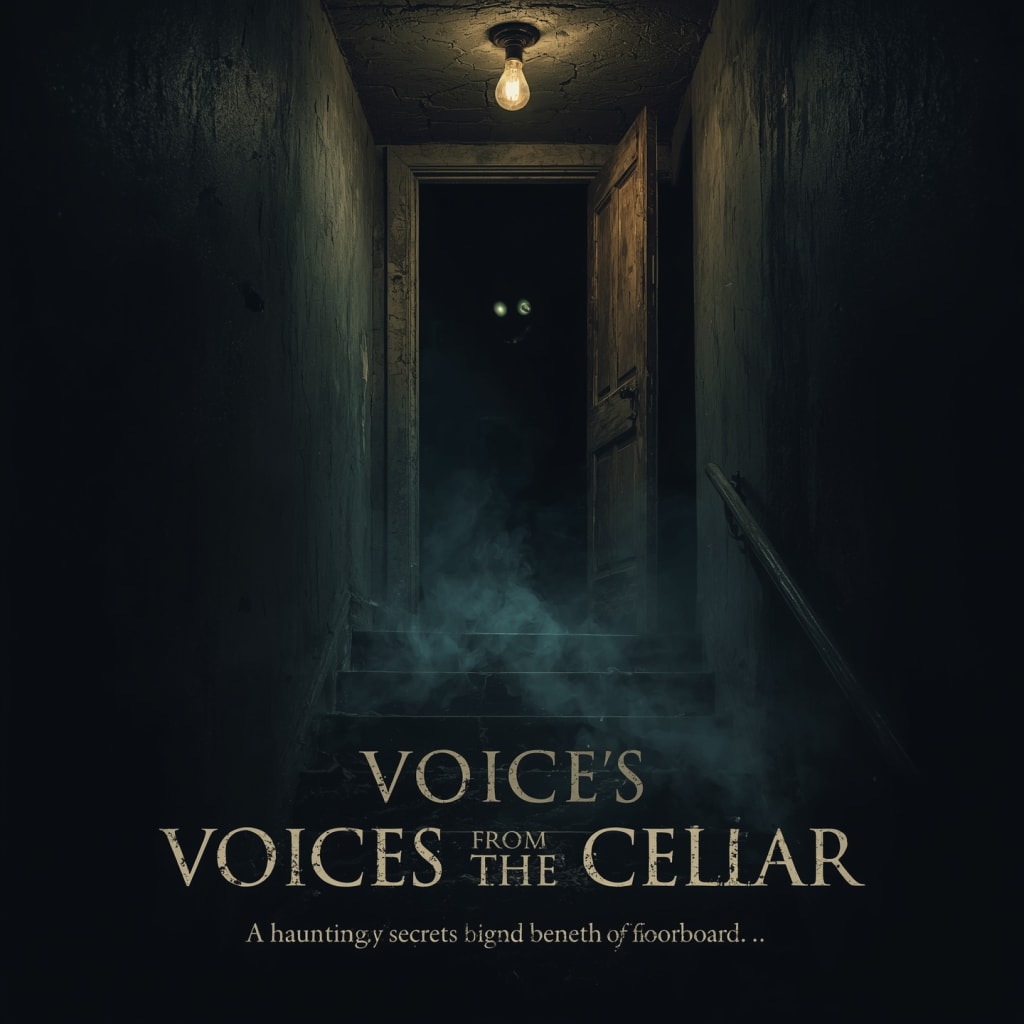
Voices from the Cellar
The house on Greystone Lane had always been quiet—eerily so. After the last owners moved out suddenly in 1998, no one had dared to move in. Rumors of strange sounds, flickering lights, and unexplained cold spots haunted the property like a fog that never lifted. Locals whispered about it, children dared each other to knock on the door, but no one stayed longer than a few minutes. That is, until Daniel Whitmore bought it.
Daniel was a writer of horror novels, with a craving for the macabre and a deep belief that truth was always stranger than fiction. He believed haunted houses were marketing ploys or the result of overactive imaginations. So when the Victorian-era home came on the market for a price too good to ignore, Daniel jumped at the chance.
From the moment he stepped inside, Daniel noticed the silence. It wasn’t peaceful—it was heavy. Like the house had stopped breathing.
The first few days were uneventful. He unpacked, settled in, and began outlining his next novel. The cellar door remained closed and locked—he assumed it was just storage space, and didn’t think much of it. Until the third night.
At exactly 3:03 AM, Daniel awoke to a sound—faint, but unmistakable. Whispers. They were low, layered, like a crowd murmuring just out of reach. At first, he thought it was the wind brushing against the windows, but the sound didn’t move. It lingered, right beneath him.
He crept downstairs, barefoot and holding a flashlight. The whispers grew louder with each step, and by the time he stood before the cellar door, they were clear—though not understandable. It sounded like several voices speaking at once, too distorted to make out words.
The doorknob was cold—unnaturally cold. He turned it. Locked.
The next morning, he called a locksmith.
“You sure you want to open that?” the man said with a nervous chuckle as he examined the old lock. “Some doors are better left closed.”
Daniel smiled. “I’m a horror writer. I need to open it.”
With a few clicks, the lock gave way. The door creaked open slowly, revealing a steep staircase that vanished into pitch black. A musty, almost metallic smell drifted upward.
Daniel flicked on his flashlight and descended.
The cellar was larger than expected. Stone walls, damp floor, and rows of shelves lined with broken jars and rusted tools. But what caught his attention was the far wall—a section of bricks that looked newer, fresher than the rest. Out of place.
He moved closer and noticed a message faintly etched into one of the bricks. It was hard to read, but he made out the words:
"DON'T LISTEN TO THEM."
Daniel stepped back, unease pooling in his gut.
That night, the whispers returned. Louder. Angrier.
They called his name.
He sat up in bed, sweating, heart pounding. The air in the room had dropped noticeably. The clock read 3:03 AM.
“Daniel…” a voice rasped. Clear this time.
It came from below.
He grabbed his flashlight again and ran to the cellar. This time the door creaked open on its own. The light flickered as he descended, and the temperature dropped with every step.
When he reached the bottom, the room was deathly silent.
He stepped toward the brick wall.
This time, he noticed a crack along one edge—just wide enough to fit fingers into. As if it were a door hiding in plain sight.
Compelled, he dug his fingers into the gap and pulled.
The bricks groaned and shifted, revealing a narrow tunnel behind the wall.
Against every instinct, he entered.
The tunnel was damp, earthy, and suffocating. After several feet, it opened into a small stone chamber.
And in the center of the room stood… nothing.
Except for an old, dust-covered wooden chair, facing the corner.
As Daniel stepped into the room, the flashlight flickered violently and then died.
Darkness.
Then—a breath.
Someone—something—exhaled behind him.
He turned, but saw nothing.
Suddenly, the voices were back. Not whispers this time—shouts. Angry, urgent, desperate. So many voices, layered, crashing into one another like a storm.
“GET OUT!”
“HE DOESN’T BELONG!”
“LISTEN!”
The air pulsed with energy, like the room itself was alive. Daniel screamed and stumbled back toward the tunnel. The voices followed, echoing through the narrow space, screaming his name.
He made it back to the cellar, slammed the hidden wall shut, and raced up the stairs, locking the cellar behind him.
He didn’t sleep.
The next day, he researched the house’s history.
It had belonged to Dr. Elias Wren, a surgeon during the early 1900s, known for his fascination with experimental medicine. Local rumors claimed he performed unsanctioned procedures in the cellar—using vagrants and patients from a nearby asylum as test subjects. No bodies were ever found, but several disappearances were linked to the property.
One article mentioned neighbors hearing “agonized voices from the cellar” during the last winter of Wren’s life. The doctor was found dead in the home, slumped over the very same wooden chair, his ears stuffed with wax.
Daniel was horrified.
That night, the voices came again—but different.
They weren’t angry. They were pleading.
“Free us…”
“Please…”
“Don’t let him win…”
Daniel returned to the cellar the next day. He brought tools, flashlights, and a recorder.
He opened the tunnel.
The room looked the same, but the air felt heavier.
He turned on the recorder and asked aloud: “Who are you?”
Silence.
Then, faintly, on the recorder:
"Help…"
He began digging. Carefully, around the edges of the room. After hours of work, he unearthed a shallow grave—bones, dozens of them. Human remains, jumbled together. A mass grave.
Daniel alerted the authorities. The house was declared a crime scene, and forensic teams recovered the remains. News broke across the county—Greystone Lane’s haunted house had secrets buried beneath.
The voices stopped after that.
Daniel moved out. He never wrote the horror novel he planned—but instead wrote a nonfiction book titled "Voices from the Cellar: The True Story of the House on Greystone Lane." It became a bestseller.
He never returned to the house. But sometimes, when the air is just right and the night is still, people walking by say they hear it—softly, barely audible:
“…Thank you…”
About the Creator
Keep reading
More stories from Muhammad Azeemullah and writers in Fiction and other communities.
"Fragments of Farewell"
A Death in the Family: Finding Life After Loss Chapter One: The Phone Call It was a rainy evening when Emily’s phone rang. She was sitting at the small dining table in her apartment, a cup of lukewarm tea in her hands, staring out at the blurred cityscape. The phone’s ring cut through the silence, and a sudden chill crept up her spine.
By Muhammad Azeemullah10 months ago in Fiction
The Silence
Danny used to feel it like weight. Not heavy, but solid, like someone standing behind him in a dark room, not threatening, just present, close enough that if he turned around fast enough he might catch a glimpse. The voice had never been audible. It was clearer than that. It landed inside him fully formed, without effort. Not imagination. Not guessing. Words that carried authority. Stay in faith. I will bring it to pass. Do you trust Me. Those moments had come when life was tight, when invoices went unpaid, when the repair shop sat quiet for hours longer than it should have, when fear crept in through the cracks at night. The words steadied him, not because they fixed anything instantly, but because they made the chaos feel contained.
By Joey Raines6 days ago in Fiction
A Historic Declaration
We the People of the Husbands of the United States of America, in Order to form a more perfect Union, and I mean you...with me...establish Justice, insure domestic Tranquility, provide for the common defence, promote the general Welfare, and secure the Blessings of Liberty to ourselves, after Puberty, do ordain and establish this Declaration of Co-Dependence.
By Gerard DiLeo4 days ago in Humans



Comments
There are no comments for this story
Be the first to respond and start the conversation.