
Vlad the Impaler: The Real Dracula Whose Cruelty Stained History in Blood
Before Dracula was a vampire, he was a man—one whose legacy was far more terrifying than fiction ever dared.

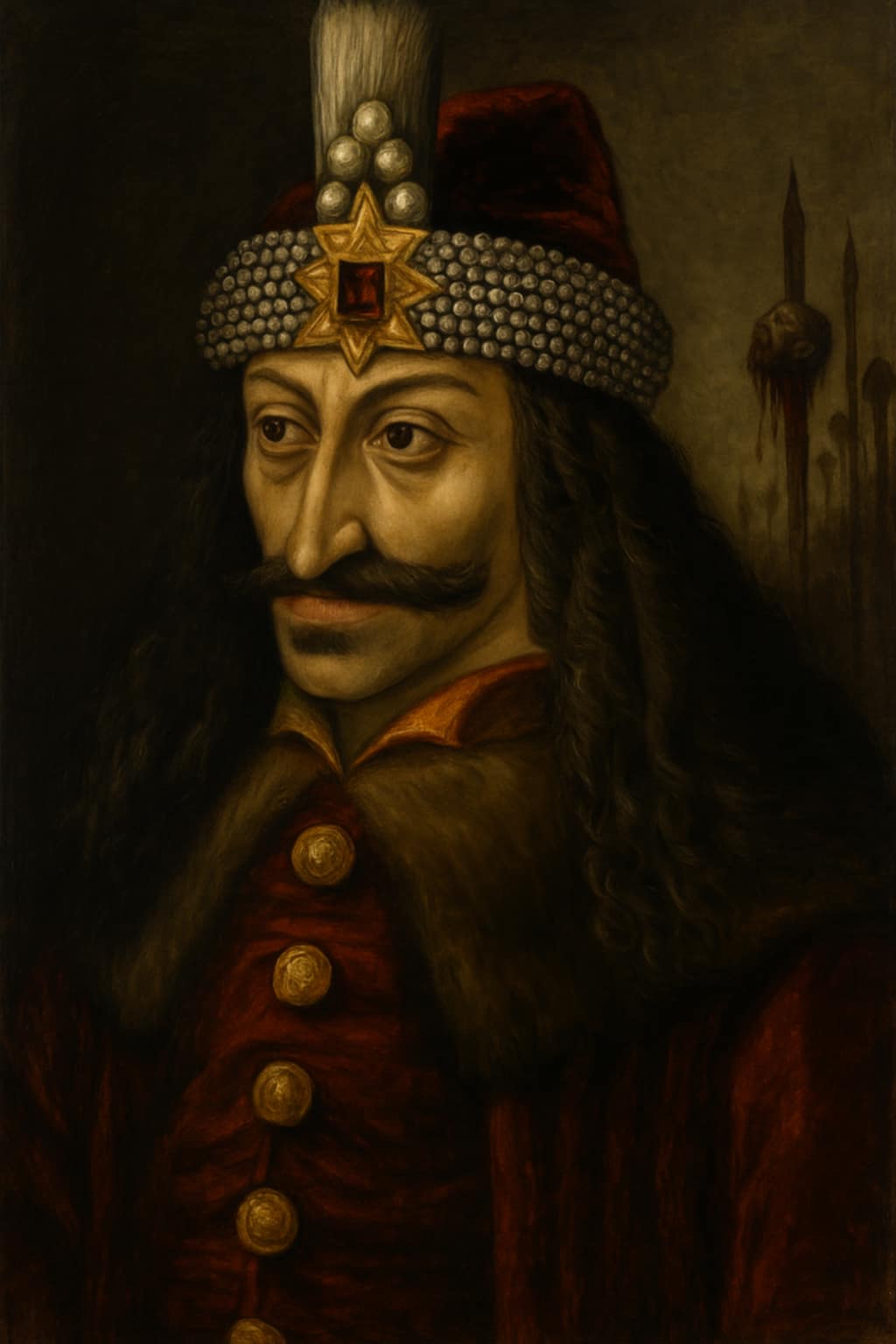
A Prince Born in Blood
In 1431, in the shadowy mountains of Transylvania, a boy was born who would grow into one of the most brutal rulers history has ever known: Vlad III, later called Vlad Țepeș, or Vlad the Impaler. one notable feature of his is that he had green eyes; the rarest of a kind.
His father, Vlad II Dracul, belonged to the Order of the Dragon, a Christian knightly order sworn to defend Europe from the encroaching Ottoman Empire. That title—Dracul, or “the Dragon”—would give Vlad his infamous surname: Dracula, “son of the Dragon.”
Vlad’s early life was anything but noble. Along with his brother Radu, he was taken hostage by the Ottomans and held for years to ensure their father’s loyalty. It was there, in captivity, that Vlad developed a chilling philosophy: to rule with absolute fear and total control.
A Throne Drenched in Blood
Vlad fought for the Wallachian throne in a series of bloody power struggles before securing it in 1456. Once in power, he launched a campaign to purge corruption, rebellion, and crime—but his methods were unspeakably savage.
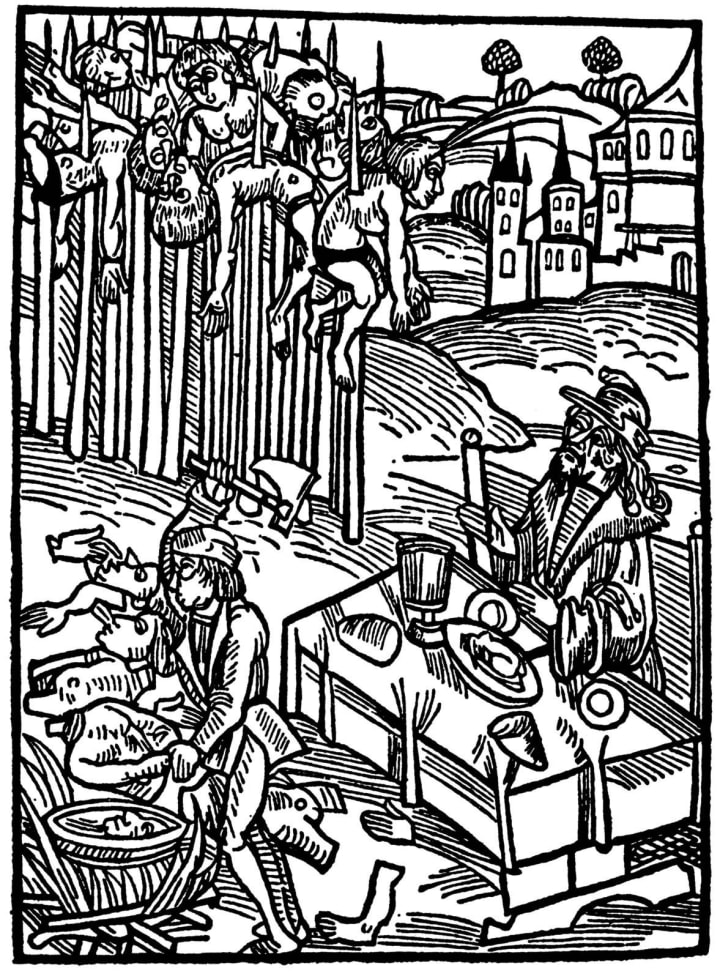
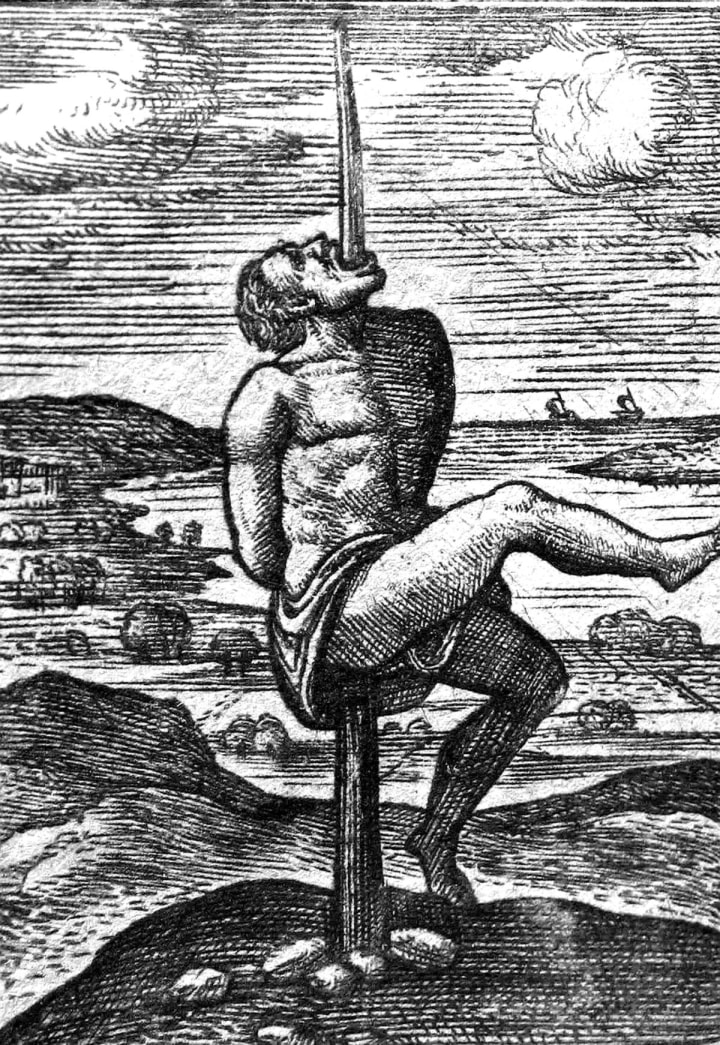
His favorite punishment? Impalement. Victims were skewered on long, sharpened stakes, often from the rectum or genitals up through the mouth or shoulder. Death could take hours—even days.
Chroniclers tell of entire fields lined with the dead, rotting in grotesque poses under the Romanian sun. One German pamphlet from the 15th century described 20,000 impaled corpses outside the capital, Târgoviște.
It wasn’t justice. It was terrorism as policy.
1462 Massacre: Hell on Earth
When Sultan Mehmed II, conqueror of Constantinople, marched on Wallachia in 1462, he brought an army of nearly 100,000 men to crush Vlad’s rebellion.
What he found instead was hell on earth.
As the Ottomans approached Târgoviște, they encountered a horrifying sight: a “forest” of impaled bodies stretching for miles—over 20,000 men, women, and children, suspended in grisly stillness.
One eyewitness, the Turkish chronicler Tursun Beg, wrote:
"The sultan’s men were stunned. Even the bravest turned pale."
Even the ruthless Mehmed II turned back in disgust. Vlad had done the unthinkable: he fought a superpower using fear as his greatest weapon.
Tyrant of the People
Vlad didn’t save his cruelty for invaders.
Wallachian nobles, merchants, criminals—even peasants—faced his wrath. A beggar could be impaled for laziness. A merchant for short-changing a customer. An unfaithful wife? Tortured and mutilated.
One popular tale claims Vlad invited hundreds of beggars to a feast, only to lock the doors and burn them alive.
"They contribute nothing," he reportedly said.
"Let them burden us no longer."
He enforced absolute loyalty. If fear kept you obedient, Vlad kept you alive.
Hero or Monster?
To some, Vlad was a sadistic tyrant. To others, a national hero.
He held back Ottoman advances for years, defended Christian lands, and enforced internal stability. Romanian folklore still speaks of him with pride.
But even his admirers admitted his cruelty. A Slavic manuscript described him as a “just but merciless” ruler who washed his hands in the blood of his enemies before meals.
The truth? He was both. Defender and butcher. Patriot and sadist. Dracula and Vlad.
From History to Horror: Enter Dracula
When Bram Stoker wrote Dracula in 1897, he borrowed Vlad’s nickname and elements of his history, even if he never visited Romania.
The myth took hold: a bloodthirsty nobleman from the dark forests of Eastern Europe, resurrected as a supernatural monster.
But the real Vlad didn’t need fangs. His cruelty was far worse than fiction.
Death and Legacy
Vlad died as violently as he lived—likely in 1476, during battle with the Ottomans or assassinated by treacherous nobles.
His head was sent to Sultan Mehmed II in Constantinople. His body may lie in Snagov Monastery, though no definitive grave has been found.
He is remembered not for peace, nor prosperity, but for one thing above all:
He ruled through horror.
Final Thoughts: A Warning in Flesh and Bone
Vlad the Impaler’s story endures not because he was a vampire, but because he shows us what real horror looks like: calculated, deliberate, and carried out in the name of order.
He didn’t drink blood.
He simply spilled more of it than most rulers could ever imagine.
Like what you read? Share, subscribe, and tip to support more deep dives into the dark corners of history.
About the Creator
E. hasan
An aspiring engineer who once wanted to be a writer .
The Clock That Stopped at Midnight
In the quiet town of Ravensbrook stood an old house that everyone avoided. It wasn’t broken or abandoned. In fact, the house looked perfectly normal—white walls, tall windows, and a small garden that somehow stayed alive even though no one ever cared for it.
By Waleed khan3 days ago in Fiction



Comments
There are no comments for this story
Be the first to respond and start the conversation.