
Vaccine Hesitancy and Uptake: A Shift in Public Health Research Priorities: NIH to Terminate or Limit Grants
Khondokar Bakhtear

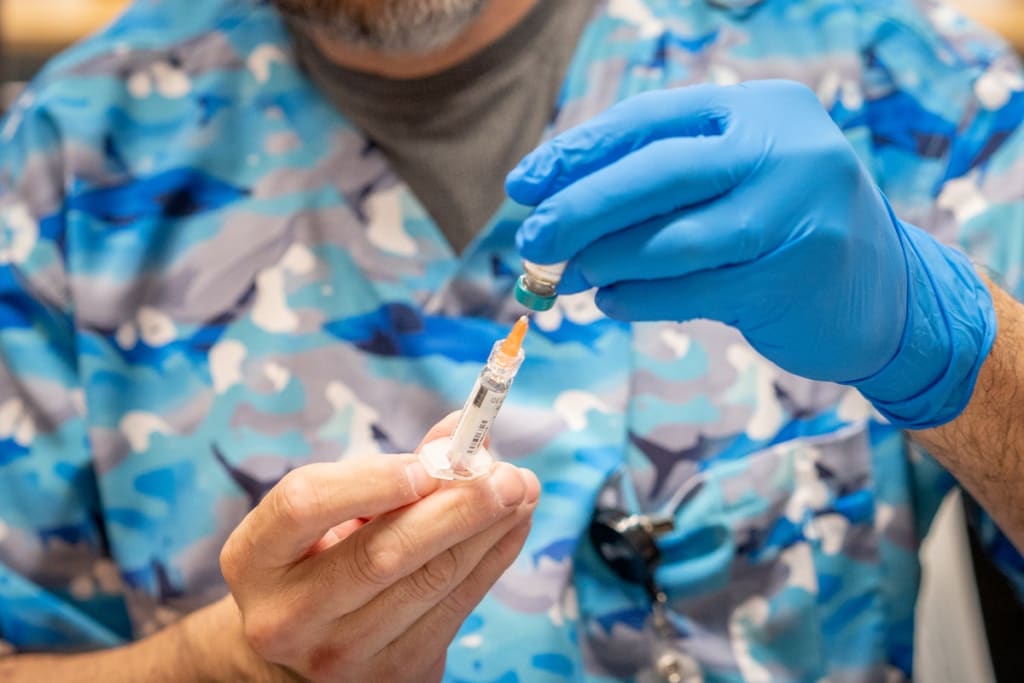
Vaccine Hesitancy and Uptake: A Shift in Public Health Research Priorities: NIH to Terminate or Limit Grants
The National Institutes of Health (NIH) recently made a significant decision that has sparked debate among experts in public health, researchers, and policymakers. It decided to end or limit grants related to vaccine hesitancy and uptake. As the federal agency seeks to reallocate resources toward other pressing public health issues, this decision reflects a broader shift in priorities. Vaccine reluctance continues to be a significant problem that necessitates ongoing research and intervention, despite the fact that some support the move as a necessary step to concentrate on emerging threats. The NIH's decision, its context, and its potential effects on public health are the subject of this article.
The Setting of Research on Vaccine Hesitancy
Global public health officials are increasingly concerned about vaccine hesitancy, which is defined as the delay or refusal of vaccines despite their availability. One of the top ten global health threats for 2019 was vaccine skepticism, which the World Health Organization (WHO) cited for its potential to reverse progress in the fight against preventable diseases. There have been outbreaks of measles, whooping cough, and other diseases that were once nearly eradicated in the United States as a result of vaccine reluctance. Even though the COVID-19 pandemic claimed millions of lives worldwide, misinformation and distrust in public health institutions fueled opposition to vaccination efforts. In response to this crisis, the National Institutes of Health (NIH) and other federal agencies made significant investments in research that aimed to comprehend the underlying causes of vaccine aversion and develop strategies for increasing vaccine uptake. The effectiveness of public health messaging, the impact of cultural and religious beliefs on vaccine acceptance, and the role of social media in the dissemination of false information were some of the topics that were the subject of NIH-funded studies. In order to solve a problem with many facets and complexities, these efforts were widely regarded as indispensable.
The Decision of the NIH: A Change in Priorities
The NIH's decision to end or limit grants for vaccine resistance and uptake represents a significant shift from its previous position. The move is part of a larger effort to reallocate resources to other urgent public health priorities, like emerging infectious diseases, climate change, and health disparities, according to agency officials. The National Institutes of Health (NIH) made it clear in a statement that, despite the fact that vaccine skepticism continues to be a significant issue, the organization must adapt to changing obstacles and ensure that its funding reflects the population's most pressing requirements. In light of the COVID-19 pandemic, critics of the decision argue that it is premature to reduce research on vaccine hesitancy. They point out that vaccine apprehension is not a fixed problem; rather, it changes as a result of new vaccines, shifting social dynamics, and the dissemination of false information. For instance, despite being a scientific triumph, the rapid development and distribution of the COVID-19 vaccines also fueled skepticism and conspiracy theories. The United States could face similar difficulties in future public health crises, the researchers warn, if continued investment in understanding and addressing vaccine hesitancy is not made.
Possibilities for Public Health Impacts
Concerns have been expressed regarding the potential effects that the NIH's decision could have on public health. One major worry is that reducing funding for vaccine hesitancy research could hinder efforts to combat preventable diseases. One of the most efficient tools in the public health arsenal are vaccines; however, their success is contingent on widespread acceptance. Reduced vaccination rates, increased disease outbreaks, and increased strain on the healthcare system are all possible outcomes if vaccine hesitancy is not adequately addressed.
The effect on institutions and researchers who study vaccine hesitancy with funding from the NIH is another concern. Understanding the intricate factors that influence vaccine acceptance has been the focus of many experts in public health throughout their careers. These researchers may be forced to give up on their work or look for other, less obvious sources of support if funding is cut back. In a field that is essential to global health, this could lead to a loss of expertise and momentum.
On the other hand, those in favor of the NIH's decision say that it is a necessary step to make sure that the limited resources are used well. They emphasize that the NIH must prioritize issues that pose the greatest threat to population health and that vaccine hesitancy is just one of many public health issues facing the nation. To avoid future pandemics, emerging infectious diseases like avian influenza and mpox (formerly monkeypox) require immediate attention and resources. In a similar vein, it is becoming increasingly urgent to address the health effects of climate change, such as heat-related illnesses and the spread of diseases carried by insects.
The Function of Other Sources of Funding
Although the decision made by the NIH may restrict federal funding for vaccine hesitancy research, this does not necessarily mean that these studies will cease. It's possible that private foundations, educational establishments, and international agencies will step in to fill the void. For example, the Bill & Melinda Gates Foundation has long been a major funder of vaccine research and advocacy, and it could play a key role in supporting studies on vaccine hesitancy. In a similar vein, in order to continue their work, universities and research centers may look for partnerships with businesses or philanthropic organizations.
However, there are drawbacks to relying on alternative sources of funding. The broader public health objectives of federal agencies may not always coincide with the specific priorities and agendas of private funders. Additionally, the availability of funding can fluctuate, making it challenging for researchers to plan projects that will last a long time. This demonstrates how crucial it is to keep a diverse and long-lasting funding ecosystem for public health research.
Conclusion
A broader shift in the priorities of public health research is reflected in the NIH's decision to limit or terminate grants related to vaccine hesitancy and uptake. Despite the mixed reactions to the move, it emphasizes the need for a balanced approach to addressing the numerous health issues facing the nation. Although vaccine hesitancy is just one piece of a larger puzzle, it remains a critical issue that requires ongoing attention. Researchers, policymakers, and funders must cooperate to ensure that no aspect of public health is overlooked as the NIH reallocates resources to other pressing issues. Only by taking a comprehensive and collaborative approach can we hope to build a healthier, more resilient future for all.
About the Creator
Keep reading
More stories from Khondokar Bakhtear Hossain and writers in Fiction and other communities.
10 Million Pounds of Meat and Poultry Sold at Trader Joe’s, Walmart, Aldi, and More Recalled Due to Listeria Risk
10 Million Pounds of Meat and Poultry Sold at Trader Joe’s, Walmart, Aldi, and More Recalled Due to Listeria Risk In one of the largest food recalls in recent history, over 10 million pounds of meat and poultry products sold at major retailers like Trader Joe’s, Walmart, Aldi, and others have been pulled from shelves due to potential contamination with *Listeria monocytogenes*, a dangerous bacteria that can cause severe illness. The recall, which spans multiple states and involves a variety of products, has left consumers concerned about the safety of their food and the steps they should take to protect themselves and their families.
By Khondokar Bakhtear Hossain12 months ago in Fiction
Winterthorne
Winterthorne stood alone at the edge of the park. The beautiful snow that had surrounded him was all trampled now, from the feet of all of the children who had built him. He missed the sparkly clean snow blanket, but he was happy that so many children had come out to make him.
By Laura DePace7 days ago in Fiction
I was in a Toxic Relationship, with my Workplace
“You got that?” My ex yelled. His hands were balled into fists at his side. At six foot three, he towered over me. A normal person would have been afraid, but I looked up a video of George Lopez repeatedly saying, “I got this,” and showed it to him. I had grown used to this treatment, so much so that I didn’t blink when he ripped the phone from my hand and threw it across the room.
By Jade M.2 days ago in Confessions




Comments
There are no comments for this story
Be the first to respond and start the conversation.