
The icy vastness of Antarctica, Earth's coldest and most inhospitable continent, spans over 5 million square miles, blanketed by ice sheets reaching depths of over a mile. With an average daily temperature of a bone-chilling -49 degrees Fahrenheit and wind speeds that can exceed 100 miles per hour, Antarctica's harsh conditions have limited its inhabitants to scientists stationed in scattered research stations across the frozen landscape.
In 2016, satellite images of Antarctica unveiled a mysterious formation, prompting speculation about a potential man-made pyramid beneath the ice. Contrary to mainstream geologists' belief that ancient humans never settled in Antarctica due to its hostile climate, these reports ignited curiosity about the possibility of our ancestors reaching and even inhabiting this barren continent. The alleged pyramid, reminiscent of those in Egypt but dwarfing them in size, added a layer of intrigue to the exploration of Antarctica's secrets.
The idea that humans might have occupied Antarctica in ancient times challenges conventional geological wisdom, which suggests that the continent has been under ice for millions of years. However, in 2017, German geologists collected core samples from the Antarctic seafloor, revealing surprising evidence of a climate potentially conducive to human habitation around 4,000 BC. The discovery included plant remnants resembling those from a rainforest, challenging the perception of Antarctica as a perpetually frozen wasteland.
Interestingly, Polynesian folklore adds another layer to this enigma. Stories from Polynesia speak of culture heroes reaching the Antarctic continent, describing a strange land with white rocks, icebergs, seals, and penguins. These narratives, compiled in the book "Out of Antarctica" by French academic Argo, suggest a connection between Polynesian beliefs and the actual geography of Antarctica. The Polynesian people considered Antarctica the place of their ancestors, raising questions about the continent's historical climate.
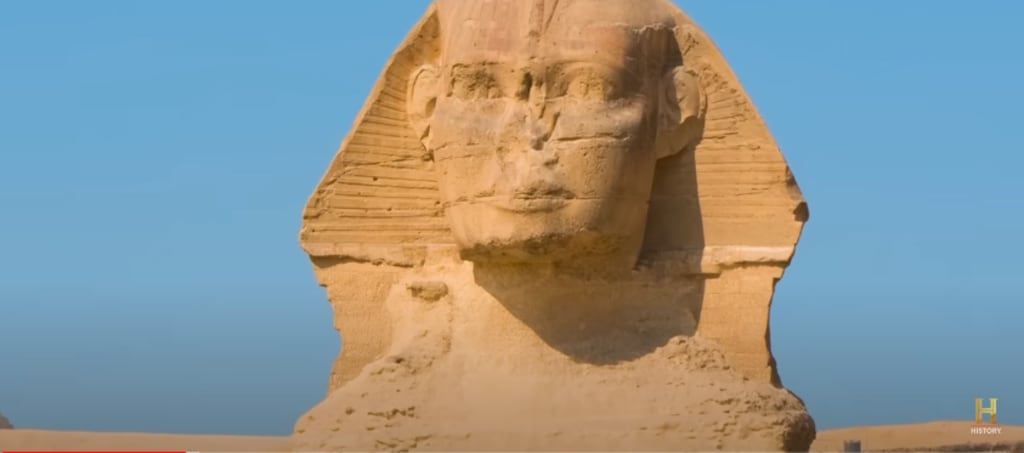
Shifting from the frozen expanse of Antarctica to the ancient mysteries of Egypt, the focus turns to Cairo, where the iconic Giza necropolis stands. Dominated by the Great Pyramid, the Sphinx, and other monumental structures, Giza has attracted awe and fascination for centuries. The Sphinx, a colossal statue with a lion's body and a human head, remains a symbol of ancient mystery.
Archaeologists have long debated the age and purpose of the Sphinx. While conventional belief attributes its creation to Pharaoh Khafre around 2500 BC, alternative theories propose a much older origin. The Inventory Stella, an ancient stone inscription, suggests repairs to the Sphinx by Khufu, Khafre's predecessor, indicating an older structure. Some researchers, like geologist Robert Schoch, argue that weathering patterns on the Sphinx's body point to a much earlier date, possibly around 10,000 BC, challenging established timelines of human civilization.
In a modern-day context, the Newkirks, residing in Cincinnati, Ohio, lead lives intertwined with a collection of cursed objects. Their basement houses a peculiar assortment of items believed to bring misfortune, with visitors experiencing physical reactions in the presence of these artifacts. From a cursed deer skull to a deadly ring and a malevolent wooden effigy known as the Crone, the Newkirks' collection blurs the line between the supernatural and the tangible.
Transitioning from the mysterious artifacts of Ohio to the archaeological site of Tall el-Hammam in the lower Jordan River Valley, the narrative unveils the remnants of an ancient city. Scholars propose that this city, dating back almost 4,000 years, could be the biblical city of Sodom. The destruction of Sodom, as narrated in Genesis, involves fire and burning stone from the heavens, leading some researchers to explore the possibility of a meteoric impact.
Examining geological proxies and anomalies, scientists hypothesize that an airburst or impact event occurred over Tall el-Hammam. Evidence includes thermal damage, microspherules, and elevated levels of rare Earth elements associated with meteorites. This lends credence to the theory that a cosmic event could explain the city's destruction, aligning with biblical accounts of divine intervention.
Lastly, the exploration shifts to the ancient city of Pompeii, frozen in time by the eruption of Mount Vesuvius in 79 A.D. The spotlight falls on the Villa De papyrus, a luxurious Roman villa that housed a remarkable library. Buried beneath volcanic ash, the villa's library contains over 1,800 papyrus scrolls, offering a glimpse into the intellectual pursuits of its time.
Recent advancements in technology, such as virtual unwrapping, provide a means to scan and study these ancient scrolls without physically unraveling them. Scholars hope that these methods will reveal more about the philosophical and literary treasures hidden within, including the possibility of containing letters from the Apostle Paul, making it a potential repository of early Christian material.
In conclusion, the narrative weaves through the mysteries of Antarctica, the enigma of the Sphinx, the supernatural artifacts in Ohio, the biblical city of Sodom, and the intellectual treasures of Pompeii. These disparate threads of history, science, and mythology converge to paint a captivating tapestry of human curiosity and the eternal quest for understanding our past.
About the Creator
Keep reading
More stories from M Huzaifa Munir and writers in Fiction and other communities.
Sea Mysteries
As humans, our innate curiosity beckons us to explore the uncharted, pushing the boundaries of our knowledge. The deep ocean, covering over two-thirds of our planet, conceals a myriad of enigmatic mysteries, 15 of which we are about to unravel—one more captivating and perplexing than the last.
By M Huzaifa Munir2 years ago in Chapters
Silken Chains
Silhouettes of the female form were given flesh and bone. Silken skin glistened under the spotlight. Dry ice rose around our Icons as they danced atop their podiums in the Square. Heralded for their beauty, their movements were slight, powerful, and sensual.
By Paul Stewart5 days ago in Fiction
The Cat in the Box
The humans have a story about one of us. How do I know this? It's because they talk among themselves while they take care of us each day. Sometimes they'll even listen to things through these little white button-like objects they place in their ears. Occasionally they'll take these out and share with each other things that they find fascinating. One of the things I've overheard them talking about is the cat in the box. They never agree about what happened to this cat, which shows just how carefully they were listening.
By Special Little Whiskers Kitten Sanctuarya day ago in Fiction
Top tipple tricks
Been thinking a lot about drinking, lately. Not least because of a recent episode of over-indulgence and the inevitable after effects. Some readers may recall the earlier articles I wrote about beating the booze. Here I set out an experiment in techniques for cutting down on my alcohol intake. The experiment was successful, the techniques worked, and I have armed myself with an arsenal of weapons in the war against the demon drink. I have yet to fire the first round however. It's all a question of timing (perhaps procrastination).
By Raymond G. Taylor2 days ago in Psyche




Comments (1)
I love reading, hearing about, or watching the many unsolved mysteries of the earth. So very fascinating. Thank you for writing this.