
Unlocking the Mysteries of the Pyramids; Latest Discoveries, and Future Directions
What they Tell Us about the Achievements and Legacy of Ancient Egypt.

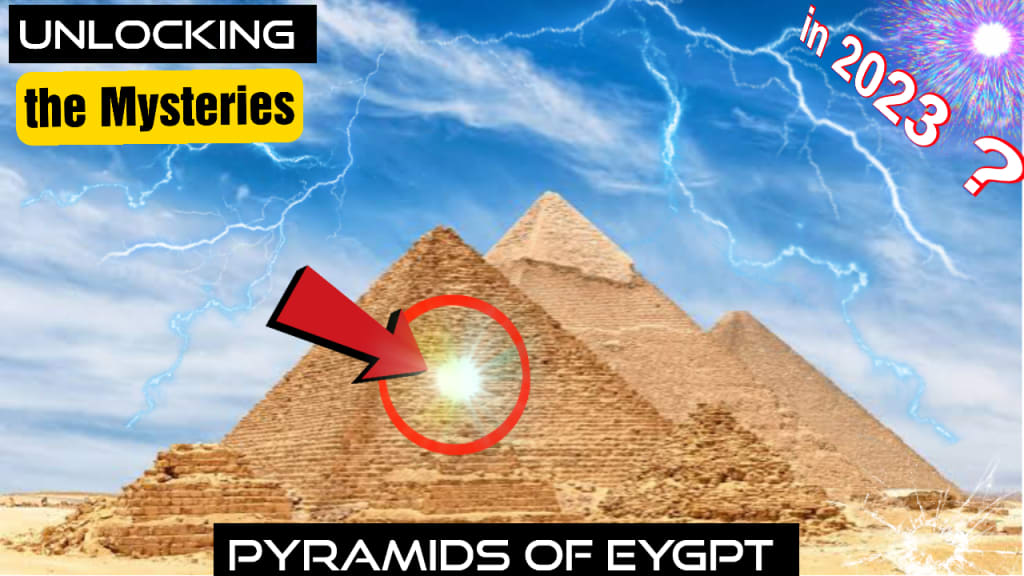
For centuries, the pyramids of Egypt have captivated people all over the world. These ancient structures, built by the pharaohs thousands of years ago, continue to intrigue and fascinate us today. Recently, new discoveries and research have shed light on these enigmatic monuments, revealing new insights into their construction, purpose, and significance.
One of the most intriguing recent findings is the discovery of a previously unknown pyramid in the Dahshur necropolis, south of Cairo. The pyramid, which is believed to date back to the 13th dynasty (around 1800 BC), was discovered by a team of archaeologists using advanced scanning technology. The pyramid, which is approximately 16 feet tall, is thought to have been built for Queen Neit, the wife of King Teti. This discovery is significant because it suggests that the Dahshur necropolis was much more extensive than previously thought and that there may be other undiscovered pyramids in the area.
Another recent discovery has shed new light on the construction techniques used to build the pyramids. A team of archaeologists from the French Institute for Oriental Archaeology and the University of Liverpool used advanced 3D scanning technology to study the Great Pyramid of Giza, the largest and most famous pyramid in Egypt. They found that the pyramid was built using a system of internal ramps, which were used to transport the large stones up to the higher levels of the pyramid. This discovery challenges the traditional theory that the pyramids were built using external ramps and provides new insights into the engineering and construction techniques used by the ancient Egyptians.
In addition to these new discoveries, recent research has also revealed new insights into the purpose and significance of the pyramids. One theory that has gained traction in recent years is that the pyramids were not just tombs for the pharaohs, but also served as astronomical observatories. Researchers have noted that the alignment of the pyramids with the stars is remarkably precise and that the layout of the pyramids themselves may have been designed to reflect the positions of the stars in the sky. This theory suggests that the pyramids were not just symbols of the pharaohs' power and wealth, but also served a more practical purpose in helping the ancient Egyptians to navigate the stars and understand the movement of the heavens.
Another recent theory that has gained attention is the idea that the pyramids may have served as power plants. This theory, which was first proposed in the 1990s, suggests that the pyramids were built to harness the natural energy of the earth and use it to generate electricity. Proponents of this theory point to the fact that the pyramids are built on limestone bedrock, which has natural piezoelectric properties. They argue that the ancient Egyptians may have used this property to generate electricity, which could have been used to power the lights and other technology in the pyramids. While this theory is still controversial and has yet to be proven conclusively, it highlights the ongoing fascination and mystery surrounding the pyramids.
Despite all the new discoveries and theories, the pyramids of Egypt continue to inspire wonder and awe in people all over the world. These ancient structures are a testament to the incredible engineering and architectural achievements of the ancient Egyptians and continue to capture our imaginations today. As new research and discoveries continue to shed light on the pyramids, we can only imagine what other secrets and mysteries they may still hold.
These findings on Egypt's pyramids have provided new insights into the construction, purpose, and significance of these ancient structures. From the discovery of a previously unknown pyramid in the Dahshur necropolis to the use of internal ramps in the Great Pyramid of Giza, these discoveries challenge our traditional understanding of the pyramids and provide new insights into the engineering and architectural achievements of the ancient Egyptians. Furthermore, theories about the pyramids serving as astronomical observatories or even power plants add a new layer of mystery and intrigue to these enigmatic structures.
It is important to note, however, that there is still much we do not know about the pyramids. Despite the new discoveries and theories, many questions remain unanswered. For example, how were the massive stones used to build the pyramids transported and lifted into place? How were the pyramids used after the pharaohs were buried? And what was the significance of the intricate hieroglyphs and carvings found inside the pyramids?
To answer these questions and unlock the secrets of the pyramids, further research and exploration are needed. Fortunately, advances in technology such as 3D scanning and remote sensing are making it easier for archaeologists and historians to study these ancient structures without damaging them. As new discoveries are made and theories tested, we may be able to gain a better understanding of the pyramids and the civilization that built them.
Recent findings in Egypt's pyramids have opened up new avenues of research and exploration. From the discovery of new pyramids to the use of advanced technology to study their construction, these findings have provided new insights into the engineering and architectural achievements of the ancient Egyptians. While many questions still remain unanswered, the ongoing fascination and mystery surrounding the pyramids continue to inspire wonder and awe in people all over the world.
About the Creator
M. Bilal Ahmed
Writer and storyteller with a passion for evoking strong emotions and exploring new perspectives. Always striving to create compelling characters and unforgettable stories.
Keep reading
More stories from M. Bilal Ahmed and writers in Fiction and other communities.
The Last Hope
The world was dying. The once-thriving cities now lay in ruins, and the few people who remained were struggling to survive in a world that was quickly becoming uninhabitable. The sun beat down relentlessly, scorching the earth and turning the few remaining sources of water into stagnant pools of disease. The air was thick with dust and smoke, and every breath was a struggle.
By M. Bilal Ahmed3 years ago in Fiction
Ludacris and Nelly draw backlash over bookings at MAGA-coded music festival
Ludacris and Nelly headlining a mostly right-wing event is good for them. It’s also great for the genre of hip hop. The two rap veterans have showcased their talents on other stages. Why can’t they perform for mostly MAGA folks and grab that bag?
By Skyler Saunders6 days ago in Beat



Comments
There are no comments for this story
Be the first to respond and start the conversation.