
Ukrainian Strikes Inside Russia and the Putin Controversy
Understanding Recent Cross-Border Attacks, Accusations, and What the Evidence Shows


Russia-Ukraine Conflict: Ukrainian Strikes Inside Russia and the Putin Controversy
In late December 2025, tension rose once more in the long-running Russia-Ukraine war after Russia claimed that Ukrainian forces had carried out a drone attack targeting Russian President Vladimir Putin’s residence in the Novgorod region of Russia. This accusation quickly became a headline in many countries, but independent information and U.S. intelligence assessments show there is no evidence Ukraine targeted Putin’s home. Reuters+1
The war between Russia and Ukraine began in 2022 when Russia launched a large-scale invasion of its neighbour. Since then, the conflict has included conventional fighting, long-range missile and drone strikes, and attacks deep inside each other’s territory. Both sides regularly accuse the other of escalation, and civilian populations have suffered heavily.
Al Jazeera
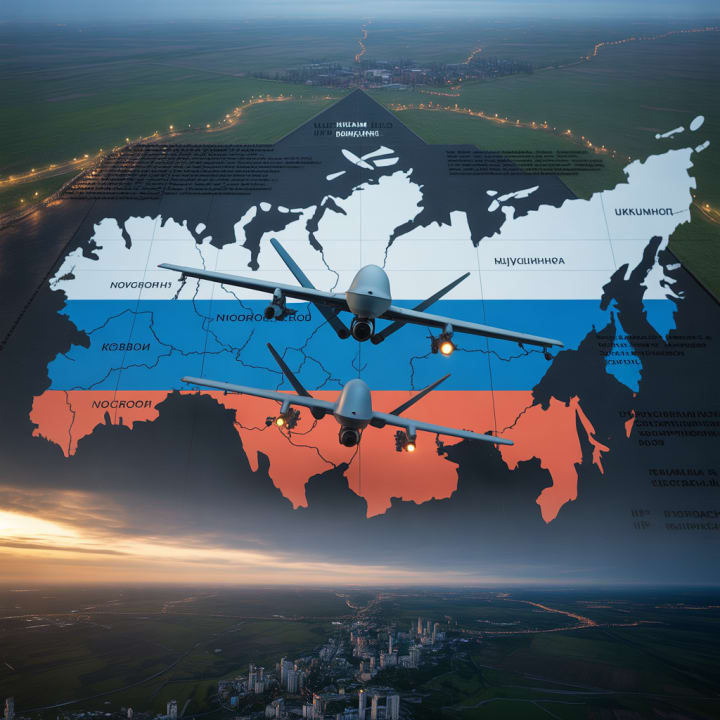
According to the Russian government, the alleged Ukrainian drone strike involved 91 long-range drones aimed at President Putin’s official residence in Novgorod and was meant to be a direct attack on the Russian president himself. The Kremlin said the attack took place during the night and that Russian air defence systems successfully intercepted all drones. Moscow also stated it would “revise” its negotiating position on peace talks as a result.
@mathrubhumi
However, Ukraine strongly denied these claims. Ukrainian officials labeled the accusation as a deliberate attempt to distract from continued fighting and to undermine ongoing peace negotiations involving the United States and European partners. They stated that Ukraine did not launch a drone attack at the Russian president’s residence and called the claim a “fabrication.”
@mathrubhumi+1
Supporting this, U.S. intelligence, including the CIA, reportedly assessed that Ukraine was not targeting Putin’s home in this incident. American officials made clear that while Ukraine may have targeted some military sites in the same broad region, there was no credible evidence showing an attempt to strike the Russian leader’s personal residence.
Reuters+1
The situation highlights how information and misinformation can shape international perceptions during a conflict. In modern warfare, especially one involving drones and long-range weapons, images, statements, and videos can spread rapidly without proper verification. Independent journalists, analysts, and intelligence sources are crucial in filtering fact from falsehood.
Aside from the specific allegations about Putin, Ukraine has carried out several confirmed strikes inside Russia over the past months as part of its military strategy against Moscow’s war efforts. For example, Ukrainian forces have targeted oil terminals, pipelines, fuel depots, and military equipment inside Russian territory. These strikes aim to disrupt logistical and economic support for the Russian war machine by making it harder for Russia to fuel its operations and maintain military infrastructure.
WTOP News
In addition to hitting energy and military logistics sites, Ukraine has also launched deep strikes in attempts to weaken Russian air capabilities and reduce its ability to strike back effectively. While these operations occur far from the front lines, they are part of an ongoing and evolving battlefield strategy that together with conventional fighting defines much of the modern Russia-Ukraine conflict.
Wikipedia
The war has also involved Russian strikes deep inside Ukraine, often targeting hospitals, residential buildings, and civilian areas. These attacks have killed and wounded hundreds of civilians, including children, and have damaged critical infrastructure such as power grids and transportation routes.
AP News
The wider context matters: peace talks and negotiations are ongoing but extremely fragile. The recent high-level discussions between Ukrainian President Volodymyr Zelenskyy and U.S. officials aimed at increasing diplomatic pressure for a ceasefire and broader settlement. Russia’s allegations about a targeted strike on Putin came at a time when these negotiations were gaining some momentum — a factor that many analysts say may have motivated Moscow’s public claims.
The Kyiv Independent
International reactions to the incident also varied. European leaders, including officials from Germany, Finland, and other NATO-aligned countries, held discussions to maintain support for Ukraine while urging restraint on both sides. Western diplomats noted that the lack of credible evidence behind Russia’s claims undermined their credibility and complicated Moscow’s attempts to justify potential escalations.
In situations like this, responsible reporting and clear facts are essential for the global public to understand what is really happening. Accusations of attacks against world leaders are extremely serious, and without verified proof, such claims should be approached cautiously. The Russia-Ukraine war continues to be violent and deadly, but the specific allegation of a Ukrainian strike on Putin’s residence remains unverified and widely disputed by independent sources and intelligence assessments.
Reuters
As the conflict moves into its fourth year, both sides continue fighting and both sides continue to suffer. Civilians remain caught in the crossfire, and peaceful diplomatic resolution remains a difficult but important goal. Understanding verified events — rather than rumors or false claims — helps the world stay informed without amplifying unnecessary fear or propaganda.
About the Creator
Wings of Time
I'm Wings of Time—a storyteller from Swat, Pakistan. I write immersive, researched tales of war, aviation, and history that bring the past roaring back to life
Keep reading
More stories from Wings of Time and writers in Fiction and other communities.
The Night the Drones Returned
The Night the Drones Returned The night was colder than usual in the small Afghan border village of Sarkha. Winter had already settled into the valley, and people were trying to sleep early under heavy quilts. But on this night, no one would rest. Shortly after 11:43 PM, the familiar and terrifying sound returned to the skies. A faint hum, a trembling vibration, a noise that every villager had learned to fear. The drones had come back.
By Wings of Time 4 months ago in Fiction
Why Didn't Anyone Tell Us
Men, move along. This is not for you. This is for the women. I was forty-five when I began menopause. It is pretty young for that to be going on in a woman’s life, but I had undiagnosed PCOS, my entire life. Thank you to all the gynecologists I had seen my entire life. That in itself should encourage women to keep seeking second opinions, especially when you are not getting correct answers or any at all.
By Alexandra Grant5 days ago in Humans


Comments
There are no comments for this story
Be the first to respond and start the conversation.