
Top 10 Mysteries Surrounding the Tunguska Event in Russia
The Top 10 Mysteries Surrounding the Tunguska Event of 1908

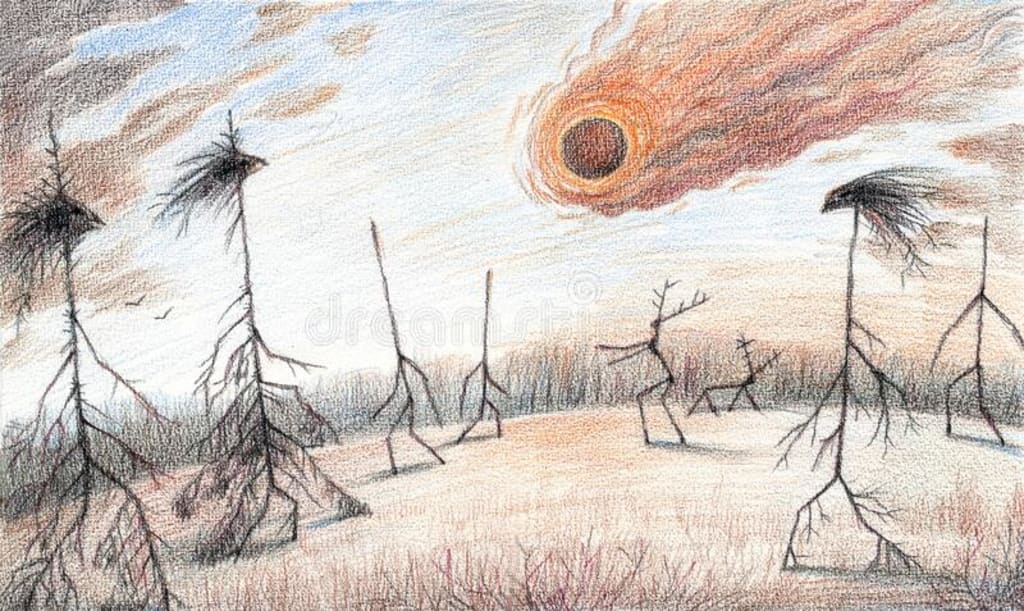
The Tunguska Event in Russia:
The Tunguska Event was a powerful explosion that occurred on June 30, 1908, in a remote area of Siberia, Russia. The explosion, which is estimated to have been equivalent to the power of a large nuclear bomb, flattened over 800 square miles of forest. Although no impact crater was found, scientists estimate that the object that caused the explosion was a meteor or comet fragment that exploded in the atmosphere.
The Tunguska Event is considered one of the most mysterious natural disasters in history due to the lack of concrete evidence about the cause of the explosion. Some scientists believe that it was caused by a comet or a meteor, while others propose theories such as a mini black hole or antimatter. The lack of physical evidence, such as meteorite fragments, has made it difficult to confirm the exact cause of the explosion.
Additionally, the remote location of the explosion and the lack of human population in the area at the time of the event meant that there were no direct human casualties. However, the explosion did cause significant damage to the surrounding environment, and many of the local animals were killed. It continues to fascinate scientists and researchers due to its unique characteristics and the lack of a definitive explanation for its cause.
Top 10 Mysteries Surrounding the Tunguska Event in Russia:
- The exact cause of the explosion: While it is generally believed to have been caused by a comet or meteor, the lack of concrete evidence has made it difficult to confirm the exact cause.
- The lack of an impact crater: Despite the massive explosion, no impact crater was found, which is unusual for an object that is believed to have hit the earth's surface.
- The size and power of the explosion: The explosion is estimated to have been equivalent to the power of a large nuclear bomb, which is highly unusual for a natural event.
- The lack of meteorite fragments: Despite the explosion being caused by an object from space, no meteorite fragments have been found.
- The fact that the explosion occurred in a remote area: The Tunguska Event occurred in a remote area of Siberia, which made it difficult for scientists to study the event and gather evidence.
- The effects of the explosion on the local environment: The explosion caused significant damage to the surrounding environment, killing many of the local animals, but did not cause any direct human casualties.
- The reports of anomalous lights and sounds: Some witnesses reported seeing strange lights and hearing strange sounds in the days leading up to the explosion.
- The reports of increased seismic activity in the area: Some seismographs recorded increased seismic activity in the area around the time of the explosion, which scientists have yet to fully explain.
- The speculation about the potential for other similar events: The Tunguska Event has led to speculation about the potential for other similar events, and the potential dangers they pose.
- The debate about the potential connection to other anomalous events: Some researchers have suggested connections between the Tunguska Event and other anomalous events, such as crop circles, but this is still a topic of debate.
Short Summary:
The Tunguska Event of 1908 was a powerful explosion that occurred on June 30, 1908, in a remote area of Siberia, Russia. The explosion, which is estimated to have been equivalent to the power of a large nuclear bomb, flattened over 800 square miles of forest. Although no impact crater was found, scientists estimate that the object that caused the explosion was a meteor or comet fragment that exploded in the atmosphere.
The Tunguska Event is considered one of the most mysterious natural disasters in history due to the lack of concrete evidence about the cause of the explosion. Some scientists believe that it was caused by a comet or a meteor, while others propose theories such as a mini black hole or antimatter. The lack of physical evidence, such as meteorite fragments, has made it difficult to confirm the exact cause of the explosion.
Additionally, the remote location of the explosion and the lack of human population in the area at the time of the event meant that there were no direct human casualties. However, the explosion did cause significant damage to the surrounding environment, and many of the local animals were killed. It continues to fascinate scientists and researchers due to its unique characteristics and the lack of a definitive explanation for its cause.
.........................................Honor White Angle..............................................
a
About the Creator
Honor White Angel
I am a MCA student and also very interested to create blogs and stories.
Please support me guys.
Thankyou for reading my articles.
Keep reading
More stories from Honor White Angel and writers in Fiction and other communities.
Top 10 Unsolved Mysteries of the Oakville Blobs in Washington
The Oakville Blobs in Washington: The Oakville Blobs, also known as the Oakville Goo, were a phenomenon that occurred in 1994 in Oakville, Washington. On August 7th, 1994, residents of Oakville reported finding strange, gooey blobs falling from the sky. The blobs, which were described as being translucent, slimy, and smelling of rotting fish, were found on rooftops, cars, and roads. The blobs were later determined to be a type of marine organism known as pyrosomes.
By Honor White Angel3 years ago in Fiction
The Pot Boiling Over
Once, there was a pot of about 340 million drops and droplets. Most of them would like to think they lived together peacefully for decades, but that wasn’t true. Different regions struggled, sometimes fought, with each other. And the mainstreams still often pursued and attacked the minorities. Law enforcers sometimes pushed minority drops out of the pot, never to be seen again.
By Gabriel Shames6 days ago in Fiction



Comments
There are no comments for this story
Be the first to respond and start the conversation.