
To Be the Best, You Must Handle the Worst
A Journey of Strength, Survival, and Unyielding Hope in the Face of Life’s Storms

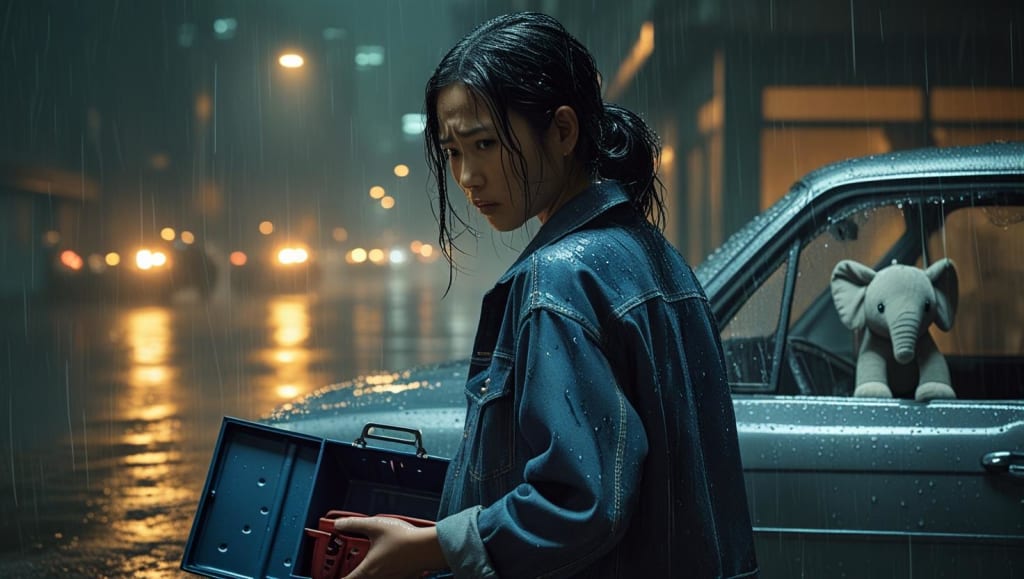
The rain hammered relentlessly against the cracked windshield of Aisha’s 2009 Honda Civic as she sat idling at a red light on the edge of downtown Oakland. It was 6:47 p.m., and the November sky had already surrendered to darkness, the city’s glow muted beneath thick storm clouds. Her phone buzzed in the cupholder, but she ignored it, knowing it was probably her boss, Marla, texting about yet another shift at the diner. At 29, a single mother, Aisha carried the weight of the world on her shoulders—heavier than the storm pressing down on her car. Her daughter, Layla, was home with Aisha’s mother, likely curled up with a book, waiting for her to return from her second job as a rideshare driver. The words her father once told her echoed sharply in her mind: To be the best, you must handle the worst. Back then, those words were a challenge. Now, they felt like a relentless burden.
Aisha’s childhood home in East Oakland was small but filled with lessons. Her father, a mechanic with grease-stained hands and a heart full of stories, would come home after long days fixing engines under pressure. He’d sit her down at the kitchen table and say, “Life isn’t about avoiding breakdowns—it’s about knowing how to get the engine running again when it fails.” He passed away when she was 17, leaving behind those words and a toolbox she still kept in her trunk. She hadn’t opened it in years, but it was always there—a quiet, stubborn reminder of who she was meant to be.
The light flicked green, and Aisha eased the Civic forward, her eyes flicking to the rideshare app. A new request popped up: a pickup at a bar on Telegraph Avenue, a 15-minute drive through the snarled traffic. The passenger’s name was Marcus, rated 4.8 stars. She accepted the ride without hesitation, her fingers moving on autopilot. Tonight’s fare was decent, but every dollar went straight to bills, daycare, or the endless cycle of car repairs. Her Civic was a warrior, but a tired one—coughing and rattling, begging for a break she couldn’t afford. Neither could she.
At the bar, Marcus slid into the backseat—a lanky man in his early 30s, wearing a faded denim jacket, his nervous energy barely contained. “Hey, thanks for the ride,” he said, voice clipped. “Can you make it quick? I’m heading to Emeryville, gotta meet someone.”
Aisha nodded, adjusting her rearview mirror. “I’ll do my best. Traffic’s rough tonight.”
Marcus fidgeted, checking his phone every few seconds. She’d seen his type before—people running from something or toward something, always in a hurry. She didn’t ask questions. Her job was to drive, not pry. But as they merged onto the freeway, Marcus leaned forward. “You ever feel like life’s just… testing you? Like it’s throwing everything at you to see if you’ll break?”
Aisha’s grip tightened on the wheel. “Every day,” she said, voice steady. “You just keep moving.”
Marcus let out a short, bitter laugh. “Yeah, well, I’m not sure I’m moving in the right direction.”
She glanced at him in the mirror, catching the half-lit expression of exhaustion and defiance on his face. “What’s got you so wound up?” she asked, surprising herself. She usually kept conversations light, but something about Marcus felt like a mirror reflecting her own struggles.
He hesitated, then sighed. “Lost my job last week. Tech startup. They called it ‘restructuring.’ Now I’m scrambling, trying to pitch a new app idea to investors tonight. If I don’t land this, I’m done. Rent’s due, and my savings are a joke.”
Aisha nodded knowingly. She understood that precarious edge—the one where one missed payment could topple everything. “Sounds like you’re handling the worst,” she said softly. “That’s half the battle.”
Marcus raised an eyebrow. “What’s the other half?”
She thought of her father’s words again. “Being the best. Not giving up, even when it feels pointless.”
He leaned back, staring out the window at the rain-streaked city lights. “Easier said than done.”
They rode in silence for a while, the rain drumming a steady rhythm on the roof. Aisha’s thoughts drifted to Layla, just six years old and already asking questions she didn’t have answers for. Why do you work so much, Mommy? Why can’t we go to the zoo like other kids? Aisha longed to give her daughter a life free from those questions, but every day was a grind just to keep the lights on. She had dropped out of community college when she got pregnant, burying her dreams of becoming a nurse beneath years of survival. Still, she held onto her father’s toolbox, his words, and a stubborn belief that she could be more than her circumstances.
The car sputtered as they exited the freeway, a low groan twisting Aisha’s stomach. “Come on, baby,” she muttered, patting the dashboard. Marcus looked up, alarmed. “We good?”
“Yeah,” she said, though uncertainty gnawed at her. The check engine light had been on for weeks, but mechanics weren’t cheap, and she’d been gambling on the car holding out. She pulled into a parking lot near Marcus’s destination—a sleek office building with glass walls that screamed money. “This is you,” she said.
Marcus didn’t move right away. He stared at the building, fingers drumming nervously on his knee. “What if I blow this? What if I’m not good enough?”
Aisha turned to him, meeting his gaze. “You’re here, aren’t you? You’re showing up. That’s more than most people do when life’s kicking them down. Go in there and be the best you can be. The rest isn’t up to you.”
He looked surprised, then nodded slowly. “Thanks… Aisha, right?”
“Yeah.”
“You’re good at this. Not just driving. Talking sense.”
She smiled faintly. “I’ve had practice.”
Marcus tipped her generously through the app before stepping out into the rain. Aisha watched him disappear into the building, then checked her phone. Another text from Marla: Can you cover breakfast shift tomorrow? Tina’s out. She sighed, typing a quick Sure. Sleep was a luxury she couldn’t afford.
As she pulled out of the lot, the car lurched, the engine coughing harder than before. She cursed under her breath and steered to the side of the road. The rain was relentless now, blurring the world into a watery haze. She popped the hood and stepped out, the cold seeping through her jacket. She wasn’t a mechanic like her dad, but she’d learned enough to know the basics. The engine looked like a tangled mess of wires and grime, and she had no idea where to start. Her phone buzzed again—Layla’s bedtime was in 30 minutes, and her mom would be annoyed if she was late.
Aisha grabbed the toolbox from the trunk, her hands trembling from the cold. She opened it, the sharp scent of metal and oil flooding her senses like a memory. Her dad’s old wrench gleamed under the streetlight, and for a moment, she was 12 again, watching him work in their garage, explaining that every problem had a fix if you didn’t give up. She tightened a loose battery cable, checked the oil, and whispered a silent prayer. When she turned the key, the engine sputtered but caught, roaring back to life.
She laughed—a small, triumphant sound—and closed the hood. It wasn’t a permanent fix, but it was enough to get her home. As she drove, her father’s words echoed again: To be the best, you must handle the worst. She’d been handling the worst for years—layoffs, a deadbeat ex, sleepless nights, and a car that refused to quit but wouldn’t behave either. But tonight, fixing the engine, talking to Marcus, surviving another shift—it felt like inching toward something better.
When she got home, Layla was asleep, clutching a stuffed elephant. Aisha kissed her forehead, then sat at the kitchen table with a cup of tea. Her mom shuffled in, eyeing her with a knowing look. “You look like you’ve been through it.”
“Car broke down. Fixed it, though.” Aisha sipped her tea, feeling a spark of pride.
Her mom raised an eyebrow. “Your daddy would’ve been proud. You’re tougher than you think.”
Aisha didn’t respond, but the words settled deep inside her. She wasn’t just surviving anymore. She was handling the worst, piece by piece, and maybe, just maybe, becoming the best version of herself. Not perfect, not rich, not a nurse—yet. But someone who refused to break, no matter what life threw her way.
The next morning, she woke early, dropped Layla at school, and headed to the diner. Marla was in a mood, the coffee machine was broken, and the breakfast rush was chaos. But Aisha moved through it, her father’s wrench tucked in her pocket—a quiet reminder that she could fix things, even when they seemed broken beyond repair. When her shift ended, she opened the rideshare app again, ready to face whatever came next.
Because to be the best, you had to handle the worst—and Aisha was learning she could handle anything
About the Creator
Keep reading
More stories from Nauman Hassan Khan and writers in Fiction and other communities.
The Pursuit of Purpose
Evan sat at the corner table of the dimly lit coffee shop, his eyes flicking toward the door every few minutes. Two weeks ago, he had met Lila at a friend’s party—her smile, her laugh, the brief touch on his arm—moments he had replayed endlessly. He had texted her relentlessly since then, crafting witty messages and overanalyzing her brief replies. Tonight, she had finally agreed to meet for coffee, and his heart pounded with anticipation. Adjusting his shirt and checking his hair in his phone’s reflection, he rehearsed the perfect lines to charm her.
By Nauman Hassan Khan8 months ago in Fiction


Comments
There are no comments for this story
Be the first to respond and start the conversation.