
Time Machine Chronicles
A Journey Through Time and the Lessons of History

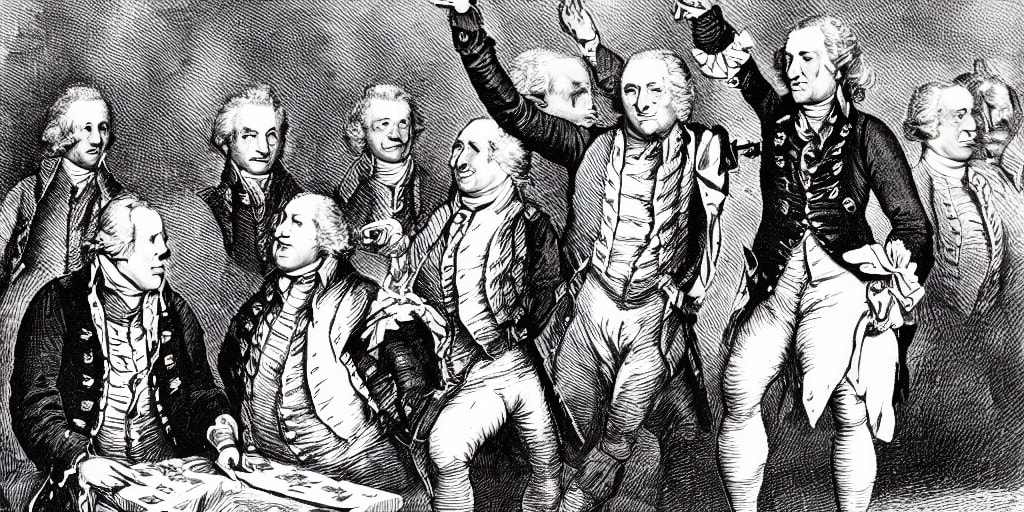
In the year 2347, time travel was no longer a figment of imagination or the realm of science fiction. The United Earth Federation had finally unlocked the secrets of the universe and had managed to manipulate time itself. The Time Machine was an invention that had revolutionized humanity's understanding of time and history. It allowed individuals to travel through time and experience the past and the future firsthand.
Professor Benjamin Parker was one of the world's leading authorities on time travel. He had devoted his entire life to the study of history and had always been fascinated by the possibility of going back in time to witness the great events of the past. After years of research, he had finally succeeded in developing a working Time Machine.
The Time Machine was a large metallic pod that could transport an individual through time. The machine was powered by a highly advanced quantum computer that could calculate the time and space coordinates required for the machine to travel through time. The machine was also equipped with advanced sensors that could detect any changes in the timeline and correct them to avoid creating paradoxes.
One day, Professor Parker received a strange message from an unknown source. The message contained a list of instructions and a specific date and location. The date was July 4, 1776, and the location was Philadelphia, Pennsylvania. The message instructed him to travel back in time and prevent the signing of the Declaration of Independence.
At first, Professor Parker was hesitant to carry out the instructions. He knew that altering a significant historical event could have disastrous consequences for the timeline. However, his curiosity got the better of him, and he decided to embark on the mission.
He entered the Time Machine, and with a flick of a switch, he was transported back in time. The machine landed in a small alleyway in Philadelphia. He stepped out of the machine and was immediately struck by the sight of the city in the 18th century. The streets were bustling with people, and the air was filled with the sounds of horse-drawn carriages and street vendors.
Professor Parker quickly made his way to Independence Hall, where the Continental Congress was set to meet to discuss the Declaration of Independence. As he entered the building, he was amazed by the sight of the Founding Fathers gathered in one room. He saw John Adams, Thomas Jefferson, Benjamin Franklin, and others, deep in discussion.
He knew that he had to act fast if he was to prevent the signing of the Declaration. He approached the Founding Fathers and tried to persuade them not to sign the document. However, they dismissed him as a madman and ordered him to leave the building.
Undeterred, Professor Parker decided to take matters into his own hands. He returned to the Time Machine and retrieved a futuristic weapon that he had brought with him. He knew that violence was not the answer, but he was desperate to prevent the signing of the Declaration at any cost.
He re-entered Independence Hall and pointed the weapon at the Founding Fathers, threatening to use it if they did not abandon their plans to sign the Declaration. However, the Founding Fathers stood their ground, and a struggle ensued. In the commotion, the futuristic weapon accidentally discharged, causing a massive explosion.
The explosion caused chaos and destruction, and Professor Parker was injured in the blast. He managed to escape the building and returned to his Time Machine. He was horrified by what he had done and knew that he had created a paradox that could have disastrous consequences for the timeline.
As he returned to his own time, he noticed that things had changed. The United States no longer existed, and the world was in chaos. The timeline had been altered beyond repair, and it was all his fault.
He realized that altering the past was not the answer. He knew that history had to be allowed to run its course, no matter how professor Parker had learned a valuable lesson about the dangers of altering the timeline. He knew that he had to be more careful in the future and only use the Time Machine for research purposes.
Over the years, Professor Parker continued to use the Time Machine to explore the past and the future. He witnessed some of the greatest events in history, including the invention of the steam engine, the fall of the Berlin Wall, and the first moon landing. He also had the opportunity to meet some of the world's greatest leaders, including Winston Churchill, Nelson Mandela, and Mahatma Gandhi.
However, he also witnessed some of the darkest moments in history. He saw the horrors of the Holocaust, the devastation of World War II, and the aftermath of the September 11 attacks. These experiences left him with a deep appreciation for the importance of history and the need to learn from our past mistakes.
As time passed, the Time Machine continued to evolve. New technologies and techniques were developed, allowing for even more precise and accurate time travel. Professor Parker worked tirelessly to refine the machine, ensuring that it was safe and reliable.
One day, he received another message from an unknown source. The message contained a list of instructions and a specific date and location. The date was November 22, 1963, and the location was Dallas, Texas. The message instructed him to travel back in time and prevent the assassination of President John F. Kennedy.
This time, Professor Parker was more cautious. He knew that altering such a significant event could have far-reaching consequences. However, he also knew that he had a moral obligation to try and prevent such a tragedy.
He entered the Time Machine and traveled back to Dallas on the morning of November 22, 1963. He arrived in a small alleyway near Dealey Plaza, where he saw a lone figure perched on the sixth floor of the Texas School Book Depository.
Professor Parker recognized the figure as Lee Harvey Oswald, the man who was responsible for the assassination of President Kennedy. He knew that he had to act fast if he was to prevent the tragedy from occurring.
He made his way to the Depository and confronted Oswald. He tried to persuade him not to go through with the assassination, but Oswald was convinced that it was the right thing to do. A struggle ensued, and Professor Parker managed to disarm Oswald.
However, in the chaos, Oswald managed to slip away, and the timeline was altered once again. The assassination still occurred, but this time, there was no clear culprit. The world was plunged into confusion and uncertainty, and conspiracy theories abounded.
Professor Parker knew that he had failed in his mission, but he also knew that he had done everything in his power to prevent the tragedy. He returned to his own time, reflecting on the lessons he had learned about the dangers of altering history.
Over the years, Professor Parker continued to use the Time Machine to explore the past and the future. He witnessed some of the greatest moments in history, from the birth of democracy in ancient Greece to the creation of the internet. He also saw the impact of technology on society, from the rise of the industrial revolution to the digital age.
However, he also saw the darker side of humanity, from the horrors of war to the injustices of oppression. He witnessed the struggles of civil rights activists, the suffering of Holocaust survivors, and the devastation of natural disasters.
Through it all, Professor Parker remained committed to the study of history and the importance of learning from our past mistakes. He continued to refine the Time Machine, developing new techniques and technologies that made time travel even safer and more precise.
In the end, Professor Parker's legacy was not just the invention of the Time Machine but the knowledge and understanding that he brought back with him from his travels. He had seen firsthand the consequences of altering history and the importance of preserving it for future generations.
As he grew older, Professor Parker began to realize that his time with the Time Machine was coming to an end. He knew that he had accomplished everything he could with the machine and that it was time to pass it on to the next generation of scientists and historians.
He spent his final years documenting his experiences and compiling a comprehensive history of the world, from the earliest civilizations to the present day. He knew that his work would be invaluable to future generations, providing a unique perspective on the events that shaped the world.
Finally, on his deathbed, Professor Parker passed the Time Machine on to his protégé, a brilliant young scientist who had been working with him for many years. He knew that the machine was in good hands and that it would continue to be used for the betterment of humanity.
In the years that followed, the Time Machine continued to be used for research purposes, exploring the mysteries of the past and the possibilities of the future. It allowed scientists and historians to gain a deeper understanding of the world and the forces that shaped it.
But the Time Machine was never again used to alter history. Professor Parker's legacy had taught the world the dangers of altering the timeline and the importance of preserving the past for the future.
And so, the Time Machine remained a symbol of human ingenuity and curiosity, a testament to the power of science and the importance of history. And though its inventor had long since passed away, his legacy lived on, inspiring future generations to explore the mysteries of the universe and to seek out the knowledge that would unlock the secrets of the past.
About the Creator
Rio Vijey
As a lifelong lover of storytelling, I am thrilled to begin my journey as a writer. I have a vivid imagination and a passion for exploring the depths of the human experience through fiction.
The Pot Boiling Over
Once, there was a pot of about 340 million drops and droplets. Most of them would like to think they lived together peacefully for decades, but that wasn’t true. Different regions struggled, sometimes fought, with each other. And the mainstreams still often pursued and attacked the minorities. Law enforcers sometimes pushed minority drops out of the pot, never to be seen again.
By Gabriel Shames4 days ago in Fiction



Comments
There are no comments for this story
Be the first to respond and start the conversation.