
Through the Cosmic Curtain: Wormholes, Time Travel, and the Wonders Beyond Our Galaxy.
A Journey Through Space, Time, and the Unseen Wonders of the Universe.

Wormholes: Portals Through Space and Time?
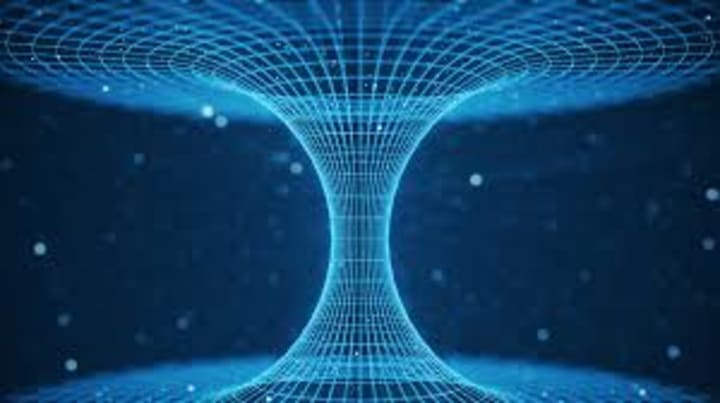
Imagine entering a tunnel on Earth and immediately emerging on a different continent. Now, spread that concept throughout the universe. Theoretically, a wormhole, also known as an Einstein-Rosen Bridge, could link two points in the universe that are far apart. Wormholes have the potential to enable instantaneous travel across light-years if they are real and stable. Under Einstein's equations, wormholes are still scientifically possible, despite the fact that we have never seen one. The problem? We have not yet discovered whether they require exotic matter with a negative energy density. But if wormholes exist, they could serve as cosmic shortcuts—or perhaps even time machines.
Time Travel: Fantasy or Future Science?
Yes, you read that right. Time travel is not limited to films. Because of Einstein's theory of relativity, time travel into the future is not only possible but also common. Because time moves differently at high speeds and in less gravity, astronauts on the International Space Station age slightly faster than we do on Earth. That’s called time dilation.
However, going back in time is much trickier. Some scientists speculate that wormholes or rotating black holes (called Kerr black holes) could allow time loops. The universe, on the other hand, keeps its secrets a secret and, at least for the time being, avoids paradoxes.
The Multiverse: Are We Alone in Existence?
If the universe is already this strange, could there be more than one?
The idea of the multiverse suggests that our universe is just one of potentially infinite others, each with its own version of physics, time, and reality. In some, gravity might be stronger. In others, time might run backward. In some, a version of you might be reading this article under an alien sky.
Though still highly theoretical, quantum physics and cosmic inflation provide hints that the multiverse isn’t just science fiction—it could be the ultimate reality
Dark Matter and Dark Energy: The Invisible Universe
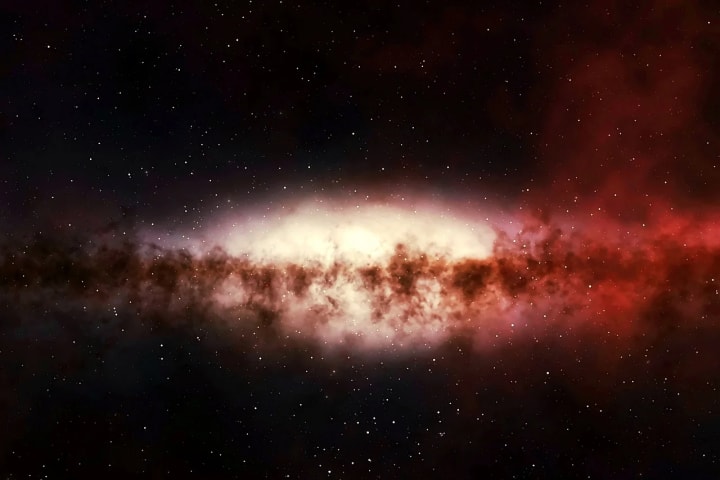
Only 5% of the universe is visible to us, including stars, planets, and gas. The rest is made of dark matter (27%) and dark energy (68%).
Dark matter is invisible to us, but we know it exists because it holds galaxies together. Dark energy, on the other hand, is accelerating the universe's expansion and separating everything faster than ever before. We’re surrounded by forces we barely understand—making the cosmos more magical with every new discovery.
Why It All Matters
These aren’t just wild ideas—they’re part of humanity’s greatest journey: the quest to understand where we are, what we are, and what else might be out there.
Studying wormholes, time travel, and galactic forces isn’t just for scientists in labs. It’s for all of us who’ve ever looked at the stars and wondered: What if?
Because the universe is more than just stars and silence. It’s a story—and we’re lucky enough to be in the middle of it.
About the Creator
Keep reading
More stories from Muhib Hasan (Ovi) and writers in Fiction and other communities.
iOS 19 Will Make You Want to Keep Your AirPods In All Day Long.
Apple has done it again, rewriting the rules in ways you didn't expect. AirPods are about to become more than just a way to listen to music with the upcoming release of iOS 19. They’re evolving into intelligent, behavior-aware companions that can listen, learn, and adapt to your daily life. And truthfully? You might never want to take them off.
By Muhib Hasan (Ovi)9 months ago in Fiction
One Unchecked Box
"Republished" because it was the only way to add the embed for the newly recorded audio version of this story due to the Top Story badge. Plus it serves as a nice, informal announcement of the podcast's revival for another season (go subscribe!):
By Stephen A. Roddewiga day ago in Fiction
A Conversation
“I don’t want to have this conversation…again” “We have to have this conversation, hun. Not just for our kids but for our own peace of mind. It haunts me, the thought of leaving you, or dying on you. It haunts me, just as much as that recurring nightmare plagues you.”
By Susan Loblaw7 days ago in Fiction




Comments
There are no comments for this story
Be the first to respond and start the conversation.