
Three Colors Before Dying
In a world ruled by color, your fate is already painted

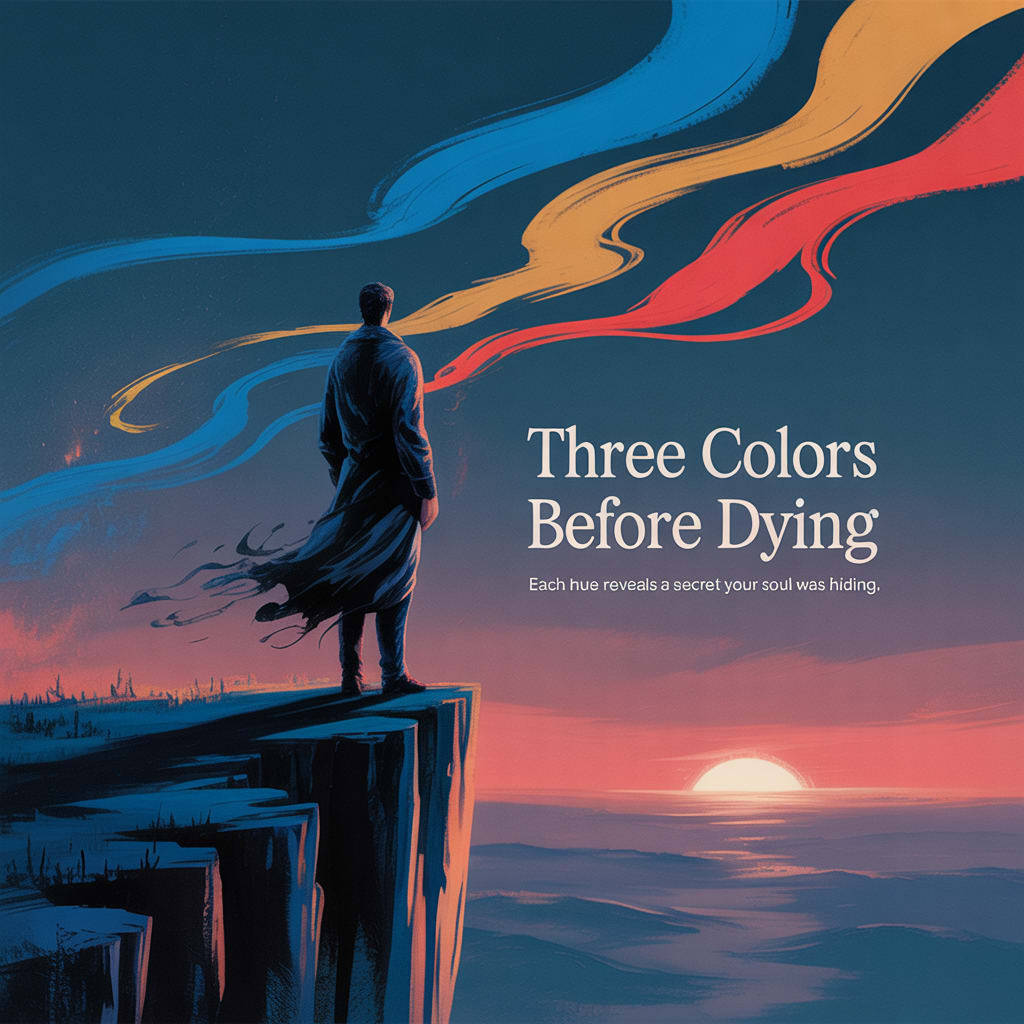
In the last days of his life, Elias saw blue, amber, and crimson.
No one knows exactly when it started—when humans lost their ability to see the full spectrum of colors. Scientists called it Selective Retinal Suppression. Philosophers claimed it was a curse. But the people of the city called Astraea believed it was fate. In this dystopian world, you were born with the ability to see only three colors—no more, no less—and those three shades determined the trajectory of your life.
Color wasn't just an aesthetic in this strange society. It was a warning. A prophecy. A mirror to the soul.
The Color System of Fate
Children in Astraea underwent a Vision Ceremony on their 12th birthday. The room was stark white. They were blindfolded and sat in silence while a seer removed the veil from their eyes, allowing them to perceive the three hues their life would be tied to.
Gold signified fortune but also greed.
Green meant balance, though some believed it led to stagnation.
Red was both love and destruction.
Grey meant neutrality—most feared it.
Violet represented knowledge, sometimes madness.
Blue was rare—signifying sorrow, depth, or sacrifice.
Amber often meant deception or illusions.
Crimson... was only ever seen in the final year of life.
Elias: The Man With the Unfinished Story
Elias was born seeing green, silver, and ochre. It made him a mediator by trade—a man trusted with secrets, ideal for politics, not war. His world was full of compromises. He married a woman who saw red, white, and turquoise—a combination known for passion, purity, and faith.
But everything changed on his 39th birthday.
He woke up with a blinding headache, then noticed that ochre had vanished. In its place, a pulsing crimson filled the edges of his vision. When he looked into the mirror, his eyes reflected not his own face, but the color burning at the corners like a warning flare.
He didn’t need to be told what it meant.
Crimson was death’s signature.
A Race Against the Palette
The problem was, no one knew when crimson would strike. Only that once it appeared, your time had started running out.
Elias became obsessed. He visited rogue color-witches and outcast monks who lived outside Astraea’s dome. He searched for the Fourth Color, a rumored shade only revealed to those who unlocked their soul's truth. It was said this Fourth Color could rewrite your fate, or even push death back.
“I don’t want immortality,” he told an old sage with fog-colored eyes. “Just more time with her.”
The sage only responded with a whisper:
“Then learn what blue, amber, and crimson mean for you.”
The Truth in the Tones
Blue was the sorrow he never acknowledged—from the brother he betrayed in youth. Amber was the lies he told himself—that compromise made him noble. And crimson? Crimson was truth—the death of illusions and the birth of clarity.
He realized then: the three colors weren’t curses. They were mirrors. And they came not before death, but before peace.
Elias returned home, held his wife’s hand, and finally spoke the secrets he buried for decades. He cried. She did too. And for a moment, she swore his eyes shimmered with a fourth color—a soft, glimmering white.
The next morning, he was gone.
But in his place, on the canvas she once gifted him for his 30th birthday, was a painting. Three colors in perfect harmony: blue, amber, and crimson. Underneath, a note:
We are not born to avoid death. We are born to understand it.
Conclusion
"Three Colors Before Dying" is a tale of speculative fiction set in a dystopian world where color and fate intertwine. This story is rich in symbolism, posing deep questions about our choices, identity, and mortality. In a time where our world also feels limited in shades—politically, emotionally, socially—this fiction mirrors reality through the prism of imagination.
If you love mystery short stories, dystopian world-building, or the delicate poetry of symbolism in fiction, then remember this: the next time a color catches your eye… it may be telling you something more than you think.
About the Creator
Mehtab Ahmad
“Legally curious, I find purpose in untangling complex problems with clarity and conviction .My stories are inspired by real people and their experiences.I aim to spread love, kindness and positivity through my words."
Keep reading
More stories from Mehtab Ahmad and writers in Fiction and other communities.
WORLD WAR 3
In recent days, the term “World War III imminent” has resurfaced across media platforms, prompting serious concerns among political analysts, defence scholars, and global strategists. While such warnings may initially evoke dramatic online headlines, today's discourse reflects underlying real-world risks, including nuclear brinkmanship, alliance fractures, and the rise of hybrid warfare. This comprehensive overview examines why top experts are sounding the alarm—and what it could mean for global stability.
By Mehtab Ahmad9 months ago in Fiction
Gorgon's Purgatory
A tingling sensation fills my head. A deep pressure builds into agonizing pain as the serpents swallow their midnight meal. They move their jaws in synchronized contractions, forcing the bodies of mice down their gullets. The mice wiggle within the snakes for what feels like an eternity, brushing the scaly, cold skin in a ballet of torture.
By Tas The Artist 3 days ago in Fiction


Comments (1)
Sooo deep ✨🫣