
“The Woman at the Window”
“Every morning she appeared — but she was never truly there.”


Every morning at 7:03 a.m., just as the sunlight hit the third brick on the east wall of the old Hartwell building, she appeared.
She didn’t wave. She didn’t smile. She simply watched.
From behind dusty, lace curtains on the third floor, her pale face peered through the cracked windowpane, eyes unmoving, expression unreadable. People in town whispered about her—“The Woman at the Window,” they called her.
I’d just moved to Bellmere two weeks ago, renting a small apartment across from the Hartwell building. On my first morning there, sipping burnt coffee from a chipped mug, I’d looked out—and saw her.
Still as a portrait. Framed by shadow.
By the third day, I found myself waiting for her. Something about her presence anchored the day. Like a strange ritual. I didn’t even know why I cared. Maybe it was loneliness. Maybe curiosity. Maybe both.
By the sixth morning, I waved.
She didn’t respond.
She saw me, though. I was sure of it. The faintest flicker of recognition passed through her eyes. A blink. A slight tilt of the head. That was all.
That night, I asked the barista at the corner café about the building.
“Oh, Hartwell?” she frowned. “No one’s lived there for years. It’s condemned. Unsafe.”
I blinked. “Are you sure? I’ve seen someone in the third-floor window. A woman.”
Her eyes narrowed. “Don’t joke about that.”
“I’m not joking.”
She leaned in, voice hushed. “A woman named Evelyn lived there once. Kept to herself. Died during the blackout five years ago. Gas leak. They didn’t find her for days.”
My skin prickled. “Then who am I seeing?”
The barista didn’t answer.
I couldn’t sleep that night. My window directly faced hers. At 2 a.m., I woke up and looked across the street.
She was there.
Not standing.
Sitting.
Head bowed like she was crying. Her fingers trembled as they touched the glass. My heart pounded. I stepped closer to my window, drawn by something I didn’t understand.
She lifted her head.
And looked directly at me.
Her lips moved. I couldn’t hear, but I could read them.
Help me.
The lights in my apartment flickered. My coffee mug shattered in the sink behind me. I stumbled backward, heart hammering in my chest.
When I looked back—she was gone.
I didn’t tell anyone. Who would believe me?
The next morning, I walked to the Hartwell building. The front door was chained shut. Windows boarded. A “No Trespassing” sign flapped in the wind. I walked around the side, found a loose panel on the basement entrance, and slipped inside.
It smelled like rot and mildew. The air felt heavier with every step.
On the third floor, the hallway was dark, walls peeled like shedding skin. I followed the corridor to the window. The same lace curtain. The same cracked pane.
The room was empty.
Except for a single, dust-covered chair facing the window—and a small photo frame on the floor.
I picked it up and wiped it clean.
A woman, smiling. Holding a baby.
On the back, in faded ink: Evelyn and Anna. March 2017.
Something inside me sank. I glanced around and saw a notebook on the broken desk. The pages were yellowed, but the writing was clear.
They told me she didn’t make it. The gas leak took her while I was at work. But I see her. Every night. Outside the window. Watching. Waiting. Am I losing my mind? Or is she calling me to follow?
My hands trembled as I set it down.
This wasn’t Evelyn I’d been seeing.
It was Anna.
That night, I left a note on my window, large black letters on white paper.
"Anna. I see you."
At 7:03 a.m., she appeared again.
This time, she smiled.
A soft, sad smile. One that said thank you. One that said goodbye.
Then she faded, like smoke in the morning light.
And the window was empty.
I never saw her again after that day.
The Hartwell building was demolished a month later. The town didn’t talk about it. The window, the woman, the strange feeling in the air—it was all gone.
But sometimes, when the morning sun hits just right, I glance across the street, half-expecting her to be there.
Watching.
Waiting.
But maybe she doesn’t need to anymore.
Maybe she’s finally home.
About the Creator
Israr khan
I write to bring attention to the voices and faces of the missing, the unheard, and the forgotten. , — raising awareness, sparking hope, and keeping the search alive. Every person has a story. Every story deserves to be told.
Keep reading
More stories from Israr khan and writers in Fiction and other communities.
Vanished During the Festival — Found 25 Years Later in Deserted Homestead
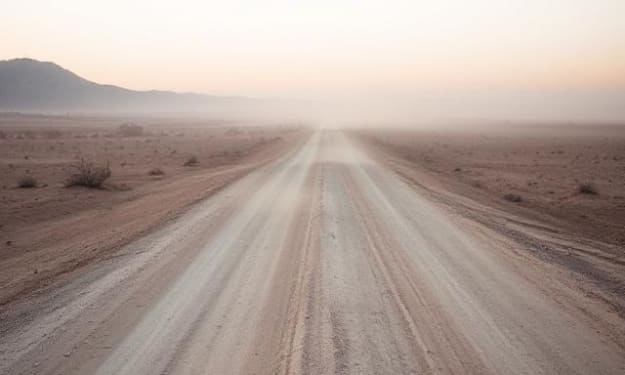
In the summer of 1995, two college students from Minnesota, Diana Reyes, 21, and Marcus O’Connell, 23, embarked on what was supposed to be a fun road trip. Their ultimate destination: the annual Desert Bloom Music Festival in Utah, a vibrant gathering of musicians and art under the open sky. But they never arrived.
By Israr khan5 months ago in Fiction
The First Rainbow Baby
Pitter-patter, pitter-patter. The rain fell in rhythmic splatters, slowly slowing, but still constant. Mira rolled onto her side pulling the blanket tight against her ears, but still she could hear chitter-chatter and scurrying feet of the creatures that refused to sleep in the lower decks.
By A. J. Schoenfeld2 days ago in Fiction


Comments
There are no comments for this story
Be the first to respond and start the conversation.