
The Whisper Beneath the Banyan Tree
A story about rumors and superstitions.


In the sleepy village of Sonarpur, time moved slowly. The days were measured by the rising sun and the evening call to prayer, and news traveled not through phones or papers, but through mouths—mouths that whispered, gossiped, and sometimes, invented.
It all began with a rustling under the ancient banyan tree.
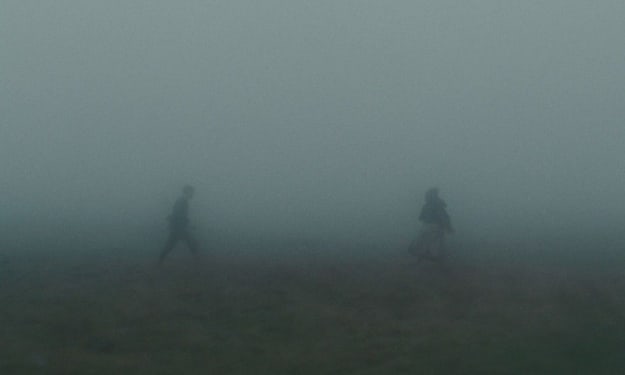
Old Ramcharan Kaka, the village watchman, claimed he saw a churel—a ghost with backward feet—gliding beneath the hanging roots at dusk. He swore by his mother’s grave that he saw the spirit leave no footprints, only a shadow and a strange chill in the air.
By morning, the tale had transformed. Now, the churel wasn't just the banyan tree that was being haunted. She was cursing the fields, spoiling the milk, and twisting the ankles of children who played near the pond.
Women stopped letting their children out after dark. Northern fields were avoided by farmers. The old temple by the tree was suddenly frequented again, as men offered oil lamps and incense in a desperate bid to appease whatever spirit they now feared.
Only Rini, a summer homeschooled girl, dared to laugh. “Churel? Really? She scoffed as she flipped through her sociology textbook. "This is 2025, not 1825." "You guys will believe anything," I said.
Her mother frowned. “Don’t say such things aloud. It’s not about believing. It’s about being careful.”
“But careful of what? Fear itself?” Rini muttered.
A week went by. Then, 12-year-old Munna disappeared for two hours after sunset. He claimed upon his return that he had been dragged near the banyan tree by unseen hands. He had scratches on his arms and tears in his eyes. The rumor now became fact.
A panchayat meeting was called. The village elders, dressed in white dhotis, sat in a half-circle. Heated words flew like arrows.
“We must perform a cleansing ritual.”
“No, we must cut the tree down.”
“No! That’s our village's oldest landmark!”
In the end, it was decided: the ojha, or village shaman, would be called from a neighboring village. He showed up with a bulky bag of herbs, arms covered in ash, and long hair. He examined the tree, chanted into the night, and declared, “The spirit is angry. The old ways have been offended by someone in this village.
Whispers now turned into suspicion.
Eyes turned toward Rini.
“She’s always mocking traditions.”
“She wears jeans. Watches TV.”
“Her mother stopped lighting the evening lamp ever since her husband died.”
And just like that, fear became blame.
Rini’s mother, terrified and ashamed, begged her daughter to apologize publicly, to go to the tree and offer a prayer. But Rini stood firm.
“I will not bow to fear. There is no ghost. This is all in our heads.”
That night, Rini did something bold. She immediately went live on Facebook, grabbed her phone, and walked straight to the banyan tree. “There is no churel. Only skepticism,” she stated. She touched the roots, even sat under them. Crickets chirped. A breeze blew. Nothing happened.
But the next morning, a storm had knocked down part of the tree.
And the villagers lost their minds.
“It’s her fault!”
“She challenged the spirit!”
By afternoon, things grew tense. Rini and her mother were told to leave the village for their own safety.
It was only two weeks later, when a group of schoolboys confessed, that the truth came out.
They had been faking the hauntings—using fishing lines to pull objects, scratching Munna during a prank gone too far, even loosening the soil around the banyan tree to make it fall during the storm. They thought a ghost story would be fun and wanted a break from school.
The village sat in stunned silence.
People apologized to Rini’s mother. The ojha quietly slipped away. And the elders called another meeting—not to chant, but to talk. About fear. concern facts. About how easily a rumor becomes truth when the ground is already fertile with superstition.
Rini stood under the banyan tree once again, this time not to prove a point, but to plant a signboard that read:
“Whispers are not truth. Think before you believe.”
And for the first time in Sonarpur’s memory, the silence that followed wasn't fear—it was reflection.
About the Creator
Ahmed Rayhan
Writer, observer, and occasional overthinker. I use words to explore moments, memories, and the spaces in between. Welcome to my corner of Vocal—where stories find their shape and thoughts find their voice.
Keep reading
More stories from Ahmed Rayhan and writers in Fiction and other communities.
Static in the Signal
It started with a flicker. A blinking cursor. A screen that wouldn’t load. Jamie slammed his laptop shut like it had betrayed him — again. Third time this week. He leaned back in his chair, rubbing his face, feeling the texture of another sleepless night creeping into his skin.
By Ahmed Rayhan10 months ago in Fiction
Bomb Scare
It was 2027, and the world never thought it would happen. A missle hit the United States, but it wasn't where they had anticipated. A little town in the northeast was hit by a missile strike, they didn't know why, and they didn't know exactly where it hit, but they did know it was a coastal community, somewhere between Maine and Delaware.
By Gregory Payton4 days ago in Fiction



Comments (1)
This story about the churel rumor in the village is fascinating. It shows how quickly fear can spread. Made me think of similar superstitions in my area. How do you think Rini could've handled the situation better to stop the panic? Also, what would you have done if you were in the panchayat meeting?