

The house on Millersby Lane didn’t whisper, didn’t moan, didn’t carry on like some of the old ones did. It just waited. Like a quilt-covered body in a room with no clocks.
Folks said it was empty. Folks said it was condemned. But the porch light still came on every evening at dusk, soft and blue as a robin’s egg under frost. That light—it was the kind of thing you could ignore if you didn’t grow up around here. But Mara had.
And around here, a blue porch light meant something.
Every Friday, after the diner closed and her apron still smelled like grease and coffee, she drove past the place. The tires always slowed on their own, like even the car knew not to rush by the dead.
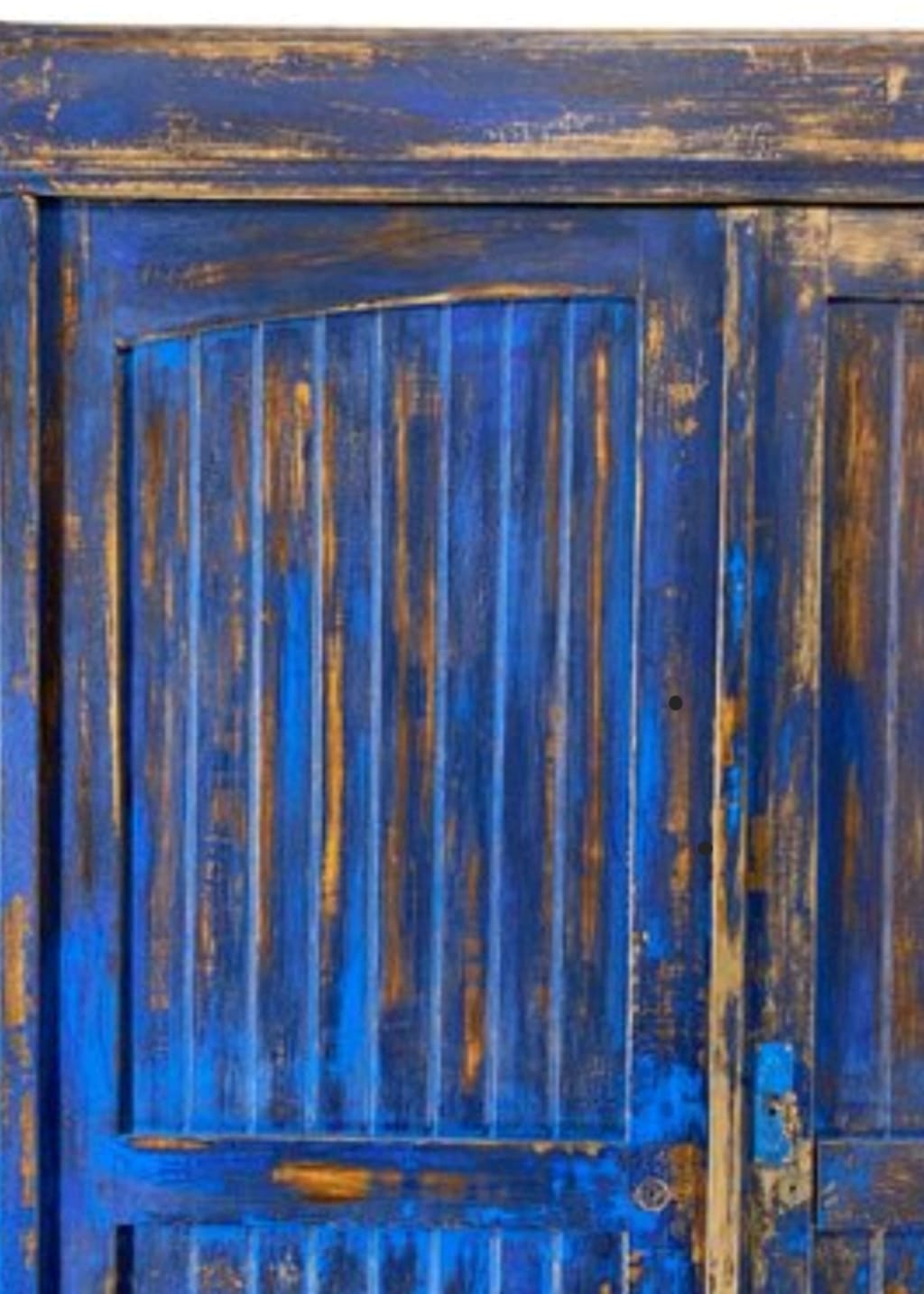
She’d tell herself she wasn’t looking. But her eyes always found the house. The chipped blue door. The sagging screen that fluttered like it still had breath left in it.
No one had lived there in years.
But once, a long time back, Mara had almost gone inside.
That was when the paint was still wet, slick and proud, a door dressed for church. She and Josie had stumbled across it on a July night thick as sorghum, fireflies tangled in their hair like punctuation marks they couldn’t read.
They’d slipped away from a party full of boys with calloused hands and fast mouths, wandered down the drainage ditch with the hush of rebels. Found the house sitting there like a sentence nobody wanted to say out loud.
“Dare me,” Josie whispered, fingers a breath from the knob.
“We shouldn’t,” Mara said, but her voice cracked like old timber.
The door never opened. They turned back. But something about the air changed after that night. Like the house remembered them.
They drifted apart after high school. Josie ran north chasing something unnamed, and Mara circled back home like a moth to the one porch light still burning.
Years passed. But the house—that house—sat the same, like it had been waiting for the rest of the world to catch up or rot down.
And tonight, Mara stopped.
Not just slowed. She parked. Left the engine ticking like a clock with its hands tied behind its back.
The air was cooler than it should’ve been. Early autumn in Georgia clings to summer like a stubborn ghost, but tonight it had let go.
She stepped onto the overgrown path. The grass brushed her shins like someone dragging fingers across a harp too long out of tune.
The porch groaned, but it was the sound of recognition, not protest.
The blue light fizzled out.
Her breath caught like fish in a net.
She touched the knob.
The door opened smoother than it had any right to, like it had been oiled with secrets.
Inside smelled like old cedar chests and forgotten gardens—lavender laid to rest.
The living room greeted her like a photograph you forget taking: familiar, grainy, and just a little wrong. Furniture sat tidy, the kind of tidy that wasn’t cleaned but held still. A teacup waited on the coffee table, steamless and stubborn.
She called out, “Hello?”
The silence that answered wasn’t empty. It was listening.
From deeper in the house, humming—low, woman’s humming, like something stirred with a wooden spoon.
She followed.
Mirrors lined the hallway, but when she passed, they reflected everything but her. Just furniture. Just hallway. Just house.
Not Mara.
She stopped at the last door.
The humming stopped, too.
Her fingers hovered. That’s all. Like before. Like Josie.
She could hear her name, whispered like it had fallen down a well and hit every stone on the way.
“Mara.”
The door opened.
And there, sitting cross-legged in the middle of the room, was Josie.
Not the Josie from New York, or wherever she’d disappeared to.
The other one.
Seventeen. Barefoot. Wild-smiled. The bandana around her wrist faded like a promise kept too long.
“You came,” Josie said, voice calm as still water.
“You’re not here,” Mara said.
Josie tilted her head. “Does that matter?”
Mara wanted to scream yes. But even her bones knew better than to lie to a ghost, real or otherwise.
“I should’ve gone through the door,” Mara said, like she was finally answering a question the house asked years ago.
Josie nodded slow. “That door wasn’t ever locked.”
“I was scared.”
“You had reason to be.”
“What is this place?”
Josie stood up. Her shadow didn’t.
“It’s the room where the undone waits. The not-quite. The almost.”
Outside, the wind shifted. The pines shivered.
The room started to melt—not with heat, but memory. Like sugar on a windowsill, softening around the edges.
Josie was the last to fade. She smiled the way people do when they forgive you without saying it.
Then she was gone.
Mara walked back through the house. It no longer looked like anything. Not haunted. Not safe. Just hollow. Like a field after harvest.
The blue light on the porch flicked back on.
She stood beneath it, looking out at the world she knew—her car, the diner beyond that, and the crooked roads of Hudson lined with ghosts in pickup trucks.
She got in. Drove home.
But every Friday, she still passed by.
And now, the door hangs open. Just a crack.
She doesn’t need to go inside again.
Once was enough.
Because some houses don’t need to be entered to live inside you.
Some doors don’t keep things in.
They keep you out—until you’re ready to meet whatever never happened.
About the Creator
Taylor Ward
From a small town, I find joy and grace in my trauma and difficulties. My life, shaped by loss and adversity, fuels my creativity. Each piece written over period in my life, one unlike the last. These words sometimes my only emotion.
Keep reading
More stories from Taylor Ward and writers in Fiction and other communities.
The heaviest room
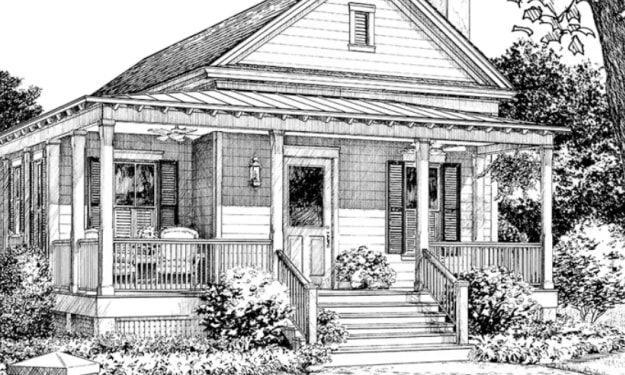
Mimi had lived in a lot of places over the years, but the little rental house she had been in for the last ten seemed to cling to the family the way grief clings to breath. Quiet, persistent, and unwilling to let go. The house sat on old cinder blocks, perched over a shallow crawlspace where a stale wind lived year-round. It drifted through the floorboards with a coldness that felt almost alive, slipping between the boards, moaning through the joints like a thing remembering every sorrow it had ever known.
By Taylor Ward4 months ago in Fiction


Comments (1)
I really love the way you write, Taylor! I love this piece, too. I wish you all the best with the challenge.