
The Weight of Shame
He married me as his family was pressuring him.

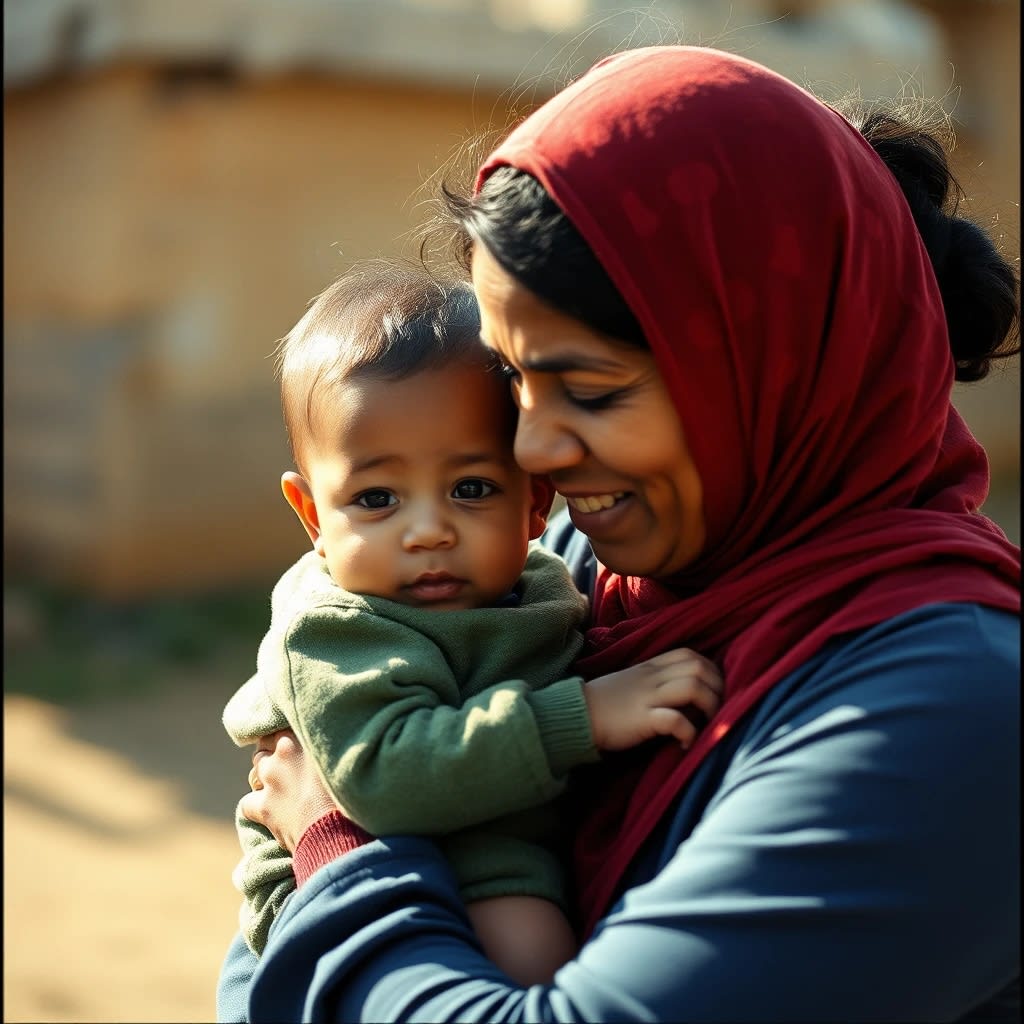
I was born in a small village in Africa, nestled in the rolling hills of the Eastern Cape. Our village was like many others in South Africa, struggling to survive in a country ravaged by poverty, civil wars, and famine.
My family's home was a small, crumbling shack on the outskirts of the village. My parents, Themba and Nala, worked tirelessly to provide for our family of 10. My father was a laborer on a nearby farm, while my mother sold vegetables at the local market.
Despite their hard work, we struggled to make ends meet. Our meals were often meager, and our clothes were threadbare. But my parents instilled in us a sense of hope and resilience, teaching us that education was the key to a better life.
I was just 18 when my parents received a visit from our distant relative, Uncle Jabu. He brought news of a potential suitor for me - a man named Sipho, who lived in a nearby town.
Uncle Jabu told us that Sipho was a good man, employed at a local factory, and kind-hearted. He didn't demand dowry, which was a huge relief for my parents.
My parents were eager to secure a good marriage for me, and they saw Sipho as a stable and reliable partner. Despite the fact that he was significantly older than me, in his mid-30s while I was still just 18, they were willing to overlook this significant age gap.
They were swayed by his promises of financial security and a better life, and they agreed to the marriage without hesitation. I was married off to Sipho just a few weeks later, feeling like a pawn in a game I didn't fully understand.
The wedding was a small, simple affair, with only close family and friends in attendance. I wore a traditional Xhosa dress, adorned with colorful beads and patterns. Sipho stood before me, dressed in a smart suit that accentuated his worn, weathered face.
His smile, though warm and inviting, couldn't quite conceal the faint lines of fatigue etched around his eyes. His eyes themselves, though bright, seemed to hold a hint of weariness, a subtle whisper of the toll that life had taken.
As we exchanged our vows, I couldn't help but notice the faint tremble in his hands, a slight hesitation in his step. It was as if his body was already hinting at the secrets it kept, the struggles it faced, even as his smile and demeanor seemed to say otherwise.
As I left my childhood home to start my new life with Sipho, I felt a mix of emotions - excitement, nervousness, and a hint of sadness. I knew I would miss my family and the familiarity of our village.
But I was determined to make a new life for myself, and to prove to my parents that their decision to marry me off to Sipho was the right one.
Little did I know, my life was about to take a dramatic and devastating turn.
As I settled into my new life with Sipho, I began to notice that he was often absent from home. He would leave early in the morning and return late at night, exhausted and irritable.
At first, I thought it was just the demands of his job at the factory. But as the days turned into weeks, and the weeks turned into months, I began to suspect that something was amiss.
Sipho would often fall ill, and when I'd ask him about his condition, he'd lash out at me, accusing me of being nosy and unfaithful. I was confused and scared, but I tried to be a good wife and take care of him.
One day, I discovered a packet of pills in Sipho's suitcase. I asked him what they were for, and he told me they were just vitamin tablets. But I knew that wasn't true. I'd seen the way he looked at me, with a mixture of guilt and shame.
But behind closed doors, our family life was a different story. Sipho's behavior towards me changed dramatically after we got married. He would come home drunk and force himself on me every night, even when I begged him to stop.
He would hit me in the heat of passion, causing me physical pain and emotional trauma. I was trapped in a loveless and violent marriage, with no escape in sight. The bruises on my body and the tears I cried every night were a testament to what I endured at the hands of my husband. I felt like I was living in a nightmare, with no way out
I felt a growing sense of unease and distrust, but I didn't know what to do. I was trapped in a marriage with a man who seemed to be hiding secrets from me.
And then, I became pregnant. Sipho was overjoyed, but only because he wanted a son. When our daughter, Kasturi, was born, Sipho was furious. He hit me in the hospital, shouting that he needed a boy.
I was devastated, but I tried to focus on caring for our daughter. Three months later, Sipho fell ill again. This time, the doctors told me that he had AIDS.
I was shocked and angry. I demanded to know if Sipho had known about his condition before we got married. He admitted that he had, and that he had contracted the virus during his business trips.
I felt betrayed and ashamed. I didn't know how to process this information, or how to protect myself and our daughter. A few days later, Sipho passed away.
Kasturi and I went for testing, and we both tested positive for HIV. I was heartbroken, holding my little girl and weeping for our future.
The doctor's words kept echoing in my mind: "You and your daughter have HIV. You need to start treatment immediately."
I felt like my world had come crashing down around me. I didn't know how to care for myself and my daughter. I didn't know how to face the stigma and shame that came with having HIV.
But as I looked at Kasturi, I knew I had to be strong for her. I had to fight for our future, no matter how uncertain it seemed.
And so, I began my journey as a mother living with HIV. I faced many challenges and setbacks along the way, but I never gave up. I fought for my daughter's life, and for my own.
But fate had other plans. Kasturi's health began to decline, and despite my best efforts, I couldn't save her. She passed away in my arms, surrounded by the hospital staff who had become like family to us.
I was consumed by grief and anger. I felt like I had failed my daughter, like I hadn't done enough to save her. But as I held her lifeless body in my arms, I knew that I had done everything I could.
I had fought for her life, and for my own. I had faced the stigma and shame of living with HIV, and I had come out stronger on the other side.
As I looked at Kasturi's peaceful face, I knew that she was free from the pain and suffering that had ravaged her little body. And I knew that I would continue to fight, not just for myself, but for all the mothers and children living with HIV.
I would fight for awareness, for education, and for the rights of people living with HIV. I would fight to break down the stigma and shame that surrounded this disease.
And I would fight to keep Kasturi's memory alive, to honor her short but brave life, and to ensure that her death was not in vain.
As I held Kasturi's lifeless body in my arms, I felt a sense of numbness wash over me. I couldn't believe that my beautiful, vibrant daughter was gone.
The hospital staff tried to comfort me, but I couldn't hear their words. I was consumed by grief and anger, and I didn't know how to process my emotions.
As I looked around the hospital room, I saw the familiar faces of the doctors and nurses who had cared for Kasturi. They had become like family to us, and I knew that they had done everything they could to save my daughter.
But despite their best efforts, Kasturi was gone. And I was left to pick up the pieces of my shattered life.
As I sat in the hospital room, holding Kasturi's body in my arms, I knew that I had to find a way to move forward. I had to find a way to honor Kasturi's memory, and to ensure that her death was not in vain.
I took a deep breath, and I began to make plans for Kasturi's funeral. I knew that it wouldn't be easy, but I was determined to give my daughter the sendoff she deserved.
As I planned the funeral, I couldn't help but think about the journey that had brought me to this place. I thought about my childhood, growing up in a poor village in South Africa. I thought about my parents, who had worked tirelessly to provide for our family. And I thought about Sipho, my husband, who had brought HIV into our lives.
I realized that my journey had been marked by poverty, lack of education, and lack of access to healthcare. And I knew that I was not alone. There were millions of women and children living with HIV in South Africa, and around the world.
As I looked at Kasturi's lifeless body, I knew that I had to do something to change this reality. I had to fight for the rights of people living with HIV, and for the rights of women and children who were disproportionately affected by this disease.
And so, I made a promise to Kasturi. I promised her that I would continue to fight, not just for myself, but for all the mothers and children living with HIV. I promised her that I would use my story to raise awareness, to educate, and to advocate for change.
As I laid Kasturi to rest, I knew that my journey was far from over. I knew that I would face many challenges and setbacks along the way. But I also knew that I was not alone. I had the support of my family, my friends, and my community.
And I had Kasturi's memory, which would continue to inspire me to fight for a better future.
As I walked away from Kasturi's grave, I felt a sense of determination wash over me. I knew that I had to keep moving forward, no matter how difficult it seemed.
I began to get involved in my community, speaking out about the need for greater awareness and education about HIV. I shared my story with anyone who would listen, hoping to inspire others to take action.
It wasn't easy, of course. There were many people who didn't want to hear about HIV, who didn't want to acknowledge the reality of the disease. But I refused to be silenced.
I remember one particular day when I was speaking at a local school. A group of students were gathered around me, listening intently as I shared my story. One of them, a young girl with big brown eyes, asked me a question that struck at the heart of the matter.
"Why didn't you know about HIV before you got married?" she asked.
I took a deep breath before answering. "I didn't know about HIV because I didn't have access to education and information," I said. "I was married off at a young age, without knowing anything about the disease."
The girl nodded thoughtfully, and I could see the wheels turning in her mind. "We need to do something to change this," she said.
I smiled, feeling a sense of hope and determination. "We can," I said. "We can educate ourselves, and we can educate others. We can fight for the rights of people living with HIV, and we can work towards a future where no one has to suffer the way I did."
As I looked at the young girl, I knew that I was not alone. There were others out there who cared, who wanted to make a difference. And together, we could do something amazing.
As I continued to share my story and advocate for HIV awareness, I began to attract attention from local organizations and community leaders. They were impressed by my determination and passion, and they wanted to support me in my efforts.
One of these organizations was a local NGO that focused on HIV education and prevention. They offered me a job as a community outreach worker, and I eagerly accepted.
In my new role, I traveled to different communities, sharing my story and educating people about HIV. I worked with schools, community groups, and even government officials to spread awareness and promote prevention.
It was a challenging but rewarding job. I faced many obstacles along the way, from skepticism and stigma to limited resources and funding. But I refused to give up.
I remember one particular day when I was visiting a rural community. I was met with resistance and hostility by some of the community members, who didn't want to hear about HIV. But I didn't let that deter me.
I shared my story with them, and I explained how HIV had affected my life. I told them about Kasturi, and how she had died from AIDS-related illnesses. And I explained how important it was to get tested, to use protection, and to seek treatment if infected.
Slowly but surely, the community members began to listen. They asked me questions, and they shared their own stories and concerns. And by the end of the day, I had helped to facilitate a conversation that would change the community's perspective on HIV forever.
As I left the community that day, I felt a sense of pride and accomplishment. I knew that I was making a difference, one conversation at a time. And I knew that Kasturi's memory was living on through my work.
Years went by, and I continued to work tirelessly as a community outreach worker. I traveled to different communities, sharing my story and educating people about HIV. And I saw the impact of my work firsthand - communities that were once resistant to HIV education were now embracing it, and people were getting tested and seeking treatment.
But despite the progress we were making, I knew that there was still much work to be done. HIV was still a major public health threat, and stigma and discrimination against people living with HIV were still rampant.
And so, I continued to fight. I continued to share my story, to educate people about HIV, and to advocate for the rights of people living with HIV. And I knew that as long as I kept fighting, Kasturi's memory would live on, and her death would not be in vain.
As I looked back on my journey, I realized that I had come a long way. I had lost my daughter, Kasturi, to AIDS, but I had also found a new purpose in life - to fight for the rights of people living with HIV, and to ensure that no one else had to suffer the way I did.
I had faced many challenges along the way, from stigma and discrimination to lack of access to healthcare. But I had also met many people who had supported me, encouraged me, and helped me to keep going.
As I stood on the stage, accepting an award for my work as an HIV advocate, I felt a sense of pride and accomplishment. I knew that I had made a difference, and that I would continue to fight for as long as I lived.
I looked out at the crowd, and I saw the faces of all the people I had met along the way. I saw the faces of my family, my friends, and my colleagues. And I saw the face of Kasturi, my beloved daughter, who had inspired me to keep going, even in the darkest of times.
I took a deep breath, and I began to speak. "I stand before you today as a testament to the power of resilience and determination," I said. "I have lost my daughter to AIDS, but I have also found a new purpose in life. I will continue to fight for the rights of people living with HIV, and I will never give up."
The crowd erupted in applause, and I smiled, feeling a sense of pride and accomplishment. I knew that I had made a difference, and that I would continue to fight for as long as I lived.
And so, my story comes full circle. It is a story of loss and grief, but also of hope and resilience. It is a story of how one person can make a difference, and how one person's story can inspire others to take action.
I hope that my story will inspire you to take action, to make a difference in the world. Remember, we all have the power to create change, and we all have the responsibility to fight for what is right.
........................................... ---------- .............................................
PS: Thank you for reading.
About the Creator
Tales by J.J.
Weaving tales of love, heartbreak, and connection, I explore the beauty of human emotions.
My stories aim to resonate with every heart, reminding us of love’s power to transform and heal.
Join me on a journey where words connect us all.
Keep reading
More stories from Tales by J.J. and writers in Fiction and other communities.
The Dancer
For RM Stockton's March Write Club Prompt The Dancer He was the best, admired by many and complimented by more. He had been a classical ballet dancer since before he was a teenager, and became renowned. Then his fame spread and he became the most respected dancer in the land.
By Mike Singleton 💜 Mikeydred 7 days ago in Fiction


Comments (2)
What a great story of HIV/AIDS awareness and the need for more education and awareness for it is not going away even now in the 21st century. Good work.
Crazy story! John, Why have you deleted every single comment you've ever made? Is everything ok? You're John Joseph, right ?