
The View from Far Away
A Journey to Find My Place in the Picture

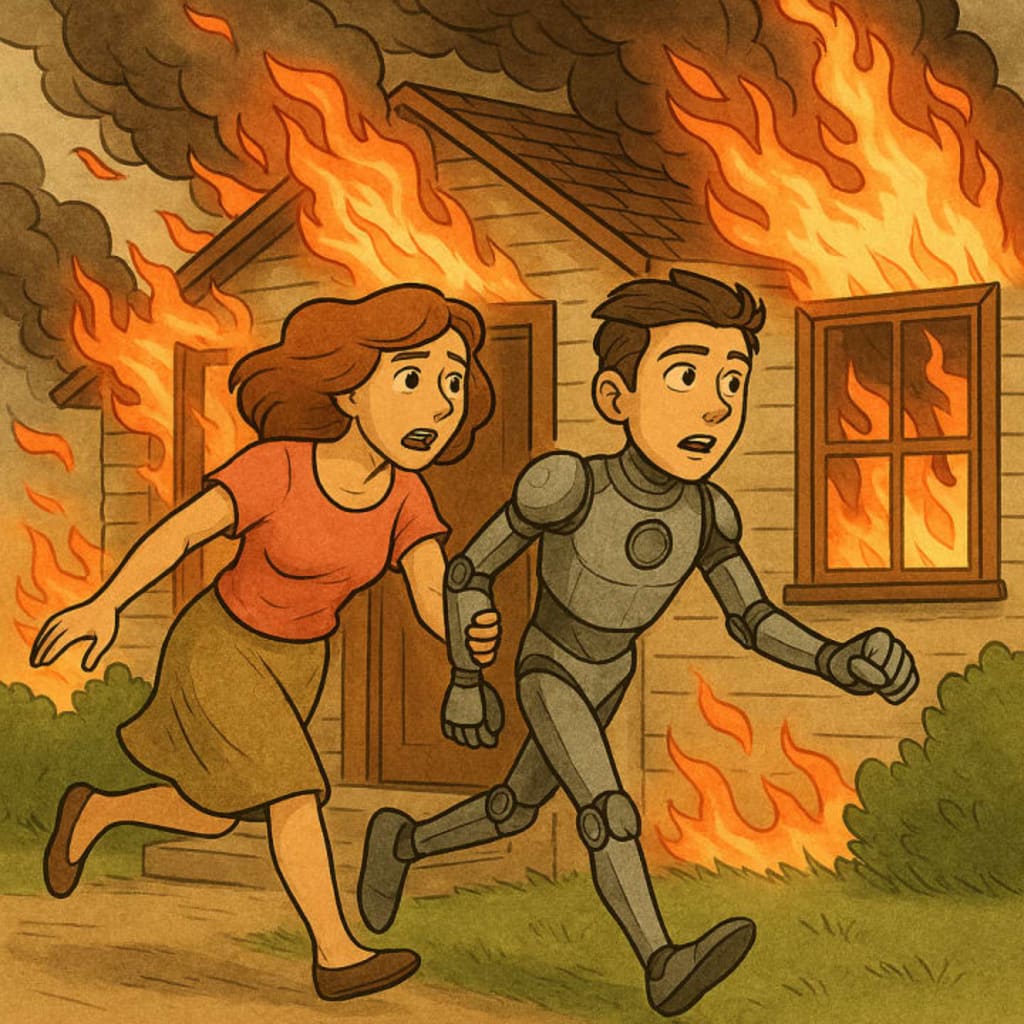
Title: The View from Far Away
A Journey to Find My Place in the Picture
My brother Skott, with a K, was a splash of bright paint on the grey canvas of our small town. From my bedroom window, I’d watch him. He wasn’t just walking down the street; he was performing for an invisible audience, his laughter echoing off the brick walls, his steps a little too dance-like. From far away, he was a masterpiece of confidence. Everything looks better from far away.
I was the opposite. Where Skott was colour, I was a pencil sketch. Elara. A quiet name for a quiet girl. My world was the precise, ordered lines of my sketchbook. I preferred to draw things from a distance—the old bridge, the skyline, my brother. It was safer. You can’t see the cracks in the paint from up here.
The crack in Skott’s paint was a quiet one. It started with him staying in his room, the laughter from behind his door becoming less frequent. The vibrant boy I watched from my window began to look… smudged. My parents whispered words like “pressure” and “just a phase.” But from my distant vantage point, it looked like my painting was fading.
The phone call came on a Tuesday. Skott, at a party he shouldn’t have been at. Skott, in trouble. Not the fun, mischievous trouble, but the real, scary kind.
I found him later, sitting on the curb outside the police station, looking smaller than I’d ever seen him. The streetlights washed him out, making him look like a ghost of himself. This was the close-up view. It was messy, and confusing, and terrifying.
“I don’t know what’s wrong with me,” he mumbled, not looking at me. His voice was ragged. “Everyone thinks I’ve got it all figured out. But it just feels… loud. All the time.”
The view from far away showed a perfect picture. The view up close showed a boy who was lost inside his own life.
That was the night I decided to save him. Not with a dramatic speech, but by finally stepping into the painting with him.
My plan was simple, and born from the only language I truly understood: silence. The next morning, I slid a note under his door. It was a drawing of our old treehouse from when we were kids, with one word: “Go?”
An hour later, he emerged, red-eyed and quiet. He just nodded.
We didn’t talk as we walked to the edge of town and climbed the rickety ladder. We sat there for what felt like hours, watching our tiny world from a distance. Cars looked like toys. People were just dots moving along lines. The whole town was a still life.
“It’s easier up here,” I said finally, my voice feeling too loud for the quiet air. “You can see the whole picture. Nothing can surprise you.”
Skott looked out, his eyes tracing the familiar streets. “Yeah,” he said, his voice soft. “But it’s not real, is it? Down there is where it’s real. The mess is real.”
I looked at him, really looked. I saw the worry lines my distant view had never picked up. I saw the way his hands fidgeted, a nervous energy he usually channeled into his performance. I had been so busy admiring the painting from across the room that I’d never noticed the artist was struggling.
“Then we’ll figure out the mess down there,” I said. It was the bravest sentence I’d ever uttered.
Our journey wasn’t a grand adventure. It was small. It was quiet walks where I did more listening than talking. It was me drawing while he tried to find the words for the “loud” inside his head. It was me showing him my world of lines and perspective, and him slowly showing me his world of noise and colour.
I stopped trying to save the Skott I saw from my window—the perfect, distant masterpiece. I started trying to understand the one right in front of me—the real, messy, complicated boy with a K in his name.
One afternoon, he looked at a sketch I was doing of him. It wasn’t the vibrant, dancing Skott. It was him, thoughtful, a little tired, but with a faint, real smile. “Is that how you see me?”he asked.
“It’s how you are,” I said.
He was quiet for a moment. “It’s better,” he finally said. “It’s real.”
I realized then that I hadn’t just been on a journey to find his place in the picture. I’d been finding my own. My place wasn’t behind a window, a distant observer. It was right beside him, inside the frame, adding my quiet lines to his bold colours.
Saving Skott didn’t mean fixing him. It meant closing the distance. It meant seeing the cracks and the brushstrokes and the smudges not as flaws, but as part of the art. It meant understanding that the most beautiful views aren't always the ones from far away. Sometimes, the most beautiful thing is to be right up close, exactly where you belong.
About the Creator
LegacyWords
"Words have a Legancy all their own—I'm here to capture that flow. As a writer, I explore the melody of language, weaving stories, poetry, and insights that resonate. Join me as we discover the beats of life, one word at a time.
Keep reading
More stories from LegacyWords and writers in Fiction and other communities.
Magic
Note from the Author: I want to let you know that this is an unusual story, and it has been written purely from whatever is in my unconscious mind, because before I start writing, I get into a flow state that reaches my unconsciousness. I also write in my subconscious mind, which is like a mid-flow state between the conscious and unconscious mind.
By Denise Larkin7 days ago in Fiction
Spring Sacrifice
The woods of Hollow Glen were quiet, save for the crunch of dead leaves underfoot. The air was thick with the scent of pine and damp earth, and the last rays of sunlight filtered through the canopy, casting long, eerie shadows. The group of teenagers—Ellie, Jake, Sarah, and Ryan—had ventured there on a dare. Rumors of strange happenings in the forest around Easter had been passed down for years, but none of them believed in ghost stories.
By V-Ink Stories4 days ago in Fiction


Comments
There are no comments for this story
Be the first to respond and start the conversation.